Though the health sector like most other sectors of Nigeria's economy is not immune from the challenges of the Nigerian system, one would say that the aggregate performance of Nigeria's health sector will remarkably improve if certain issues are addressed.
It is clear that the unsatisfactory amount allocated to the health sector in the National budget will continue to impact negatively on the quality of health of Nigerians until there is change.
In the critical area of Universal Health Coverage for Nigerians through the National Health Insurance Scheme (NlllS), there are some developments, particularly the launching of more Community Based Social Health Insurance Schemes in various Nigerian communities, including the Federal Capital Territory. However, these efforts seems to be insignificant considering that the Universal Health Coverage in Nigeria is about 7.2% .
It is expected that the application of more innovative and social-based health financing mechanisms, together with strong commitment and transparent leadership, will propel the administrative wheels of NHIS towards accelerating the enrolment of more Nigerians into the scheme as well as boost financial access of all Nigerians to a minimum healthcare package.
 The new Health Minister should take advantage of the passage of the National Health Bill with fundamental provisions for financing the health of Nigerians to agitate for more funding for the health sector.
 Nigeria still has a lot to do in the fight against HIV/AIDS. Besides seeking to improve the level of public education and access to Anti-Retroviral medications by PLWHAs, the National Agency for the Control of AIDS(NACA), needs to do much more to reduce the significant level of Mother- To-Child-transmission of HIV / AIDS in Nigeria. Nigeria is rich enough to make treatment of HIV / AIDS truly free without relying on donor agencies. Government should give a budgetary headline to TB and HIV at the hospital level if any meaningful impact is to be made.
The war against Tuberculosis (TB) seems not to be enjoying the momentum desired. It is good that government is paying attention to Multi-drug Resistance TB (MDRTB) but an insignificant proportion of cases of MDRTB arise without first line drug management failure. There is therefore the need for agencies of government saddled with the responsibility of protecting Nigerians against TB to realize that the best weapon against MDRTB is effective prevention, early diagnosis and adequate provision of drugs for the management of Tuberculosis. Just like HIV/AIDS, treatment of TB deserves to be truly free.
Nigeria still has no strategic research policy, and probably does not consider research as a necessary tool for national development. In addition, investment in research by government, corporate bodies, and individuals is still at low ebb in Nigeria such that potential Nigerian researchers and inventors are discouraged. Those who have the capacity to sponsor research in Nigeria do not believe in it. Although this is not peculiar to health but it is worse in the
health sector. The, new Health Minister must ensure research is a priority in the country by getting government and the private sector to invest in research. Existing research institutions in the country like the Nigeria Institute of Medical Research(NIMR), Nigeria Institute for Pharmaceutical Research and Development(NIPRD), Federal Institute for Industrial Research, Oshodi(FIIRO) etc. should enjoy better funding and attention from the government.
Some efforts have been made to upgrade existing federal health infrastructure and equipment with the aim of improving the capacity of the Federal Tertiary Health Institutions. There were also efforts by some state governments to upgrade their state hospitals. However, these efforts were not significant enough, thus leaving the aggregate performance in terms of public health infrastructural upgrade and development in Nigeria below par.
Again, the private healthcare sector did not witness significant push in terms of health infrastructural development. This administration must ensure that the challenge of poor instructure is tackled headlong through a special interventional fund and also through Public Private Partnership(pPP) deals. The government needs to firmly institute Public Private Partnership (PPP) arrangements in the hospitals/ health institutions or the outright outsourcing of some services such as pharmacy, radiography, physiotherapy, etc, so as to free funds for more critical services.
On the issue of Nigerians still travelling abroad for treatment, it has become a status symbol for some, while for some others it is because of the ready availability of public funds to be spent. There are few germane cases. The government should discourage medical tourism totally. Government officials who want to go abroad for treatment as a matter of choice should pay from their pockets
For remarkable progress to be made in the health sector it is important that the following challenges are concretely addressed:
(1) The low level of political commitment to healthcare by most governments in Nigeria, especially as depicted by the frequenttravels abroad to seek medical care by political and public office holders, coupled with the poor healthcare funding and poor sectoral allocation/release to the health sector at various levels of government.
(2) Poor security and safety of health care workers in their workplace, and other Nigerians generally.
(3) Infrastructural and equipment deficits and dilapidation in the healthcare sector.
(4) Poor constitutional and legal framework for health in Nigeria, particularly the absence of full implementation of the National Health Act that clearly defines the roles and responsibilities of the Local, State and Federal Governments with respect to the three levels of health care; as well as the roles and responsibilities of health care professionals.
(5) Poor funding and budgetary provisions for health; It is worrisome that despite the clarion call for improved resource allocations to the health sector, the health budget is far less than the stipulated 15% of the National budget as stipulated in the 2001 Abuja declaration of African Heads of State.
(6) Poor Health Human Resource Development plans, including poor recruitment of health human resource by all levels of government, poor capacity building and role definition, blunted job descriptions, uncompetitive wages, unsatisfactory working conditions and poor motivation of the health workforce; as well as the inequitable distribution of the health workforce.
(7) Worsening mass poverty in Nigeria.
(8) Poor percentage and lack of Universal Health Coverage for Nigerians.
(9) Pervasive quackery in the health sector.
(10) Weak Primary and Secondary levels of care with a weak referral system and the impact of the federal system of government on healthcare delivery.
(11) Poor database, and poorly developed Information Communication, Technology and Health Management Information System.
(12) Unbridled and indiscriminate advertisement of herbal and medicinal products on the electronic and print media.
(13) Unwieldy and unproductive number of Regulatory Councils in the health sector; with conflicting professional regulatory laws/Acts.
(14) Illegal prescription of prescription only medicines by persons who are not licensed medical doctors, dentists or veterinary doctors, as well as chaotic and unregulated drug and reagent procurement and distribution.
(15) Poor development of health-related infrastructure such as power, roads/transportation system, potable water, agriculture, housing and security.
There are viable solutions that can drive greater progress , including insulating the health sector from the vagaries and bureaucracies ofthe civil service by creating a separate Commission for the health sector as was done by removing critical sectors like the judiciary from the civil service.
By: Azoma Chikwe
Sun News
ABUJA: Training Schedule for Basic Life Support BLS, Pediatric Advanced Life Support (PALS), Advanced Cardiovascular Life Support ACLS, First Aid, CPR, AED
PORTHARCOURT: Training Schedule for Basic Life Support BLS, Pediatric Advanced Life Support (PALS), Advanced Cardiovascular Life Support ACLS, First Aid, CPR, AED
LAGOS: Training Schedule for Basic Life Support BLS, Pediatric Advanced Life Support (PALS), Advanced Cardiovascular Life Support ACLS, First Aid, CPR, AED
STOP paying for airtime and electricity, Let your phone pay its bills with ScreenT
You may also like
Comrade Lemii Christian Emerges Chairman of NANNM Rivers State Branch in Historic Victory
PORT HARCOURT, NIGERIA Following the long awaited National Association of N…

FG Supports Robotic Surgery Expansion to Reduce Medical Tourism
Nigeria is taking another step toward strengthening specialised healthcare …
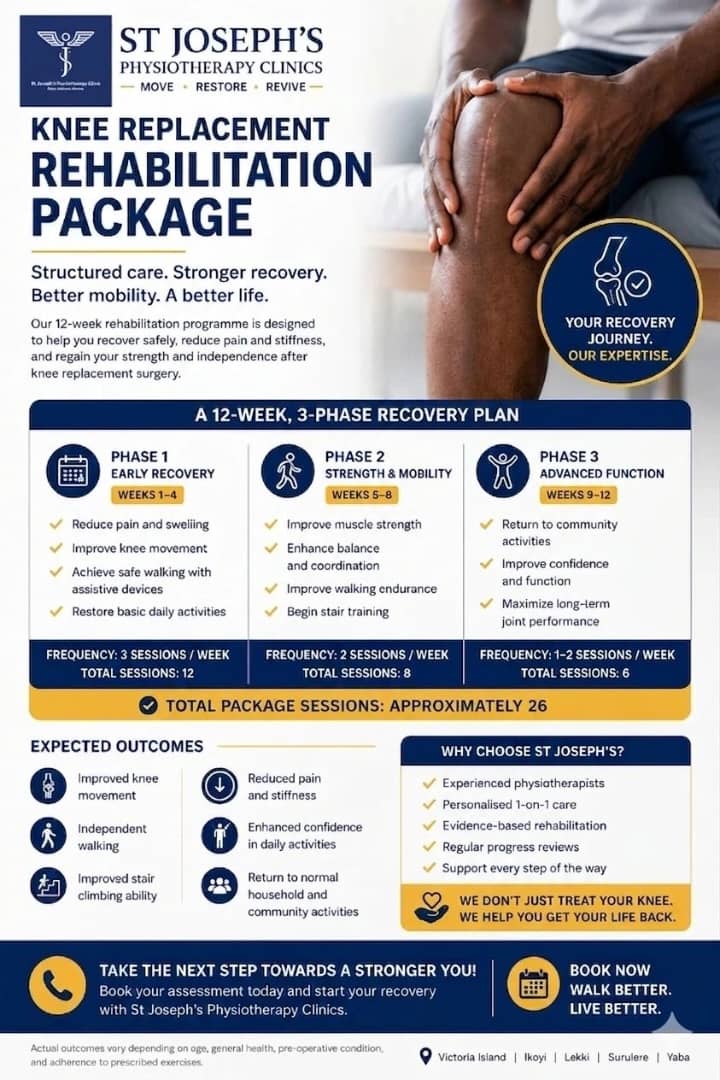
Complete Knee Replacement Rehabilitation Package in Lagos
Knee replacement surgery is a major step toward pain relief and improved mo…

NAMDA threatens strike over unpaid medical lecturers’ allowances
The Nigerian Association of Medical and Dental Academics (NAMDA) has warned…

Resident Doctors Signal End to Strike Threat After High-Level Talks with Gbajabiamila
The threat of a nationwide indefinite strike by the Nigerian Association of…