The Female Condom Youths Advocates has described the lack of accessibility, affordability and availability of different brands of female condoms as a major reason driving away the interest of women from using it.
The programme and Communication Officer, Education As a Vaccine (EAV), Ms. Marian Patrick, disclosed this in Abuja at an event commemorating this year 'Global Female Condom Day 2015', where the group called on the government to address the case of stock out in public health facilities .
According to her, "most people don't use female condoms because they find it not accessible and not affordable, they don't have a choice, meaning that there is no diversification of brands unlike the male condoms where you can get several brands, for female condoms we don't have brands.
"The problem of accessibility in female condoms push their lack on interest, when a lady wants a female condom and she gets to primary health centre or a pharmacy, what she gets is FC2, and some people want varieties, so they prefer having other brands as a choice, and not having those brands is discouraging them to look for female condoms knowing fully well that they can't access their own choice," Marian added.
The communication officer explained that the group wants youths to be involved in policies and plans of the government specifically that of Ministry of Health and National Action Committee on Aids (NACA) in procurement processes, especially as regards female condoms.

She emphasised further that government should put more effort in creating demand and accessibility for female condoms.
The group therefore demanded among other things that; "in reviewing major policy documents, especially those that relate to adolescents and young people's sexual and reproductive healthcare that female condoms are explicitly mentioned and also included in a section of its own.
"That the government build capacity healthcare providers at all levels to provide female condom services to adolescents and young people and the society at large," it noted.
The group also recommended that government at all levels and development partners need to invest in building capacities of healthcare workers, especially at the primary health care level to be able to inform, educate and promote female condoms to women.
By: Adedayo Akinwale
This Day
ABUJA: Training Schedule for Basic Life Support BLS, Pediatric Advanced Life Support (PALS), Advanced Cardiovascular Life Support ACLS, First Aid, CPR, AED
PORTHARCOURT: Training Schedule for Basic Life Support BLS, Pediatric Advanced Life Support (PALS), Advanced Cardiovascular Life Support ACLS, First Aid, CPR, AED
LAGOS: Training Schedule for Basic Life Support BLS, Pediatric Advanced Life Support (PALS), Advanced Cardiovascular Life Support ACLS, First Aid, CPR, AED
STOP paying for airtime and electricity, Let your phone pay its bills with ScreenT
You may also like
Comrade Lemii Christian Emerges Chairman of NANNM Rivers State Branch in Historic Victory
PORT HARCOURT, NIGERIA Following the long awaited National Association of N…

FG Supports Robotic Surgery Expansion to Reduce Medical Tourism
Nigeria is taking another step toward strengthening specialised healthcare …
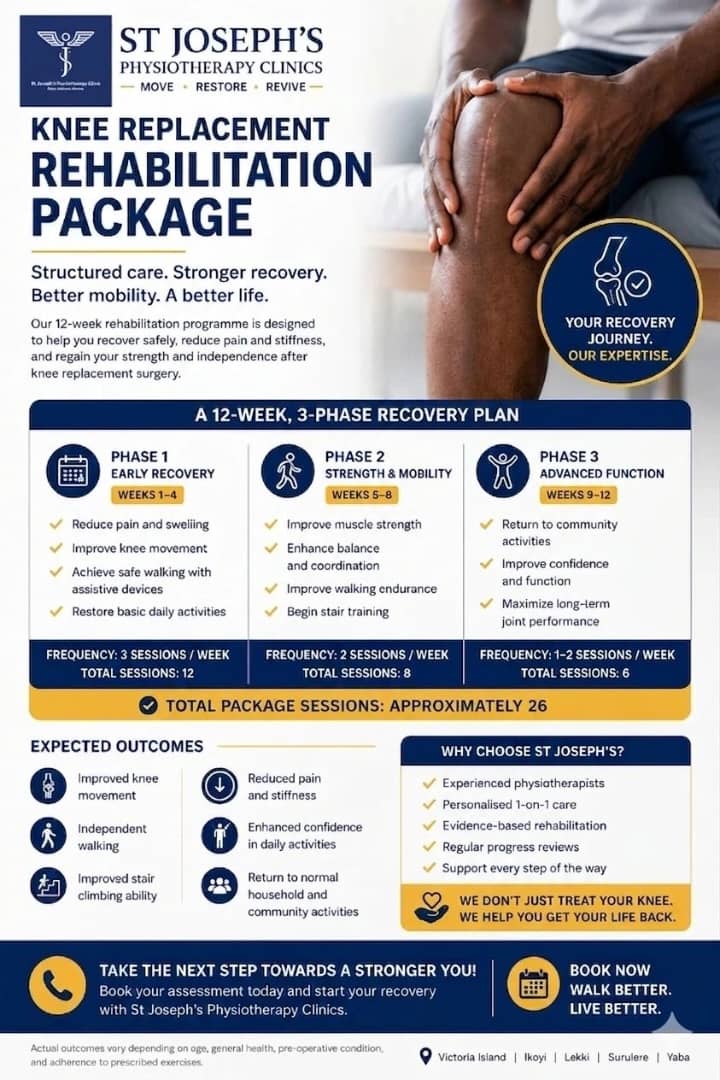
Complete Knee Replacement Rehabilitation Package in Lagos
Knee replacement surgery is a major step toward pain relief and improved mo…

NAMDA threatens strike over unpaid medical lecturers’ allowances
The Nigerian Association of Medical and Dental Academics (NAMDA) has warned…

Resident Doctors Signal End to Strike Threat After High-Level Talks with Gbajabiamila
The threat of a nationwide indefinite strike by the Nigerian Association of…