“Once Nigeria overcomes a challenge, it forgets about it until another problem comes” – Oyewale Tomori, August 2104
This columnist first deployed as an opening quote the remarks, again cited here of the Regional Virologist for the World Health Organisation, Prof. Oyewale Tomori. In an essay entitled, The Ebola Next Time (The PUNCH, August 26, 2014), this columnist warned that “Generals preparing for the last war have long been scoffed at; but they are at least a step ahead of Generals who are not preparing for any war at all. If we refuse to learn our lessons, they will return to haunt us in ways we cannot for now imagine.” Sadly, the ravaging Lassa fever, which at the last count affects 17 states and has claimed over 60 lives, has caught us napping, ill-prepared and flat-footed, suggesting, as Tomori predicted, that we slipped into characteristic indifference after we overcame the Ebola Virus Disease challenge.
Ebola, at the time it sneaked into Nigeria from Liberia, was a new ball game, with no known cures, excusing, somewhat our initial bafflement and incoherence in responding to it. Not so Lassa fever, an endemic disease, which devastated several parts of the country as recently as 2012.The point being made is that, there is an intimate connection between our responses to medical emergencies and our governance woes, complicated by a national character that does not plan for the medium or long term. Before dealing with these issues, however, I crave the reader’s indulgence, to, characteristically, enter a short take.
.jpg) Topical as the anti-corruption actions of the President Muhammadu Buhari administration are, they have continued to generate controversy. The ongoing debate is not just a case of “corruption fighting back” but includes valid concerns about the character, quality, and even-handedness of the actions. For example, this columnist has avoided using the term “anti-corruption policy” to describe the ongoing probes because it is doubtful whether such a policy exists, and if it exists, whether it has been clearly articulated. A policy suggests a systematic agenda with contingent, medium and long-term interventions. Were such a policy to exist, it will invite us beyond the current obsession with Dasukigate and its dramaturgy, to a prospectus of subsequent initiatives.
Topical as the anti-corruption actions of the President Muhammadu Buhari administration are, they have continued to generate controversy. The ongoing debate is not just a case of “corruption fighting back” but includes valid concerns about the character, quality, and even-handedness of the actions. For example, this columnist has avoided using the term “anti-corruption policy” to describe the ongoing probes because it is doubtful whether such a policy exists, and if it exists, whether it has been clearly articulated. A policy suggests a systematic agenda with contingent, medium and long-term interventions. Were such a policy to exist, it will invite us beyond the current obsession with Dasukigate and its dramaturgy, to a prospectus of subsequent initiatives. Also, there is a slight overlap between current actions and a sense of triumphalism among the ruling party. Law enforcement, for example, in the recent handcuffing of the National Publicity Secretary of the Peoples Democratic Party, Mr Olisa Metuh, appears to gloat as if feelings of exhilaration are all that are needed for the nation to be rid of corruption. Similarly, there is an unwillingness or indifference to raising fundamental issues such as sources of party funding, which loom large in the current investigation of diversion of funds for electoral purposes. To make the point clear, where would the ruling All Progressives Congress obtain funds to fight the 2019 elections in a clime which lacks a system for enlisting the financial energies of the average party member? Indeed, as Abimbola Adelakun queried in a recent intervention in The PUNCH, how did the APC raise the funds to prosecute the 2015 elections? I do not wish to downplay the seriousness of the miasma that has come to be known as Dasukigate; however, unless it is connected to fundamental drivers of corruption such as a capital intensive electoral competition, it may end up as a case of treating symptoms rather than the disease.
Moreover, a well-focused anti-corruption struggle must be worried that the police are back in business taking tolls and unofficial levies from road users probably because they have not been paid their salaries. This columnist endorses the anti-corruption struggle, but counsels that it should develop a strategy and a work plan that can lift it beyond the current cheerleading, and reactive character.
To get back to the discourse on Lassa fever, it is interesting that the Minister of Health, Prof. Issac Adewole, on Tuesday blamed the state governments for what he called a culture of silence in failing to report outbreaks of the disease in their states. He went on to say that “State governments should not be under the illusion that the Federal Government alone can take care of the health needs of this nation because we must all drive it.” Ordinarily, the local governments, and municipal authorities should be the first line of call in these matters, but everyone knows that these institutions are comatose either by the design of the state governments which render them inoperative, or by their own complicity in a culture of subnational indolence.
The Nigerian government is usually absent, with a few exceptions as one moves away from the centre. The current predicament of the states makes them even less of any importance beyond the payment of salaries which are increasingly irregular. To connect this lacuna with Lassa fever, it is an undeniable fact that our cities have recently been overtaken by mountains of garbage heaps and accumulating dirt, a perfect recipe for the outbreak of diseases and the festering of viruses. Even governors who were active on the eve of the last elections in sanitising the cities appear to have relapsed into a second term syndrome of minimum government. Considering that health is on the Concurrent List, the abjection of the states and their postures of resignation in the face of an epidemic are to be much lamented. In this regard, it should be recalled that a former governor of Lagos State, Mr. Babatunde Fashola, mobilised the entire machinery of government to combat the Ebola scourge in 2014. It would have been helpful if the states in conjunction with the Federal Government employed the same sort of gravitas in the present circumstances.
That is not all. Governments, federal and state, appear to have allowed the outbreak to snowball into a spreading emergency before handing out alerts. Why is it difficult for us to put in place early warning systems which will ensure that these kinds of occurrences do not take us by storm? In the case of Lassa fever, the outbreak of March 2012, in which 70 Nigerians died in 19 states, should have led us to a disease surveillance mechanism and the strengthening of health infrastructure to deal with the contingencies.
Important too is our chronic neglect of medical and scientific research, leading to over-dependence on so-called global expertise which very often does not exhaust local conditions and circumstances. In response to my article entitled, Ebola, the absence of Nigerian science (The PUNCH, August 22, 2014) Iruka Okeke, Professor of Molecular Microbiology at Haverford College in the United States, argued that “Had the Nigerian government invested in more widespread resources for diagnoses, care, and clinical research on Lassa fever, those resources could have been adapted to deal with the next unpredictable outbreak of haemorrhagic viral disease like Ebola.” It is doubtful if that warning was heeded at least until the recent spreading occurrences of Lassa fever.
A final point concerns the rusty state of medical infrastructure symptomised by unkempt government hospitals which have become incubators for diseases, poor quality of services and the shortage of medical personnel. Our current responses to Lassa fever should take on board these structural lags.
Source: Punch News
ABUJA: Training Schedule for Basic Life Support BLS, Pediatric Advanced Life Support (PALS), Advanced Cardiovascular Life Support ACLS, First Aid, CPR, AED
PORTHARCOURT: Training Schedule for Basic Life Support BLS, Pediatric Advanced Life Support (PALS), Advanced Cardiovascular Life Support ACLS, First Aid, CPR, AED
LAGOS: Training Schedule for Basic Life Support BLS, Pediatric Advanced Life Support (PALS), Advanced Cardiovascular Life Support ACLS, First Aid, CPR, AED
STOP paying for airtime and electricity, Let your phone pay its bills with ScreenT
You may also like
Comrade Lemii Christian Emerges Chairman of NANNM Rivers State Branch in Historic Victory
PORT HARCOURT, NIGERIA Following the long awaited National Association of N…

FG Supports Robotic Surgery Expansion to Reduce Medical Tourism
Nigeria is taking another step toward strengthening specialised healthcare …
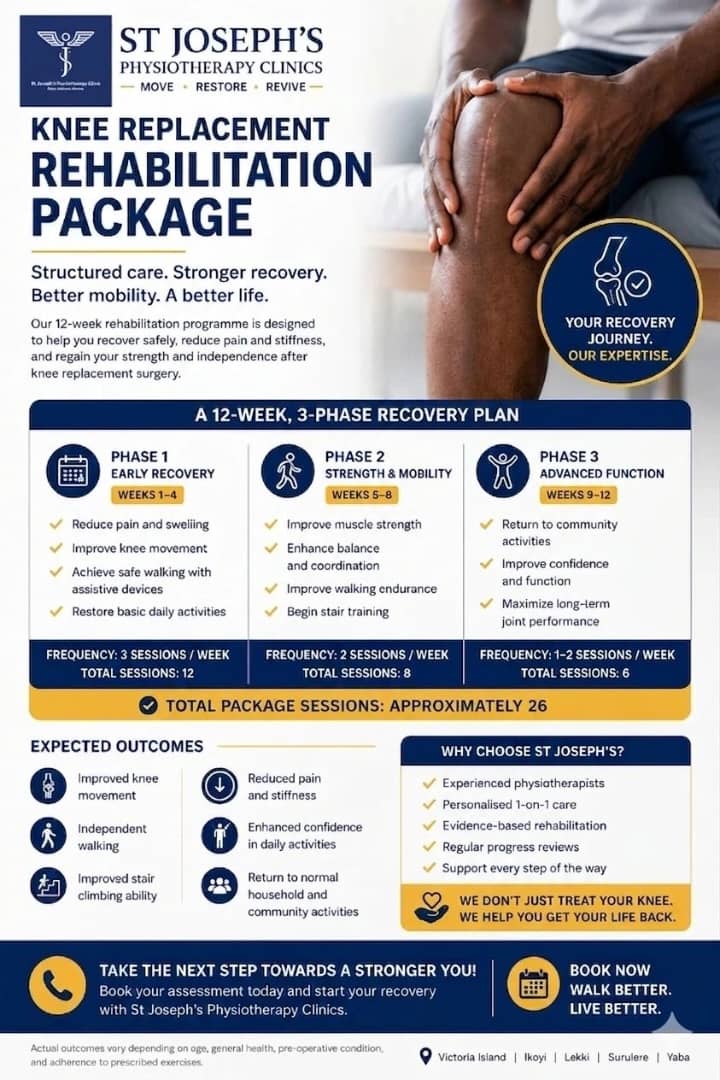
Complete Knee Replacement Rehabilitation Package in Lagos
Knee replacement surgery is a major step toward pain relief and improved mo…

NAMDA threatens strike over unpaid medical lecturers’ allowances
The Nigerian Association of Medical and Dental Academics (NAMDA) has warned…

Resident Doctors Signal End to Strike Threat After High-Level Talks with Gbajabiamila
The threat of a nationwide indefinite strike by the Nigerian Association of…