Lassa fever has spread to 20 states and killed 108 people, the Federal Government confirmed yesterday. Deadlier outbreak of the disease is possible as weather becomes hotter in coming weeks in most part of the country, the government said. Government has also alerted that Zika virus, currently spreading across Latin American and the Caribbean could hit Nigeria, if necessary measures are not taken by people and all tiers of government. Minister of Health, Prof. Isaac Adewole, made the disclosures in Abuja, while briefing journalists on the state of both ailments.
He noted that resurgence of Zika virus, which was first discovered in the western part of the country in 1954, is possible because of presence of mosquito that transmits the disease in the country. Statistics given by the minister showed that almost two out of three persons who have been infected by Lassa fever in the country had died. “Nigeria has recorded 176 cases with 108 deaths given a case fatality rate of 61.4 per cent. Out of this, 78 are confirmed cases and 49 deaths given a specific case fatality rate of 62.8 per cent. “The total cases reported (suspected, probable and confirmed): 176; Total deaths (suspected, probable and confirmed): 108 (CFR: 61.4 per cent). Total confirmed cases: 78; Deaths in confirmed cases: 49 (CFR: 62.8 per cent).
“As at today, 20 states are currently following up contacts, or have suspected or probable cases with laboratory results pending or laboratory confirmed cases,” the minister said. He added: “The outbreak is under control as evidenced by decline in new suspected cases; new laboratory confirmed cases and newly reported cases. “Despite this achievement however, you will agree with me that it will be dangerous if we go complacent at this stage, as we could record another flare-up and a second wave deep in the dry season. “I have instructed the NCDC to work closely with the Lassa Fever Eradication Committee and other partners to develop a Lassa Fever Control strategy that will withstand the test of time.”
 Adewole reiterated his earlier advice that Nigerians should exercise caution in travelling to Latin American countries and the Caribbean; even though the disease has been reported in United Kingdom, China and United States, including Brazil and Columbia – two countries the minister said had been the most affected with an estimated cases ranging between 600,000 and 1,700,000. The minister argued that until the time of the briefing, in Africa and Nigeria, Zika virus was not causing any serious illness; and those so far infected individually recovered fully with no serious complications. Forty percent of adults and 25 percent of Nigerian children have had antibodies to the virus, according to the minister. He noted that the dimension which the disease was taking in 44 countries already affected called for serious preparedness against it. He listed the efforts to include collective killing of mosquitoes, preventing them from breeding, including sleeping inside mosquito nets at night and preventing them from gaining entry into homes and offices.
 He directed all states in the country to immediately embark on health education campaigns to empower communities take actions to protect themselves from the virus as well as other mosquitoborne diseases. Zika virus is associated with a steep increase in the birth of babies with abnormally small heads, named scientifically as Microcephalia. It is also associated with increase in cases of Guillain-Barré syndrome (GBS), a poorly understood condition in which the immune system attacks the nervous system, sometimes resulting in paralysis. The clinical presentation of Zika is similar to many other tropical diseases such as malaria, typhoid fever common cold or another mosquitoborne disease. This usually makes its diagnosis often difficult.
There is as of now, no known specific treatment for Zika virus disease, the minister said. “Zika virus belongs to the flavivirus group of viruses to which Yellow fever and Dengue viruses also belong. It was first discovered in Zika forest in Uganda in the year 1947. “It is transmitted to people primarily through the bite of infected mosquitoes of Aedes species among which are Aedes aegypti, Aedes Luteocephalus and A. albopictus. “These are the same mosquitoes that spread yellow fever, dengue and chikungunya fevers. “These mosquitoes exist in Nigeria and with the exception of Aedes albopictus, have been found to be transmitting yellow fever and dengue viruses,” Adewole added.
By: Marcus Fatunmole
National Mirror News
ABUJA: Training Schedule for Basic Life Support BLS, Pediatric Advanced Life Support (PALS), Advanced Cardiovascular Life Support ACLS, First Aid, CPR, AED
PORTHARCOURT: Training Schedule for Basic Life Support BLS, Pediatric Advanced Life Support (PALS), Advanced Cardiovascular Life Support ACLS, First Aid, CPR, AED
LAGOS: Training Schedule for Basic Life Support BLS, Pediatric Advanced Life Support (PALS), Advanced Cardiovascular Life Support ACLS, First Aid, CPR, AED
STOP paying for airtime and electricity, Let your phone pay its bills with ScreenT
You may also like
Comrade Lemii Christian Emerges Chairman of NANNM Rivers State Branch in Historic Victory
PORT HARCOURT, NIGERIA Following the long awaited National Association of N…

FG Supports Robotic Surgery Expansion to Reduce Medical Tourism
Nigeria is taking another step toward strengthening specialised healthcare …
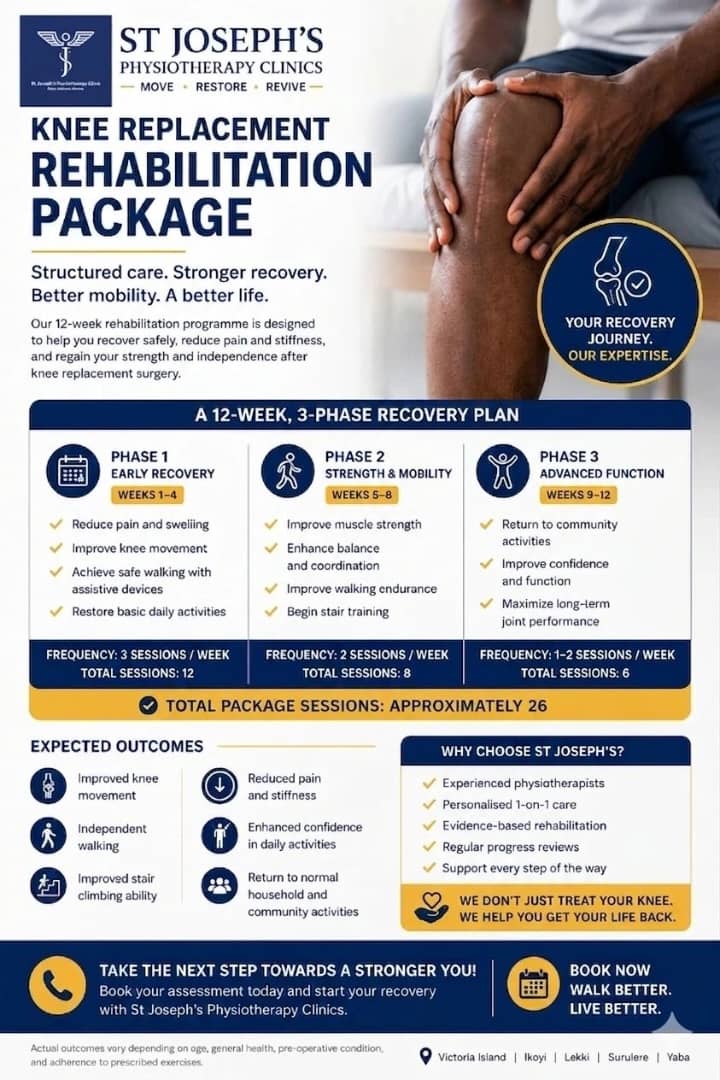
Complete Knee Replacement Rehabilitation Package in Lagos
Knee replacement surgery is a major step toward pain relief and improved mo…

NAMDA threatens strike over unpaid medical lecturers’ allowances
The Nigerian Association of Medical and Dental Academics (NAMDA) has warned…

Resident Doctors Signal End to Strike Threat After High-Level Talks with Gbajabiamila
The threat of a nationwide indefinite strike by the Nigerian Association of…