SCIENTISTS have urged Nigerians to consume locally produced foods and fruits as they contain nutrients that can serve as medicine in the body. They warned against consumption of imported food products as many of them may have been contaminated in the process of shipping them into the country.
The researchers led by a professor of pharmacognosy at the University of Nigeria Nsukka (UNN) and Chief Executive Officer of Bioresources Development Group (BDG), Prof. Maurice Iwu, validated local foods such as bitter kola, coconut oil, Zobo, bitter leaf, Moringa oleifera, tomato, Sour sop, African bush' mango (Ogbono), among others as medicines. Iwu told journalists that his team has developed dietary supplements based on these local foods for managing chronic diseases like diabetes, hypertension, prostate cancer, erectile dysfimction, Human Immuno-deficiency VIrus (HIV)/ Acquired Immune Deficiency Syndrome (AIDS), among others.
At a forum on this year's herbfest with the theme: "Food as Medicine: Utilisation and sustainable Exploitation of African Medicinal Plants and Natural Products" in Lagos, lwu said they have developed dietary supplements based on these local foods for managing chronic diseases.
According to him, "It is dangerous for you to eat any fruit not produced in Nigeria. There is no way fruits from Ghana or any other country imported into Nigeria will not be contaminated. Imported poultry are preserved with chemicals, some imported fruits when you look at their size you will know were not grown naturally and are not the best and that is why people are coming down with cancers.
lwu who noted the need for Nigeria to tap into the many benefits of herbs disclosed that a United States statistics show that global market value for herbal medicine is about $200 billion annually.
lwu also said the herb/est, billed to hold October 7 to 9, 2015, is targeted at bringing different traditional medicine practitioners and researchers together, would improve the herbal medicine sector. "We will see how much we can tap from the $200 billion global market value".
lwu explained: "It is not a new thing, the father of modem medicine, Hippocrates, said, 'let thy medicine be thy food and thy food thy medicine.' So it is a concept we are trying to revive and are trying to make it that dietary supplement is not a fad but based on solid science. "The Foundation of Innovation Medicine (FIM) has now defined what we mean as food as medicine, that is food that can be used as medicine. The term is applied to products that range from isolated nutrients, dietary supplements and herbal products, specific diets and processed foods such as cereals, soups, arid beverages.
"We call it in pharmacy, nutraceuticals, that is nutra for food and ceuticals that it treats diseases. Any substance that is considered a Iood or pat l of a food and provides medical and health benefits including the prevention and treatment of diseases, that will qualify as nutraceutical; that is a whole area we as a nation have advantage over other countries even African countries. The only countries that can compete with us are perhaps South Africa and Egypt. What it means is that we have the natural resources, we have the human resources, we have the intellectual capacity to build, we have the technological base to be able to convert these things into not only for our own help but for export and for very solid economy."

lwu said: "The China project was the first to explain this. The China-Cornell- Oxford Project was a large observational study conducted throughout the 1980s in rural China, jointly funded by Cornell University, the University of Oxford, and the government of China led by the Chinese Academy of Preventive Medicine and the Chinese Academy of Medical Sciences.
It was between 1983 and 1989. In 1983 I was in a laboratory at Oxford and that was when this project came on stream.
"The study examined the diets, life- style, and disease characteristics of Chinese, comparing the prevalence of 'disease characteristics, excluding causes of death such as accidents.
"What they did essentially, because China is large, they studied 80 million that came from 63 counties. They found out that there is a clear correlation between what you eat and your health. They also found that certain diseases werepeculiar to certain counties in China.
"But what was starling was the fact that they found that diseases also go along economic patterns. The wealthy people have their own disease and the poor people have their own disease. That was a major finding. They now have what they call diseases of affluence like the cancers, lung cancer, blood cancer, breast cancers leukaemia, diabetes, heart disease and so on. Then you have diseases of poverty that is diseases that are found predominantly among the poor like pneumonia and various infectious diseases, diseases of pregnancy rather than eclampsia and metabolic diseases and so on "But what is so bad for us as Africans and Nigerians is that the Western world afriad the China study became conscious of it, the rich in America and Europe now eat differently. They eat more natural food, more fibre and so on. But our own rich people believe that they have arrived and eat what the Whiteman no longer eat which isfood of the poor. In Nigeria if you are rich you go to MacDonald's, Mr. Biggs, Kentucky Fried Chicken and so on to: show affluence. But there the rich men in the Western world don't do that any longer.
"They' also found that the smallest in-take of meat, no matter how' small, are the thing that make people have cancers and so.on based on animal diet. They also found that the cholesterol level and urea levels where increased even with smallest intake of animal products- meat, egg and mille They also found from that study that the more plant based food you eat, the healthier the person is. They also found that there is a direct correlation between degenerative diseases like Alzheimer's, cardiac problems and so on with consumption of animal products. You will remember those of you who are not from too affiuent homes that in normal African setting the meat are used as a garnish not as a main meal. You see a whole pot of rice and they just put two lonely pieces of meat. But now it is the opposite, you see somebody have a whole lump of meat and only small portion of rice. This study shows it is a wrong approach."
Director General of the Federal Institute of Industrial Research, FIIRO, Dr. Gloria Elemo said part of the goals of herbfest is to commercialise herbal products. EIemo said FIIRO was established in 1956 to find out why Nigerian products are not commercialized and found out that it is because research findings are not commercialised. She said already, FIRRO has taken inventory of bioresouces in Nigeria and have undertaken research into some of them
Mr. Sam Oghene, Director General, Nigeria Natural Medicine Development Agency, NNMDA, explained that herfest will attract varying investors and buyers from across African region as well as from the wider market in Middle East, Europe and US: "Herbfest will showcase various herbs, health foods and natural products nom across the region. In addition to the exhibition, there will be training workshops, meetings and seminars, sandwiched with about 32 abstracts of academic papers sent from scientists in various higher institutions in Africa."
By Azoma Chikwe
Daily Sun
ABUJA: Training Schedule for Basic Life Support BLS, Pediatric Advanced Life Support (PALS), Advanced Cardiovascular Life Support ACLS, First Aid, CPR, AED
PORTHARCOURT: Training Schedule for Basic Life Support BLS, Pediatric Advanced Life Support (PALS), Advanced Cardiovascular Life Support ACLS, First Aid, CPR, AED
LAGOS: Training Schedule for Basic Life Support BLS, Pediatric Advanced Life Support (PALS), Advanced Cardiovascular Life Support ACLS, First Aid, CPR, AED
STOP paying for airtime and electricity, Let your phone pay its bills with ScreenT
You may also like
Comrade Lemii Christian Emerges Chairman of NANNM Rivers State Branch in Historic Victory
PORT HARCOURT, NIGERIA Following the long awaited National Association of N…

FG Supports Robotic Surgery Expansion to Reduce Medical Tourism
Nigeria is taking another step toward strengthening specialised healthcare …
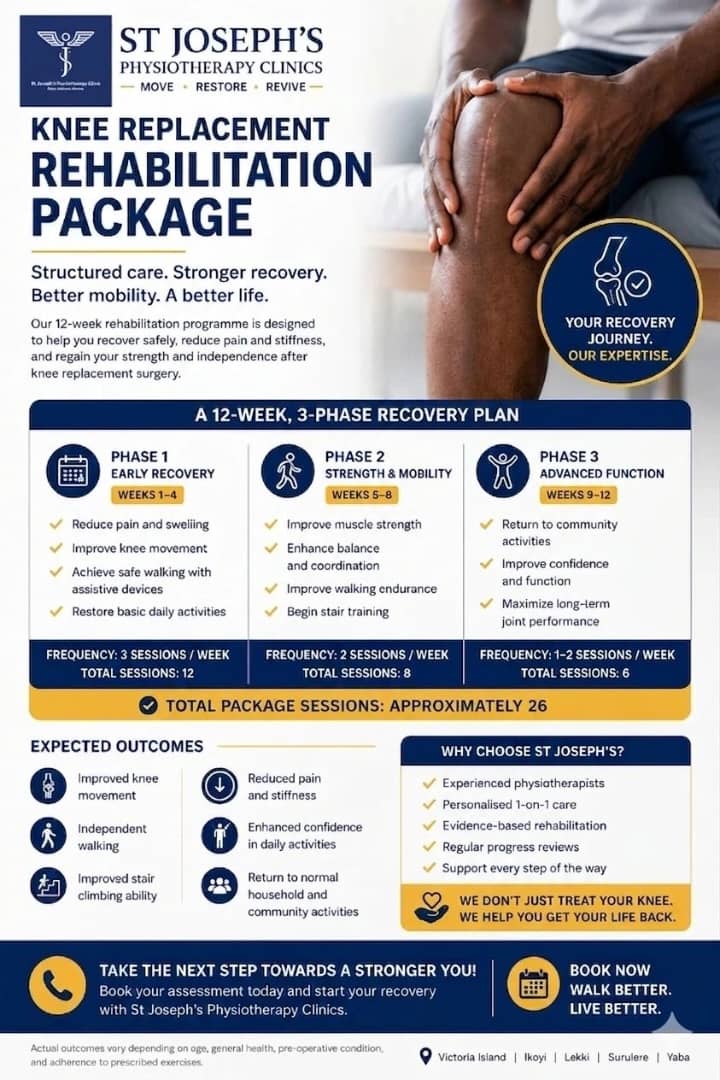
Complete Knee Replacement Rehabilitation Package in Lagos
Knee replacement surgery is a major step toward pain relief and improved mo…

NAMDA threatens strike over unpaid medical lecturers’ allowances
The Nigerian Association of Medical and Dental Academics (NAMDA) has warned…

Resident Doctors Signal End to Strike Threat After High-Level Talks with Gbajabiamila
The threat of a nationwide indefinite strike by the Nigerian Association of…
