Some Nigerian hospitals are filled with quacks, resulting in the death of several patients. Rebecca Ejifoma chronicles the tale of a victim
It was a Tuesday morning. I boarded a commercial bus heading to Sango-Ota from the ever busy Oshodi Market. As the bus kept dancing to the rhythm of the many dangerous potholes on the road, my phone rang. It was my female friend who needed help and was already at the hospital. So, I urged her to persist in seeing the doctor urgently, due to the severity of her case.
Immediately I hung up, my co-passenger on the left, Rachael Sunday – a fair skinned woman in her early 30s – excused herself.
“Sorry to intrude into your discussion. But is your sister in labour? It is good you advise her to wait for the doctor. Nurses are terrible. They have no feelings, no heart and no professionalism. They are just small girls looking for jobs.”
 Swiftly, the neighbour on my right echoed it. And, another chorused; and then another – including men. Before I knew it, it had become a discourse for everyone, while stranded in the energy-sapping heat of the still traffic.
 When I contradicted their views with positive lines, my fair skinned neighbour began to reel out her ordeal, which transpired in a private hospital in Iganmu area of Lagos in 2011. “I went visiting my family in that area with my husband’s consent, since my husband was on duty in Aba and I didn’t want to be alone,” she said.
“Four days later, I became restive. It was on a Wednesday night at 9pm or thereabouts. I screamed so silently that my two younger sisters, who came visiting, knew it was time for me to have my child.”
They crammed her bag hastily and took her to the nearest hospital, one Mosafejo Mother and Child Care Clinic. On getting to the hospital, one of her sisters walked to the front desk, but the nurse was receiving a phone call and told her to hold on. ‘Can’t you see she’s in labour?’ her sister yelled, but the nurse just asked her to sit down. Later, she came back with two other nurses.
To aggravate the pain and groaning she felt “the senior nurse among them told me to climb up the stairs and down until the child was coming out. It was my first pregnancy. So, I complied.”
According to this victim, who expressed herself more in Pidgin English, she climbed the stairs without any assistance. The nurses instructed her sisters not to touch her. She shed tears as she walked up and down the stairs.
“At a point, I halted and called the nurses that I was fatigued, that I needed the doctor. But they told me he was sleeping, that they would call him later,” she said.
“All the while I did the exercise, I saw my sisters watching me. They roared at the nurses, who were watching a Yoruba movie and laughing at the many dry jokes. At a time, they took me to a room. Immediately, my water broke. They still told me to hold on – it wasn’t time. They even gave me a towel to sit on to absorb the water. They abandoned me there with my sisters. As the towel got drenched in water, my sisters kept changing it with the towels the nurses provided. It was terrible. They did not yield to all the calls my sisters made. While I cried, my sisters began to cry, too.”
She went on: "At midnight, the nurses attended to me. They took me to the labour room, set me on a small bed and then nurses instructed a young girl (most likely an apprentice) to watch over me. Interestingly, the young girl became angry that she had been asked to stay in the room and watched over me. Not long, she slept off. I called out to her several times, but she never answered. She was just a girl. That made me really cry, coupled with the fact that I was naked in an open room.”
She narrated that it was until the next morning when another shift resumed that they attended to her. "The new nurses seemed more matured and polite. They rushed quickly to call the doctor, who was upstairs in his room. When the doctor saw me, he was unhappy with them; queried why no one came to wake him up." By then, Mrs. Sunday said she was already sapped of strength.
“I wanted to push myself. But I was in tears already. I didn’t understand what was going on with me. Still, I pushed. I pushed with all my muscle for a long time. The baby’s head came out. That was all I remembered.”
Sadly, Mrs. Sunday said the Head Doctor told her she developed eclampsia in the process. “He said I convulsed and went into coma. From the head to the chest of my baby was out. That was where my strength carried. There was no strength in me again. So, he held my baby on its chest and pulled it out with a gentle force.”
At this point, Mrs. Sunday wept. “My baby was very weak and almost dying and needed to be in an incubator, but the hospital didn’t have one. So, my mother, alongside my husband (Mr. E. Sunday), who came back early that morning, dashed to the Lagos University Teaching Hospital (LUTH) in a taxi. I was told that on getting there, LUTH said there was no space that we would have to wait on queue till it gets to our turn. That was how they took the baby from us and kept him in a room, under air conditioner.
“Unfortunately, two days later, the child gave up. That was when the doctors came out to fix some drip on him. He never entered any incubator because there was no space,” she said.
“I was only told the child is a chip off the old block – me. And that he was a tiny pink boy.”
Having heard this, passengers, including men, became irritated that they began to condemn attitude of the health workers. But there was no way this reporter could let her go without getting her contact. The reporter needed it on record with names… And she did, confirming it from her mother who visited her in Sango area of Lagos.
Some medical experts, who spoke to THISDAY, blamed an over-laboured manpower, and the government for not providing enough facilities and motivation for nurses in the country, as factors responsible for some of the unprofessional attitudes.
“When you consider the amount of services the Nigerian nurses have to do – you will see one or two nurses caring for about 30 to 40 patients at the same time. How much can they do? How much can they achieve? And that is one of the problems, which is being addressed abroad but not attended to in this country,” the Vice Chairman of the Nigeria Medical Association, Lagos Chapter, Dr. OlumuyiwaOdusote, said.
He emphasised that the health sector still has a very deficient health worker-patient ratio that puts a lot of pressure on the health worker. “And you know pressure could result in stress. And that could lead to some rash behaviour – being snappy every now and then, which may be some of the things patients are complaining about,” he said.
Although Odusote noted that employers of health workers are doing a lot to correct such attitude among nurses, he said it wasn’t something that would happen over a short period.
“There are many other factors that contribute to it: the issue of manpower and the availability of equipment to work with. That may lead to a lot of burnouts. Once you have seen too many patients, you get fatigue.”
Consequently, he maintained that the solution was multi-factorial and that a lot of publicity needed to be done. “Patients need to know beyond their rights, their responsibilities. If we do that, it will reduce the friction – because there are no rights without responsibilities,” he pointed out.
Meanwhile, on how the NMA can curb the menace of private hospitals employing quacks as nurses, who prescribe drugs and inject patients and help pregnant women deliver babies in their homes among others, he said it was being taken care of.
“That is true. That happens. And that has been identified by the government. I am aware that the Monitoring Team of the Lagos State Government goes about hospitals to ensure that that does not occur. Any doctor found wanting pays fine heavily.”
On the alleged ill treatment of babies at Lagos University Teaching Hospital, THISDAY spoke with the former Chairperson, Lagos State Primary Healthcare Board, Dr. Olayinka Akanke Abosede, who stood against the allegations.
“That is not true. I was there when the matron said the only two empty incubators were faulty. We refer them to the outreach centre in Festac,” she said. “There are a lot of incubators now that are functional at the maternal unit at LUTH. But LUTH cannot take all the babies because it can only use incubators that are functioning.
"At least, I saw a lot of babies in the incubator being treated. One of them, a member from the community here, just linked me up with the mother that before admission was going to LUTH. That baby was already in the incubator. They didn’t have oxygen but I saw the oxygen supply as I was coming in, and the matron told me that they have supplied it and all the babies, who need it, are already on oxygen. There are certain problems. I know. But I know so many babies that were being taken care of in the incubator. It is just that we don’t have adequate incubators in Lagos State. It is a problem of the system – not just LUTH.”
Proffering a panacea to the unholy attitude from the nurses and improve health centres across the country, the NMA Chairman, Dr. Tope Ojo told THISDAY that the earlier the government paid its dues, the better for everyone.
By: This Day News
ABUJA: Training Schedule for Basic Life Support BLS, Pediatric Advanced Life Support (PALS), Advanced Cardiovascular Life Support ACLS, First Aid, CPR, AED
PORTHARCOURT: Training Schedule for Basic Life Support BLS, Pediatric Advanced Life Support (PALS), Advanced Cardiovascular Life Support ACLS, First Aid, CPR, AED
LAGOS: Training Schedule for Basic Life Support BLS, Pediatric Advanced Life Support (PALS), Advanced Cardiovascular Life Support ACLS, First Aid, CPR, AED
STOP paying for airtime and electricity, Let your phone pay its bills with ScreenT
You may also like
Comrade Lemii Christian Emerges Chairman of NANNM Rivers State Branch in Historic Victory
PORT HARCOURT, NIGERIA Following the long awaited National Association of N…

FG Supports Robotic Surgery Expansion to Reduce Medical Tourism
Nigeria is taking another step toward strengthening specialised healthcare …
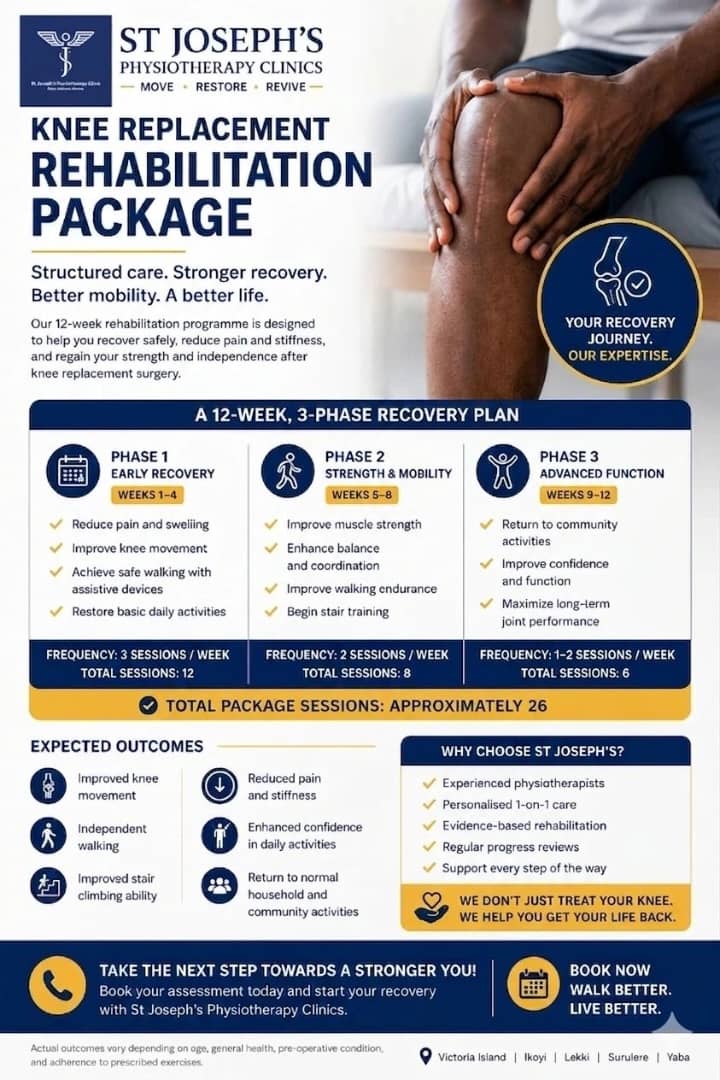
Complete Knee Replacement Rehabilitation Package in Lagos
Knee replacement surgery is a major step toward pain relief and improved mo…

NAMDA threatens strike over unpaid medical lecturers’ allowances
The Nigerian Association of Medical and Dental Academics (NAMDA) has warned…

Resident Doctors Signal End to Strike Threat After High-Level Talks with Gbajabiamila
The threat of a nationwide indefinite strike by the Nigerian Association of…