The standard practice in most private hospitals is to ask pregnant patients that need blood transfusion to pay for blood and some hospitals charge as much as N17,000 per pint of blood. What could be the fate of women whose family cannot afford to pay for blood?
We have so many private laboratories around where people can get access to blood but most of these facilities use touts. There are some facilities out there that go through the normal process; they go through the state government.
There is a Lagos State Blood Transfusion Agency where you can get blood. Of course there are some private laboratoriess that are affiliated to them. The private labs can also go there, do their screening because this blood needs to be screened. Blood is screened for common blood-borne diseases and blood borne infections like HIV, hepatitis, syphilis and so on.
So they have to be screened and of course the lab belonging to the Lagos State Government is licensed to do so. All the private labs are affiliated to them.
But there are also some other labs that patronise blood touts. Largely there was a time in public hospitals that blood touts come around to donate blood for monetary benefit but but they’ve been completely eliminated now. So when they come, you can imagine when someone comes and donates blood and they are expecting you to pay N5,000 or N10,000.
So, the patient that will use the blood but is not ready to donate blood, has to pay because you have to give the money to the person that is donating the blood which is not encouraged because it is not ethical.
 Ethically, if you are going to voluntarily donate any part of any human cells you are not supposed to charge for it. If I’m giving someone my blood ethically I’m not supposed to charge any money but because of poverty we have so many blood touts around. They go to private laboratories, donate their blood and expect some monetary compensation in return.
 So when hospitals patronise all these private labs, of course they have to pay for the blood. Some pay up to N15,000 and N20,000 and hospitals too would want to make some profits while attending to patients. So, basically the cycle continues like. Of course, we don’t have any comprehensive health insurance in Nigeria; people pay out-of-pocket. The patient becomes the person to bear the brunt at the end of the day.
How do we tackle this problem without people really coming out to donate voluntarily? Most pregnant women who access care in private hospitals are required to pay before blood is transfused on them and many that cannot pay have lost their lives. What is your take on this?
The government has a very big role to play here, especially in the area of blood transmission.
What can government do?
It is to educate the public. Let everyone know the importance of voluntary blood donation. In fact, people that donate blood live healthier lives. When you donate blood you challenge your bone marrow because your bone marrow rapidly produces another one.
You can actually donate blood every six months without any problem. So, the government needs to educate the general public on the importance of blood donation. Let them know there is really no danger in donating blood. There are some cultural beliefs that the government needs to address through some government agencies like the National orientation Agency (NOA).
We can have a situation where people can go to the villages and sensitise members of the public on the importance of blood donation and let them know there is really no problem about donating blood. Unless people are ready to donate blood voluntarily there will always be scarcity of blood in the country.
The Lagos State Government sometimes issues a statement warning the public and health facilities to desist from buying blood from unauthorised sources. Are there outlets that procure blood through unethical means?
Like I have told you there are some outlets that can do that. Even the so called Lagos State Government logo the Lagos State Blood Transmission logo is being produced. There are fakes all over the place because of corruption in the country. Ideally all labs that are in Lagos State that deal in blood should be affiliated to Lagos State Blood Transfusion Services but some dubiously are not doing that.
If there are dubious outlets like that what are the problems that can arise?
The problem that can arise is that some people don’t screen the blood very well. Some of the blood from dubious channels are contaminated. They contain HIV and hepatitis and the unsuspecting members of the public who go to these facilities to get blood they unknowingly transfuse with contaminated blood and the person could get infected with various types of diseases. So, that’s the problem. If we don’t put a checks and balances there will be problems.
Blood is human tissue there should be strict regulation with how it is handled because it is still mostly applied in Nigeria that is why a lot of people get to live with it. We have the agency that should be in charge of the regulation but are they really doing the work?
The agency that should be in charge of that is the Lagos State Blood Transmission Services. Of course they are supposed to be the only licensed body to handle blood and every other facility goes there except in a tertiary hospital where they collect blood from our patients and do the screening. But for private facilities they are supposed to go to Lagos state blood transmission services.
Are there people who get blood transfusion and later come down with infections?
Of course there are situations when people get transfused and get down with infection. It is well documented even in the hospitals though not common but it happens and it’s a big problem.
It is still a problem in Nigeria that government needs to tackle. If it’s not tackled now of course we are going to have a situation where we are going to see outbreak of blood infection because people just throw caution to the wind and start collecting blood from anybody without screening.
Is this a common problem?
It is not a common problem but it happens. Although, we may say it is not common but it is until it personally or indirectly affects you that you will know this is a big problem. It is still a problem in Nigeria that government needs to tackle.
What are the advices you can give to our pregnant women on how they can help themselves?
The moment a woman misses her period and finds out that she is pregnant through a pregnancy test and she is able to confirm that through ultra sound I advise that the woman should register for antenatal clinic early.
How early?
The recommendation is that once it’s after three months you can register. Three months to us as obstrician is thirteen weeks so by thirteen weeks a women should have registered.
We encourage the women to register within thirteen weeks of their pregnancy so that if there is going to be problem, there are some pregnancies that are categorised as high risk, some provisions would have been made by obtrusician or healthcare provider to arrest such condition that may arise, so, encourage the women to register as early as possible, it mustn’t have to be Teaching hospital because Teaching hospitals provide highly specialised form of care we are supposed to manage only high risk pregnancy, they can be referred to other facility through a referral system. We don’t follow an organised structure anymore, anybody can come from anywhere and we take such.
By: Appolonia Adeyemi
New Telegraph News
ABUJA: Training Schedule for Basic Life Support BLS, Pediatric Advanced Life Support (PALS), Advanced Cardiovascular Life Support ACLS, First Aid, CPR, AED
PORTHARCOURT: Training Schedule for Basic Life Support BLS, Pediatric Advanced Life Support (PALS), Advanced Cardiovascular Life Support ACLS, First Aid, CPR, AED
LAGOS: Training Schedule for Basic Life Support BLS, Pediatric Advanced Life Support (PALS), Advanced Cardiovascular Life Support ACLS, First Aid, CPR, AED
STOP paying for airtime and electricity, Let your phone pay its bills with ScreenT
You may also like
Comrade Lemii Christian Emerges Chairman of NANNM Rivers State Branch in Historic Victory
PORT HARCOURT, NIGERIA Following the long awaited National Association of N…

FG Supports Robotic Surgery Expansion to Reduce Medical Tourism
Nigeria is taking another step toward strengthening specialised healthcare …
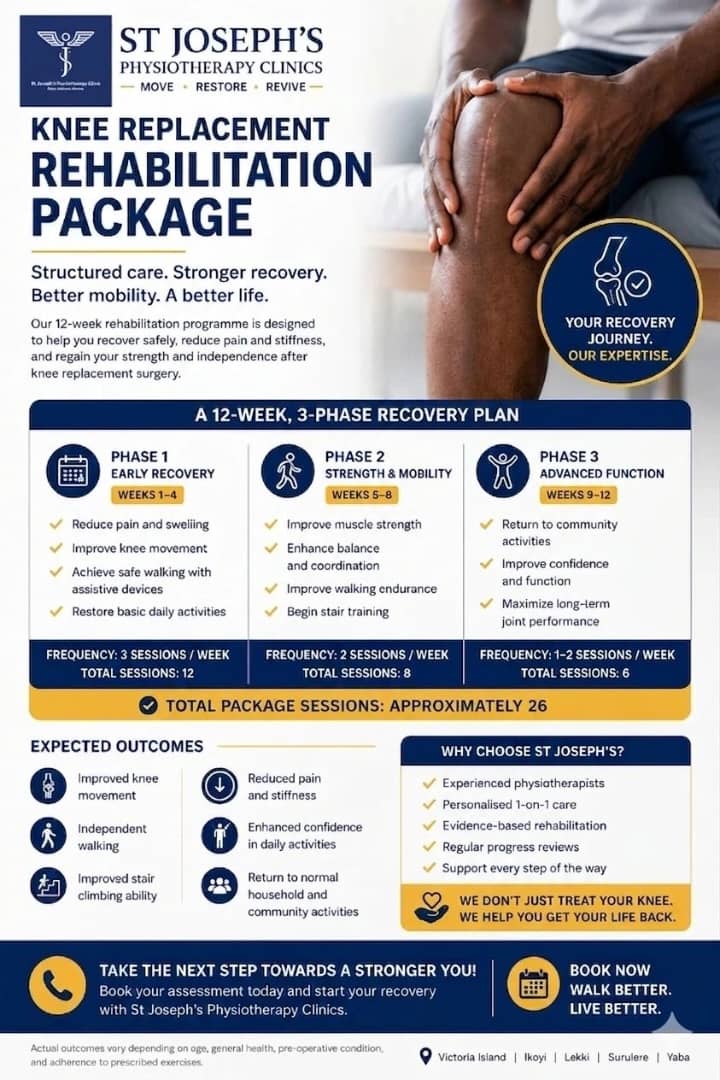
Complete Knee Replacement Rehabilitation Package in Lagos
Knee replacement surgery is a major step toward pain relief and improved mo…

NAMDA threatens strike over unpaid medical lecturers’ allowances
The Nigerian Association of Medical and Dental Academics (NAMDA) has warned…

Resident Doctors Signal End to Strike Threat After High-Level Talks with Gbajabiamila
The threat of a nationwide indefinite strike by the Nigerian Association of…