How will you define infertility? Infertility as a disease condition is defined as the inability of a couple to achieve pregnancy after having unprotected regular intercourse for twelve calendar months. So, if a couple is living together and they are having regular intercourse of at least three times a week for 12 months and there is no pregnancy, then, such a couple is said to be infertile. Infertility can be primary or secondary. In a couple that has achieved conception before, you refer to it as secondary infertility. But in couple that has never had any conception before, it is primary infertility. For example, if a woman has never had a baby before and she has been trying with her husband to get pregnancy and she cannot get it, you define that as primary infertility. Then, you call it secondary if there has been a prior pregnancy. That is just the difference. What could make a couple or someone who has got a child to find it difficult to bear children again? That refers to secondary infertility. There are two types of factors responsible for it. It can be male-factor infertility; it can be female-factor infertility. We talk of the male factor infertility, where the man can have problem with the sperm count. If the sperm count is low, it may lead to inability of the man to impregnate his wife. Again, if the sperm count is normal but the quality of sperm being produced is abnormal, that can also account for male-factor infertility.
What are the factors that can cause poor quality sperm? Infections like gonorrhoea, syphilis, then, trauma; if a man has had any trauma in his testicles or surgeries to his testicles or radiation of chemicals. For instance, if there is a leak of radiative materials, that can lead to low sperm count or poor quality sperm. That is male-factor infertility. Then, the female factor: there are three levels. It can be at the level of ovulation which means the woman is not releasing eggs. It can be at the level of the fallopian tube. If a woman’s fallopian tubes are blocked, that can lead to secondary infertility. Then, at the level of the uterus, if a woman is not menstruating, it is unlikely she conceives. Those are the three levels of secondary infertility you can have in a woman.
What can cause this? The commonest cause of secondary infertility in sub-Saharan Africa in women is infection. Infection can be sexually transmitted; it can follow abortion. If a woman has had abortion and the abortion was complicated or the abortion was infected, that can spread the infection to her womb and the fallopian tube and it can block the tube. That can lead to secondary infertility. Again, after childbirth, if a woman delivers her baby in an environment that is unhygienic, she can have infection after delivery. That can spread up into her womb, into her fallopian tubes, into the peritoneum, and it can lead to secondary infertility. Also, if a woman has what is called severe post-partum haemorrhage after delivery, she may bleed to the extent that the bleeding can lead to what is called necrosis of the pituitary gland which is in the brain. And, the pituitary gland being in the brain is responsible for the release of certain hormones or signals called follicle-stimulating hormones. These hormones are responsible for stimulation of follicular development of the woman’s ovaries. So, severe postpartum haemorrhage or bleeding after delivery by a woman can also contribute to secondary infertility. These are the major causes of secondary infertility in women in sub-Saharan Africa.
How prevalent is infertility among couples in Nigeria? The prevalence actually varies across geographical or geo-political zones to another one. For instance, in the geo-political zones where maternal mortality and morbidity is high, like in the North-East and North-West, maternal mortality is high in the far North because women don’t access antenatal care and some of them deliver at home; that may lead to infection after delivery. But, at least, of every ten couples, about three to five may have infertility.
 There have been instances where couples have challenges with infertility suddenly got issues after long years of marriage. What is responsible for this? There are two ways they can get a baby. One of the ways is IVF, the In-Vitro Fertilization. IVF essentially means that a woman or a couple that cannot achieve pregnancy naturally goes to see a doctor and they are given some medications. The woman is given some medications, her egg is harvested; the man’s sperm is also collected. The egg and sperm are fertilized in a test-tube and the embryo that results from that fertilization is incubated; it is put into an incubator until the embryo develops into 16-cell stage. Then, the embryo is transferred into the womb of the woman; a womb that has already been primed with some medications will accept the transfer. That is what we call In-Vitro Fertilization. The success rate of In Vitro Fertilization is about 35 percent, even in the best of centres, it is about 35 percent. This means if ten couples go for IVF, only about three to four will achieve success. That is one of the ways people who have been battling with the problems of infertility for years can achieve their desire to get a baby. We’ve also heard of miracle babies, cases that are rampant in the South-East and South- South Nigeria. What happens essentially is that the couples look for a willing girl that would carry a baby and they buy the baby. That practice is illegal. So, somebody will carry the baby (in her womb) and the couple will buy the baby and they say it is a miracle baby. But, scientifically, pregnancy can be achieved from IVF.
 Is it possible that intending couple go for fertility test before marriage? It is possible. But, if you look at the definition of infertility, it says that if a couple living together, having regular, unprotected intercourse for 12 calendar months cannot achieve a pregnancy, then, one can say there is infertility. So, people intending to marry, you cannot tell them to go for fertility test unless if they have been co-habiting for at least 12 calendar months and there is no pregnancy. I don’t think it is all culture or all religion that allow for pre-marital sex.
What is your opinion on permanent family planning; as we’ve seen instances where couples with children have to look for babies again perhaps for reasons such as death of children among others? Yes, permanent family planning means in a woman, you do bilateral tuber ligation. That is permanent, irreversible family planning for a woman. Usually, there are certain criteria that should be met before you offer a woman permanent family planning. One of the criteria is that the woman should be 40 years and above. We usually don’t offer it to a woman that is under 40 years of age. Of course, the woman should have discussed with her husband and she should have at least three or four children. So, unless a woman has met these criteria, it is unlikely that any doctor will offer her BTL. For those that have BTL, it is irreversible because if you have to reverse it, you have to take the woman to the theatre and rework her fallopian tube. And, the success rate after such a surgery is not so encouraging. I don’t advise any woman that is under 40 years or any woman who still desires to have children in the future to go for BTL,
What are lifestyle practices that can enhance fertility? One of the lifestyle changes that we advise, especially for the men folk is that they should stop drinking alcohol. They should also stop smoking. Even for the women, alcohol consumption, cigarette smoking has been scientifically proven to affect fertility negatively. In the men, it can lead to decrease sexual performance; it can also lead to decrease sperm count. In the women, it can lead to decrease ovulation and it can also affect, even if they do get pregnant, the pregnancy to get to nine months; meaning that they can have miscarriage. We advise them to avoid alcohol, abuse of substances such as heroin, cocaine and all other drugs that affect fertility negatively. Then, weight; people that are overweight tend to have problem with fertility. A couple that is intending to achieve pregnancy should be advised to go on diet that will make sure that their weight is within normal.
How can we treat infertility? The treatment essentially depends on the cause. If it is due to male factor, for instance, low sperm count or poor quality sperm, there are medications that the man will take to improve the quality of the sperm and the quantity of the sperm; that is, the sperm count. For the woman, it also depends on the causes. If it is ovulatory infertility, which means the woman is not ovulating, you give her drug that will make her to ovulate. If it is tubal factor infertility, meaning that the woman’s fallopian tubes are blocked, she can either do surgery to unblock the fallopian tubes or the woman can go for IVF. And, if the woman is not menstruating properly, you can also give her drugs to regulate the menstruation. So, essentially, the treatment depends on the cause.
When is fertility at its peak in both men and women? In women, fertility is at its peak between the ages of 18 and 25 years of age. For men, it is also at its peak between 18 and 40 years of age. My advice is that as much as possible, people should start their family early. I prefer people to marry when their fertility is still at its peak. But, today, people delay child bearing because of career. You find out that the problem is more now than in the past because people tend to delay family because of career. So, the earlier the better.
By: Marcus Fatunmole
National Mirror News
ABUJA: Training Schedule for Basic Life Support BLS, Pediatric Advanced Life Support (PALS), Advanced Cardiovascular Life Support ACLS, First Aid, CPR, AED
PORTHARCOURT: Training Schedule for Basic Life Support BLS, Pediatric Advanced Life Support (PALS), Advanced Cardiovascular Life Support ACLS, First Aid, CPR, AED
LAGOS: Training Schedule for Basic Life Support BLS, Pediatric Advanced Life Support (PALS), Advanced Cardiovascular Life Support ACLS, First Aid, CPR, AED
STOP paying for airtime and electricity, Let your phone pay its bills with ScreenT
You may also like

Comrade Lemii Christian Emerges Chairman of NANNM Rivers State Branch in Historic Victory
PORT HARCOURT, NIGERIA Following the long awaited National Association of N…

FG Supports Robotic Surgery Expansion to Reduce Medical Tourism
Nigeria is taking another step toward strengthening specialised healthcare …
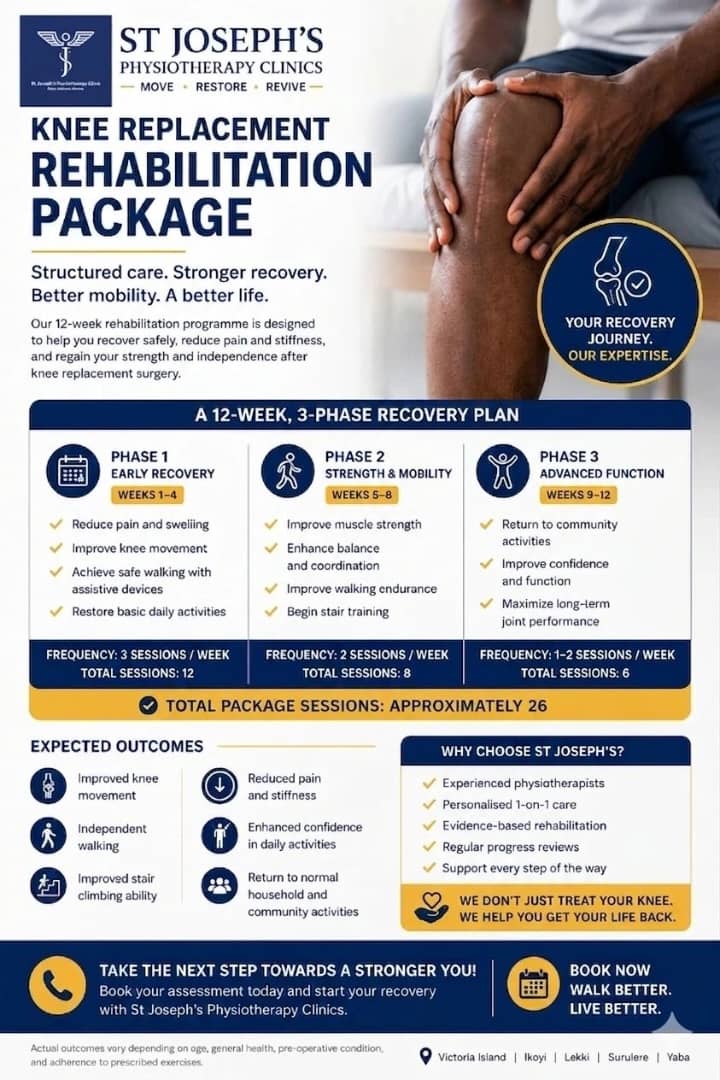
Complete Knee Replacement Rehabilitation Package in Lagos
Knee replacement surgery is a major step toward pain relief and improved mo…

NAMDA threatens strike over unpaid medical lecturers’ allowances
The Nigerian Association of Medical and Dental Academics (NAMDA) has warned…

Resident Doctors Signal End to Strike Threat After High-Level Talks with Gbajabiamila
The threat of a nationwide indefinite strike by the Nigerian Association of…
