With the largest funding gap in malaria elimination in Africa, Nigeria currently faces a financial gap of N504 billion ($1.4 billion) to implement its national malaria strategy by 2020, according to new data from the 2017 World Malaria Report, a publication by the World Health Organization (WHO) presented at the ongoing African Union Summit in Addis Ababa, Ethiopia.
In addition to constituting 27 percent of malaria cases worldwide, out of 30 African countries analysed in the report, Nigeria alone accounts for 53 percent of the $1.3 billion funding gap for essential commodities that include 76 percent of the funding gap in Artemisinin Combination Therapy (ACT) and 86 percent of the funding gap for Rapid Diagnostic Test kits (RDTs).
At a high level briefing attended by senior health, finance and foreign affairs officials from across the continent, it was revealed that for the first time in more than a decade progress against malaria across Africa, which accounts for 90 percent of the global burden, has stalled.
Malaria alone is estimated to rob the continent of $12 billion per year in lost productivity, investment and associated health care costs.
According to the World Malaria Report 2017, progress across Africa has been uneven, putting at risk the tremendous progress to-date and African leaders’ collective ambition to end the disease. While some African countries have seen a greater than 20 percent increase in malaria cases and deaths since 2016, others are showing that beating malaria is possible.
African leaders have been urged to renew their commitment, and urgently step up domestic funding and strengthen instruments to attain a malaria-free Africa by 2030.
Chairperson of the African Union Commission, Moussa Faki Mahamat, said malaria alone is estimated to rob the continent of US$12 billion per year in lost productivity, investment and associated health care costs.
“It is therefore critical that we sustain the political commitment, as articulated in our continental Agenda 2063, to eliminate malaria in Africa by 2030 through increased domestic financing, increased access to life-saving malaria interventions, as well as more robust health systems.”
According to CEO of the RBM Partnership to End Malaria, Dr Kesete Admasu, “African countries are at greatest risk of losing the significant gains made over a decade and must renew efforts to make fighting malaria a priority. Domestic funding needs to be urgently stepped up. These investments — only a fraction of what African nations will save if we succeed in eliminating malaria — will pay off, in millions more lives saved, health systems strengthened, economies grown and the world back on track to end this disease.”
Malaria already costs the African continent’s economy US$ 12 billion per year in direct losses, and 1.3 percent of lost annual GDP growth, an earlier report by the RBM Partnership, Action and Investment to defeat Malaria, has shown.
“In 2016, just 15 countries carried most of the global malaria burden, together accounting for 80 percent of all malaria cases and deaths. All but one of these countries are in Africa,” said Dr Pedro Alonso, Director of the WHO Global Malaria Programme.
“The report sends a clear warning that we have stopped making progress and that, without urgent action, we risk going backwards.” WHO used the occasion to launch a World Malaria Report 2017 mobile app that provides, at the swipe of a finger, the latest information on malaria policies, financing, interventions and burden in 91 endemic countries.
By: Sola Ogundipe
Vanguard News
ABUJA: Training Schedule for Basic Life Support BLS, Pediatric Advanced Life Support (PALS), Advanced Cardiovascular Life Support ACLS, First Aid, CPR, AED
PORTHARCOURT: Training Schedule for Basic Life Support BLS, Pediatric Advanced Life Support (PALS), Advanced Cardiovascular Life Support ACLS, First Aid, CPR, AED
LAGOS: Training Schedule for Basic Life Support BLS, Pediatric Advanced Life Support (PALS), Advanced Cardiovascular Life Support ACLS, First Aid, CPR, AED
STOP paying for airtime and electricity, Let your phone pay its bills with ScreenT
You may also like

FG Supports Robotic Surgery Expansion to Reduce Medical Tourism
Nigeria is taking another step toward strengthening specialised healthcare …
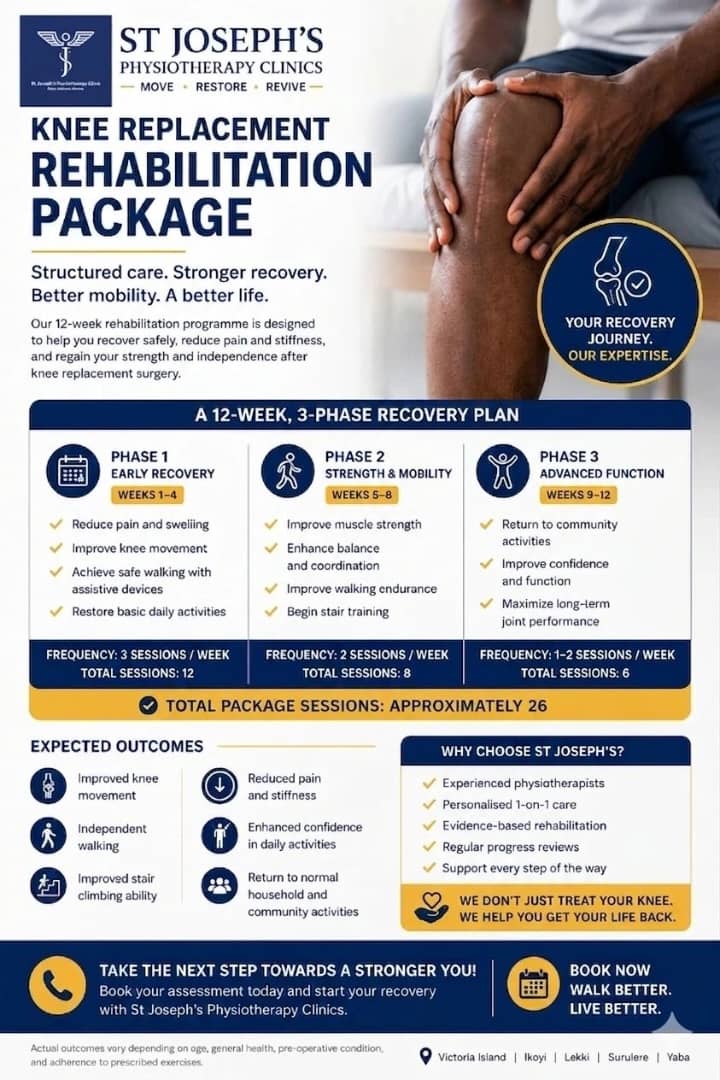
Complete Knee Replacement Rehabilitation Package in Lagos
Knee replacement surgery is a major step toward pain relief and improved mo…

NAMDA threatens strike over unpaid medical lecturers’ allowances
The Nigerian Association of Medical and Dental Academics (NAMDA) has warned…

Resident Doctors Signal End to Strike Threat After High-Level Talks with Gbajabiamila
The threat of a nationwide indefinite strike by the Nigerian Association of…
AMLSN Issues Strong Rejoinder to NAMDA on Public Service Establishment Matters
The Association of Medical Laboratory Scientists of Nigeria (AMLSN) has rel…