Malaria fever is ravaging states across the country as hospitals and health centres are being overwhelmed by thousands of patients daily, Daily Trust investigations have shown.
Reports from the states revealed that dozens have been killed by the epidemic. Many patients now resort to herbal medicine due to their poor financial state or congestion in the public health facilities.
A professor of paediatrics and child health and director Centre for Malaria Care, University of Ilorin Teaching Hospital, Olugbenga A. Mokuolu said Nigeriapresently accounted for one third of global malaria deaths.
The disease is also responsible for one-fourth of all infant-related deaths, and one third of deaths in children less than five years.

The Coordinator of the National Malaria Elimination Program, Federal Ministry of Health, Dr Audu Bala Mohammed, said the disease accounted for most of the burden of diseases and deaths among children under five and pregnant women.
It also takes a toll on the economy as almost 50 percent visits to health facilities are for malaria diagnosis and treatment, he said.
Kaduna hospitals overwhelmed
Thousands of patients daily besiege Kaduna hospitals as a result of the epidemic, the state commissioner of health Dr. Paul Dogo said.
Dogo said the Yusuf Danstoho Hospital in Tudun Wada, Kaduna has the highest number of reported cases of malaria.
“In the space of three days, 2,500 patients reported to Yusuf Dantsoho Hospital while children constitute 1,500 of the malaria patients,” he said.
The state government had launched a free anti-malaria treatment for all residents who desire treatment in public hospitals.
Our reporter who visited some health facilities including government, private and patent medicine stores observed a high influx of patients with cases of typhoid and malaria fever.
Dozens killed in Sokoto
In Gandu area of Sokoto North Local Government area where there was reported outbreak of malaria, 190 cases of the disease were confirmed at the Primary Health Centre in the locality.
The initial reports from the area put the number of deaths at 48, but Permanent Secretary, Sokoto State Ministry of Health, Alhaji Almustapha Othman said only five malaria related deaths were recorded at the centre within the last one month.
The state commissioner of health, Dr. Balarabe Shehu Kakale said a total of 3.6 million doses of anti-malaria drugs would be administered on the people in the state in the next four weeks.
Some patients take to herbal drugs in Kano
For the past three months people have been battling malaria in the state resulting to massive visits to health facilities. The resistance of orthodox drugs by the ravaging malaria fever forced many to resort to herbal treatment.
Residents now use mango, guava, lemon, pawpaw and neem leaves to treat their fever, it was learnt.
However, as some of the patients resorted to this measures, others opted to use of eggs, milk and lemon mixture as medication.
Our reporter gathered that because of the mass usage of the leaves and grasses for treating the fever, some enterprising youths have started hawking them at junctions and roundabouts across the state metropolis.
Malama Ladidi Habu of Bachirawa quarters in Kano metropolis died after suffering from fever for just a day.
One of her relations, Abdullahi Muhammad said: “The deceased died at home because we don’t have money to take her to hospital. We cannot afford to settle their hospital bills not to talk of buying the prescribed drugs. She complained to me about her condition but to be honest I don’t have the means to take her to hospital.”
He said the deceased, a mother of five, lost her husband a long time ago.
Malam Abdullahi Muhammad, a resident of Kawo in Nassarawa local government said his daughters, including the married ones, suffered malaria fever but that they resorted to traditional medicine.
A worker in a private company in Kano Audu Adamu, said most of the workers who had malaria in his organization used the herbal treatment inside the company.
“I resorted to herbal treatment because I have no money to go to the hospital,” Sufyan Usman said.
Binta Muhammad, a mother who took her child to Murtala Muhammad Hospital, said she suffered a lot before her son was attended by doctors.
Hafsat Ibrahim said when she visited a patent medicine store, patients were being put on drips while lying on mats. “The situation is frightening. You need to see how people were sleeping on the floor waiting for their turn to see the nurse that owned the medicine store,” she said.
Kano state government in its efforts to control the situation had procured malaria drugs worth N48 million and distributed same to various healthcare facilities across the state.
300,000 affected in Adamawa
More than 300,000 people have suffered from malaria infection this year, the Program Manager, Malaria Control Program, Isaac Kadala has said.
He said the infection this year surpassed the annual average of 300,000.
He explained that although infection had increased, number of death reduced significantly due to availability of effective drugs.
Malaria epidemic in Katsina
In Katsina, there have been several reported cases of a new trend of malaria epidemic ravaging the state with many losing their lives, Daily Trust gathered.
Some health personnel at both government and private hospitals told our reporter that out of every 10 emergency cases that turned up at the hospitals six had to do with severe malaria attack.
A visit to police compound comprehensive health centre reveals many patients and care givers on queue trying to get medical attention.
A resident Zaharadeen Umar said a neighbour’s daughter who came down with malaria was rushed to the hospital and pronounced dead the next day.
Another resident, Abdullahi Mohammed said no fewer than four women in their area were rushed to hospitals over the severe malaria cases.
Speaking on the issue, the state chairman of Nigeria Medical Association Dr. Suleiman Usman said the rate of malaria cases in the state was alarming.
On his part, the Permanent secretary Ministry of Health Dr Kabir Mustapha said government and its malaria development partners were deeply concerned over the high cases of malaria being reported across the state.
“Well you see there is nothing one can do but just to push more drugs to the hospital, and to encourage people to go to hospital,” he said.
1,687 malaria cases in Kogi
In Kogi State, many patients brought down by the rising scourge of malaria in recent times, have overwhelmed health officials both at the public and private hospitals while others resorted to pharmacists/drug stores for medical attention.
The Chief Resident of Family Medicine Department at the Federal Medical Centre, Lokoja, Dr Chinenye Otorkpa, said almost half of the patients’ population that usually visited the Out Patient Department (OPD) of the hospital “come complaining of sickness with symptoms that suggest malaria fever.”
She said the hospital’s medical record indicates that a total of 1,687 new malaria cases were recorded between January and August 2016, with the month of August having the highest figures of 375.
Malaria fever surges in Bauchi
Cases of Malaria in Bauchi State have recently increased according to findings.
According to our reporter who visited one of the Primary Healthcare Centres (PHCs) located at Bauchi State Low Cost Housing, admission of patients suffering from Malaria has risen more than what has been witnessed few months ago.
A health officer at the facility, Almustapha Ibrahim informed our reporter that at present, there were cases of almost whole families being admitted with Malaria cases.
He said that cases of Cerebral Malaria had also been on the rise as some patients on admission showed signs of the disease even before diagnosis.
He said that four patients had died at the facility in less than a month, as they were all brought when the disease had already weakened and affected them a lot.
Patients treat malaria with cotton leaves in Yobe
Our correspondent who went round hospitals in Damaturu and some liberated communities reported that large number of people, mostly women, children and the old battle with the scourge.
A staff at General Hospital Buni Yadi, told Daily trust that on average, they received 70 malaria patients daily and majority of them could not afford simple medication or drugs.
He said most of the parents stayed back home to treat themselves traditionally.
Baba gajere, a returnee in Buni yadi, said he spent N10, 000 to treat his malaria at Afuwa Private Clinic in Buni Yadi.
Gajere said that most people in the town were using cotton leaves, malt drinks and roots of cassia tora to treat malaria and replenish their blood.
In Potiskum, the hospital secretary, said on the average, they received 150 malaria patients everyday but government had been doing enough in providing free treatment to children between 0 -5 year old.
Patients everywhere but no doctors in Jigawa
In Jigawa, the General Hospital Dutse was over crowded as accident and emergency wards were filled to the brim with malaria patients.
Patients were also seen lying down on the floors and benches while others were on queue waiting to be attended at the accident and emergency ward by the nurses.
When Daily Trust visited the hospital at the weekend no doctor was on ground but nurses and other auxiliary health workers were seen attending to patients.
A patient’s relative at the hospital, Sagiru Muhammed from Duru village in Dutse local government area, said they were in the hospital since morning but could not be admitted because of lack of space.
Poor funding aids malaria crisis in Gombe
In Gombe State, there are widespread cases of malaria, checks by Daily Trust revealed.
At the Federal Teaching Hospital, Gombe a staff at the General Out Patient Department who crave for anonymity, disclosed to our correspondent that over 100 patients turned up for malaria related cases daily.
Also scores of others are receiving treatments at home, Daily Trust learnt.
In densely populated areas of the metropolis, the malaria is more endemic.
It was gathered that in the past the malaria was controlled by the World Bank funded project, Malaria Booster Project.
However, since the project ended in 2013, a Roll Back Malaria (RBM) funded by the state government replaced it but it failed to continue with the programme, hence the high cases of the endemic this year.
The Project Manager of the RBM in the state, Alhaji Mohammed Baba Gana, said the agency was waiting for the release of fund by the state government to enable it control the malaria endemic effectively.
Additional reporting by Rakiya A. Muhammed (Sokoto), Haruna Gimba Yaya (Gombe), Balarabe Alkassim (Bauchi), Itodo Daniel Sule (Lokoja), Kabiru R. Anwar (Yola), Hamisu Kabir Matazu (Yobe), Dickson Adama (Uyo), Usman A. Bello (Benin), Emma Elekwa (Awka), Shehu Umar (Gusau), Ismail Adebayo (Birnin Kebbi), Ojoma Akor & Olayemi John-Mensah (Abuja)
Source:
By Nuruddeen M. Abdallah, Christiana T. Alabi (Kaduna), Yushau A. Ibrahim (Kano), Aliyu Hamagam (Dutse)
The Daily Trust News
ABUJA: Training Schedule for Basic Life Support BLS, Pediatric Advanced Life Support (PALS), Advanced Cardiovascular Life Support ACLS, First Aid, CPR, AED
PORTHARCOURT: Training Schedule for Basic Life Support BLS, Pediatric Advanced Life Support (PALS), Advanced Cardiovascular Life Support ACLS, First Aid, CPR, AED
LAGOS: Training Schedule for Basic Life Support BLS, Pediatric Advanced Life Support (PALS), Advanced Cardiovascular Life Support ACLS, First Aid, CPR, AED
STOP paying for airtime and electricity, Let your phone pay its bills with ScreenT
You may also like
Comrade Lemii Christian Emerges Chairman of NANNM Rivers State Branch in Historic Victory
PORT HARCOURT, NIGERIA Following the long awaited National Association of N…

FG Supports Robotic Surgery Expansion to Reduce Medical Tourism
Nigeria is taking another step toward strengthening specialised healthcare …
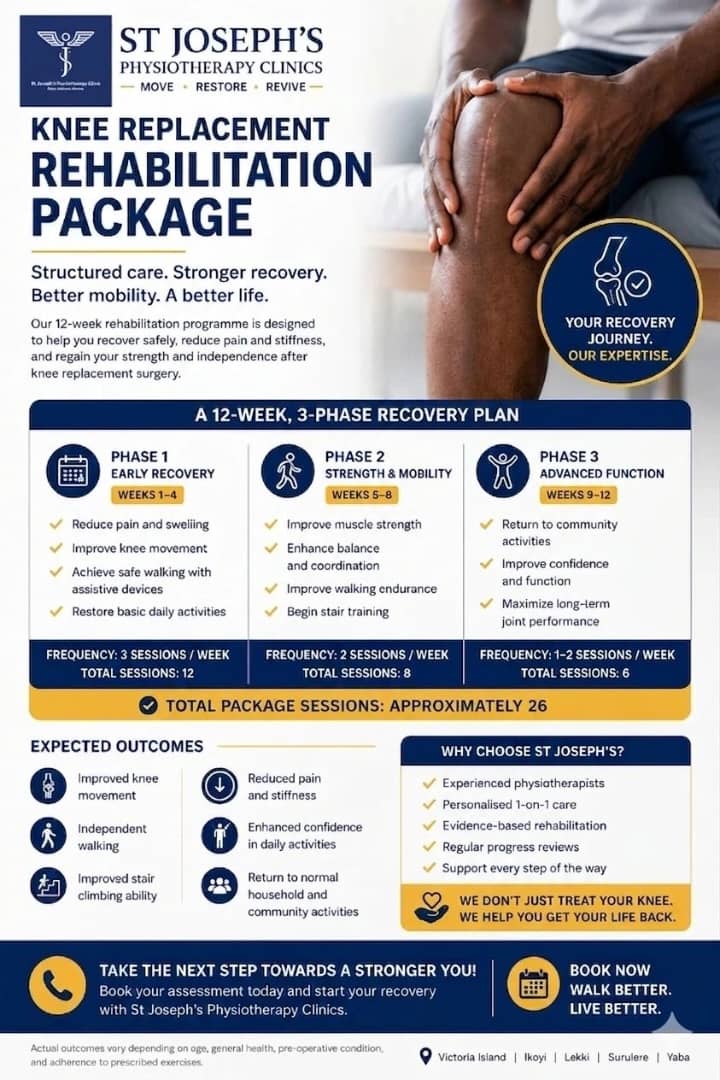
Complete Knee Replacement Rehabilitation Package in Lagos
Knee replacement surgery is a major step toward pain relief and improved mo…

NAMDA threatens strike over unpaid medical lecturers’ allowances
The Nigerian Association of Medical and Dental Academics (NAMDA) has warned…

Resident Doctors Signal End to Strike Threat After High-Level Talks with Gbajabiamila
The threat of a nationwide indefinite strike by the Nigerian Association of…