Paralysed by knife attack, Fidyka is first person to recover from chronic injuries
• Bulgarian received treatment pioneered by University College London
A FIREMAN paralysed from the waist down after his spinal cord was completely severed has regained the ability to walk thanks to British scientists.
Darek Fidyka, 40, is believed to be the first person in the world to recover from such chronic injuries, in an achievement hailed as more impressive than putting a man on the Moon.
Mr. Fidyka’s spinal cord was sliced in half during a stabbing four years ago, leaving him paralysed below the waist.
According to a story published Tuesday by DailyMailUK online, amazingly, he has now been able to resume an independent life – walking with a frame and even driving a car – thanks to a revolutionary technique pioneered at University College London.
Mr. Fidyka, from Bulgaria, suffered damage similar to that of actor Christopher Reeve, whose spine was severed from his skull after he fell off a horse in 1995.
While some victims of partial spinal injury have recovered, a complete break was generally assumed to be irreparable.
However, scientists in Poland used cells from Mr. Fidyka’s nose to re-grow nerve cells, which were then inserted into his spine, fixing the broken link.
It is the first time the procedure has been shown to work on a human. Professor Geoffrey Raisman, whose team at UCL first discovered the technique, said: ‘We believe that this procedure is the breakthrough which, as it is further developed, will result in a historic change in the currently hopeless outlook for people disabled by spinal cord injury.’
He described Mr. Fidyka’s recovery as ‘more impressive than man walking on the Moon’.
The Procedure ‘More Impressive Than Putting A Man On The Moon’
Scientists from University College London (UCL) pioneered the breakthrough procedure.
It was designed to enable Darek Fidyka to walk again, after his spinal cord was sliced in half during a stabbing four years ago, leaving him paralysed below the waist.
The procedure involved transplanting olfactory ensheathing cells – or OECs – from the nose to the spinal cord.
OECs assist the repair of damaged nerves in the nose that transmit smell messages to the brain.
The cells were transplanted into the spinal cord, using 100 micro injections across the site of the injury.
A small piece of nerve tissue, which was taken from the ankle, was grafted onto the ‘gap’ in the spinal cord to act as a scaffold for the spinal neurons to extend, as guided by the OECs.
This enabled the ends of severed nerve fibres to grow and join together – something that was previously thought to be impossible.
Three months after the operation, Mr Fidyka began to gain muscle in his left leg and regained sensations in it, such as hot and cold, and pins and needles. A year later, he is able to walk again, with the aid of parallel bars.
Professor Raisman, whose work is also published in the journal Cell Transplantation today, said: ‘[Mr Fidyka] can get around with a walker and he’s been able to resume much of his original life, including driving a car.
“He’s not dancing, but he’s absolutely delighted.’ He continued: ‘The number of patients who are completely paralysed is enormous.
“There are millions of them in the world. If we can convince the global neurosurgeon community that this works then it will develop very rapidly indeed.”
Dr Pawel Tabakow, of the Wroclaw Medical University in Poland, said: ‘We estimated that without this treatment, our patient’s recovery chances were less than one per cent.
‘However, we observed a gradual recovery of both sensory and motor function that began four months after the surgery.’
The procedure involved transplanting olfactory ensheathing cells – or OECs – from the nose to the spinal cord.
OECs assist the repair of damaged nerves in the nose that transmit smell messages to the brain.
Two weeks later, the cells were transplanted into the spinal cord, using 100 micro injections across the site of the injury.
A small piece of nerve tissue, which was taken from the ankle, was grafted onto the spinal cord to act as a scaffold for the spinal neurons to extend, as guided by the OECs.
This enabled the ends of severed nerve fibres to grow and join together across the ‘gap’ – something that was previously thought to be impossible.
Three months after the operation, Mr. Fidyka began to gain muscle in his left leg and regain sensation in parts of his lower body. He felt hot and cold as well as pins and needles in the limb.
A year after surgery – and large amounts of physiotherapy at the rehabilitation centre in Wroclaw – he could walk with the aid of parallel bars and using a walker with short callipers supporting his ankles.
Professor Raisman said: “The observed wisdom is that the central nervous system cannot regenerate damaged connections. I’ve never believed that.’
He stressed that what had been achieved was a leap forward beyond ‘plasticity’ – the re-wiring of the remaining connections.
He compared that method to motorists finding other routes around a closed section of motorway, adding: ‘What we’re doing is repairing the motorway.’
Speaking on BBC Radio Four’s Today Programme, Professor Raisman said: “This (procedure) opens the door, which I had always been knocking at - to see that our nervous system has the ability to repair itself.
“This is the beginning of a repair for spinal injuries and other types of injuries - including stroke.
“The idea that the nervous system can repair itself in rats and in one man – there’s no reason to restrict this to just the spinal cord. It opens the door to a future which is terrifyingly large.
“We’ve climbed two mountains and we are now at the foot of the (next) mountain. We have knowledge which could be of great value, we can’t stop now.”
The Nicholls Spinal Injury Foundation was founded by Briton David Nicholls after his son Daniel was paralysed in a swimming accident at the age of 18.
He said: ‘I promised Dan that I would not give up until a cure had been found. Professor Raisman and Dr. Tabakow’s breakthrough marks the first step.’
Nsif was founded by David Nicholls after his son, Daniel – an 18-year-old from the UK on his gap year in Australia – was left paralysed from the neck down after he dived into a wave on Bondi Beach in Sydney in 2003. Mr. Nicholls, who promised his son he would not give up until a cure had been found, says: “Prof. Geoffrey Raisman and Dr. Pawel Tabakow’s breakthrough marks the first step. The scientific information relating to this significant advancement will be made available to other researchers around the world so that together we can fight to finally find a cure for this condition which robs people of their lives.”
• BY DailyMailUK online
GUARDIAN
ABUJA: Training Schedule for Basic Life Support BLS, Pediatric Advanced Life Support (PALS), Advanced Cardiovascular Life Support ACLS, First Aid, CPR, AED
PORTHARCOURT: Training Schedule for Basic Life Support BLS, Pediatric Advanced Life Support (PALS), Advanced Cardiovascular Life Support ACLS, First Aid, CPR, AED
LAGOS: Training Schedule for Basic Life Support BLS, Pediatric Advanced Life Support (PALS), Advanced Cardiovascular Life Support ACLS, First Aid, CPR, AED
STOP paying for airtime and electricity, Let your phone pay its bills with ScreenT
You may also like
Comrade Lemii Christian Emerges Chairman of NANNM Rivers State Branch in Historic Victory
PORT HARCOURT, NIGERIA Following the long awaited National Association of N…

FG Supports Robotic Surgery Expansion to Reduce Medical Tourism
Nigeria is taking another step toward strengthening specialised healthcare …
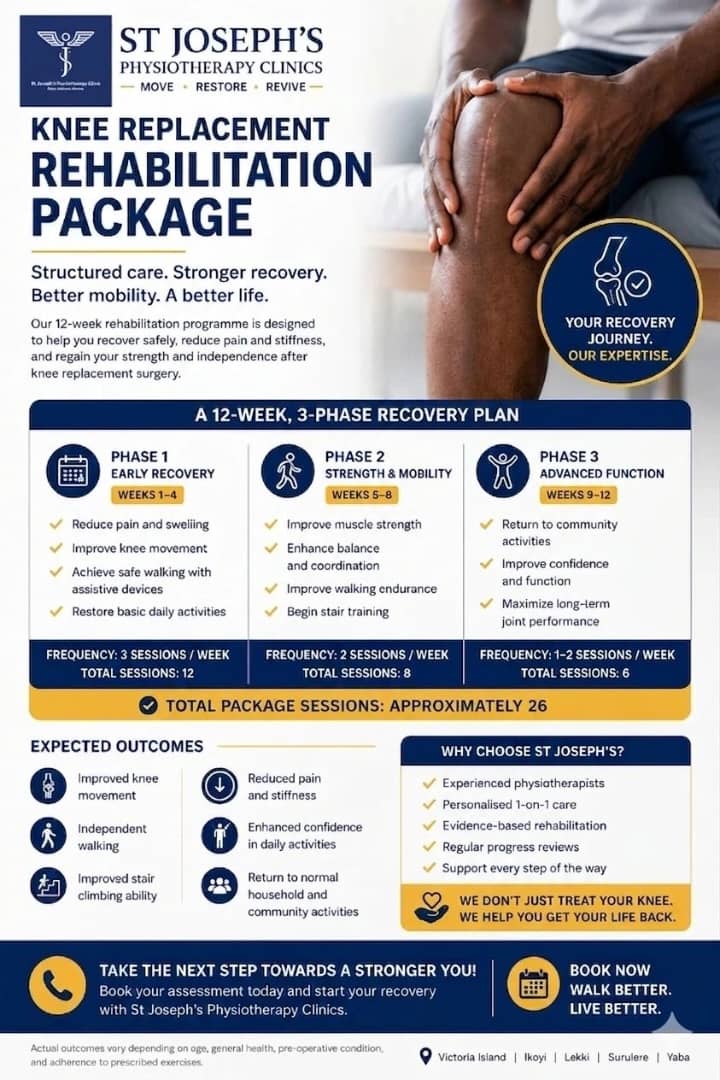
Complete Knee Replacement Rehabilitation Package in Lagos
Knee replacement surgery is a major step toward pain relief and improved mo…

NAMDA threatens strike over unpaid medical lecturers’ allowances
The Nigerian Association of Medical and Dental Academics (NAMDA) has warned…

Resident Doctors Signal End to Strike Threat After High-Level Talks with Gbajabiamila
The threat of a nationwide indefinite strike by the Nigerian Association of…
