1. Received the commendation of Federal Government of Nigeria Presidency twice on institution of the first Public Health In-Vitro Diagnostics Control Laboratory in West Africa and in developing the MLSCN Five-Year Strategic Plan (2014-2018) with its vision of becoming a world acclaimed regulatory agency for good medical laboratory services and practice.
2. Tremendously improving the public profile of Council through the deployment of effective public communication tools. This has led to new partnerships with opinion leaders as well as the high echelon of the Nigerian Armed Forces. Such efforts probably contributed to the survival of Council as a single entity in the aftermath of the White Paper on the Oronsanye Panel while some of its contemporaries were merged.
3. Collaborating with the leadership of AMLSN continually setting the agenda for the growth of the profession through robust intellectual engagement with critical stakeholders, the government and the general public. The pivotal role of the profession is now better appreciated.
.jpg) 4. Making a rare presentation to members of the Top Management Committee of the FMoH on the shared Vision, Mission, and Strategic Plan of Council as well as its current activities. The outcome of that presentation is that, for the first time, the leaders of the Ministry of Health have a better understanding of the mandate of Council as they pledged their commitment to supporting Council in its efforts to sanitize the medical laboratory services sector.
4. Making a rare presentation to members of the Top Management Committee of the FMoH on the shared Vision, Mission, and Strategic Plan of Council as well as its current activities. The outcome of that presentation is that, for the first time, the leaders of the Ministry of Health have a better understanding of the mandate of Council as they pledged their commitment to supporting Council in its efforts to sanitize the medical laboratory services sector. 5. Broadening Council’s influence at the global stage through the development of new strategic partnerships involving foreign organizations such as the South African National Accreditation System (SANAS), which is recognized by the South African Government as the single National Accreditation Body for medical laboratory services in that country; the African Society for Laboratory Medicine (ASLM) and so on. This is also in line with the Shared Vision of Council.
6. In addition to establishing the Public Health In-Vitro Diagnostics Control Laboratory in Lagos, Council is on the verge of realizing that part of its mandate relating to the regulation of the manufacture, importation, stocking and distribution of IVDs. This was a totally uncharted territory for Council and not many people thought it was possible to realize, especially considering the stranglehold of another government agency on that field. But through unwavering passion, commitment and belief in the legitimacy of its efforts, Council has made tremendous progress in securing the support of government agencies like CBN, Nigeria Customs Service etc. to be recognized as the custodian of the mandate to regulate the IVDs market.
7. Institution of Registration/Orientation Ceremony for newly graduated MLTs and MLAs which has enhanced their sense of belonging.
8. Recognition of MLSCN as the World Health Organization/ASLM Stepwise Laboratory Improvement Process Towards Accreditation (SLIPTA) Focal Agency for Nigeria.
9. Publication of the Register of MLS in good standing as at 31st December 2013 on the Council website. The last of such a register was published in Council in 2007.
10. Designed the Doctor of Medical Laboratory Science Curriculum that has been adopted by the West African Health Organization with endorsement of ECOWAS Health Ministers. Four universities in Ghana have blazed the trail and commenced use of the curriculum. NUC has acknowledged receipt of the curriculum with a view to considering it during the next revision of its MLS Benchmark.
11. Admission of Council as a member of International Laboratory Accreditation Cooperation (ILAC) / International Accreditation Forum (IAF) which drives global competitive trade of goods and services. MLSCN is the very first Agency in West and Central Africa to be so admitted into the elite league of ILAC membership.
12. Recognition of MLSCN as a core member of the National Quality Policy Steering Committee under the auspices of the Federal Ministry of Industry, Trade and Investment, and UNDP/EU. 13. R/CEO appointed as Member, World Governing Board on
13. Strengthening Laboratory Management Towards Accreditation (SLMTA)
14. R/CEO appointed as Foundation Member, Governing Board,African Society for Laboratory Medicine (ASLM). Used theprivilege to nominate Prof D.E. Agbonlahor as ASLM Ambassador for Nigeria.
15. Instituted Annual Council Medical Laboratory Services Forum, which brings together all stakeholders in medical laboratory services - medical lab scientists, clinicians, MLT, MLA, laboratories, IVDs manufacturers, importers and marketers etc.
16. Secured positive evaluation of the Associateship Certificate of Council as equivalent of Bachelors degree by the Federal Ministry of Education. This is no mean feat considering that HND holders had sought for such equivalence for over 30 years without success yet.
17. Articulating, publishing and launching, for the first time in the history of medical laboratory services regulation in the country, a set of various Guidelines and Standards for services and practice with the attendant benefit that both practitioners and others, who may wish to open medical laboratories are now guided accordingly right from the outset. Some of the documents include:
ï‚· National Guidelines for Setting up a Medical Laboratory in Nigeria.
ï‚· Medical Laboratories: Regulations for Approval, Monitoring and Accreditation
ï‚· Guidelines to Medical Laboratory Continuous Quality Improvement and Accreditation
ï‚· Laboratory Design: MLSCN Approved Guidelines
These materials have been made available to health institutions, private/public laboratories and practitioners. They are also available at MLSCN website, www.mlscn.gov.ng. The requirements for the operation and maintenance of standard medical laboratories are clearly spelt out in the documents and Council has been strict and diligent in enforcing the spirit and tenor of the guidelines.
18. Deployment of Quality Assurance tools such as for Laboratory Inspection, Approval, Mentoring, Guidance, Quantitative Assessment, as well as Accreditation to ensure that the medical laboratory services delivered to citizens meet global benchmarks.
19. As approved by the Honourable Minister of Health, Council inaugurated an Independent Advisory Committee (IAC) made up of a cross section of eminent Nigerians & distinguished laboratory professionals. The Committee has the duty to consider and approve reports of laboratory assessments/audits carried out by Council to ensure that they are above board in line with global best practice.
20. Continuous engagement with stakeholders, as well as public enlightenment geared towards encouraging and empowering the patients to demand quality service as of right. These efforts are already yielding fruits and Council remains committed towards the goal of bequeathing a regulatory framework for quality health laboratory services to the people.
21. Collaboration with a number of national and international development partners including the Federal Ministry of Health, World Health Organization, US Centres for Disease Control & Prevention, West African Health Organization (WAHO), US Agency for International Development, Management Sciences for Health (MSH), Axios Foundation, Institute of Human Virology Nigeria, FHI/GHAIN, Clinical and Laboratory Standards Institute, American Society for Microbiology, John Hopkins University, US Association of Public Health Laboratories, African Society for Laboratory Medicine, Standards Organization of Nigeria (SON) and so on. They appreciate the efforts of the Medical Laboratory Science Council of Nigeria to bequeath a culture of Quality in the health laboratory sector, and so have continued to partner with Council to achieve its various mandates.
22. Building nationwide capacity for the implementation of Laboratory Quality Management Systems through workshops, as part of series of efforts by the MLSCN/CDC MELTNA project at improving laboratory services in Nigeria, aimed at building the capacity of participants to understand the national accreditation scheme and the quality systems essentials.
23. As part of its mandate, MLSCN in collaboration with Axios Foundation established the National External Quality Assurance Laboratory at the National Tuberculosis and Leprosy Training Centre, Saye Zaria. This laboratory continues to organize national training for labs on the need and value of participating in EQA activities, procurement of proficiency panels for CD4, Haematology, Chemistry, HIV serology, and recently commenced local production of AFB & MP microscopy panels. These panels are distributed to participating laboratories. A National Proficiency Testing Corrective Actions Committee had been set up to review the Panel reports and investigate poor performing laboratories towards ensuring that accurate laboratory results are generated from laboratories subscribing to the MLSCN EQA. Full management of NEQAL had been transferred to MLSCN with effect from August 1, 2013.
24. MLSCN also conducted additional mentorship training on the 24th of April, 2013 at 445 Nigerian Air force Laboratory, Lagos, the first 5-star laboratory in Nigeria. These mentors consist of serving and retired seasoned Medical Laboratory Scientists who shall continue to support laboratories undergoing continuous quality improvement to successfully implement their quality improvement projects designed to address gaps in quality management implementation.
25. Furthermore, the Council has recently developed and published its Five-Year Strategic Plan (2014-2018) with a view to further strengthening health laboratory systems across the country and providing inspiration, guidance and direction for the realization of Council’s mandate and strategic goals. Council’s strategic goals include:
a. Facilitating quality and efficient medical laboratory services through laboratory registration, inspection, monitoring, evaluation and accreditation.
b. Zero tolerance for fake and sub-standard public health diagnostic laboratory reagents, kits, chemicals and equipment
c. Effective regulation for quality health laboratory workforce development through curriculum development/review, accreditation/re-accreditation of training institutions and internship
d. Promotion of professionalism and elimination of quackery
26. MLSCN, as part of its civic responsibilities, has at different times sponsored public enlightenment campaigns to create awareness on the dangers of patronizing unapproved and unaccredited laboratories with the electronic and print media. This was necessitated by the fact that quackery is a hydra headed monster, a cankerworm that has eaten deep into the fabric of our health services, not only the Medical Laboratories.
27. Moving the corporate headquarters of Council to the seat of power, Abuja. Compared to the previous location in Lagos, this was a bold and visionary decision, and well meaning stakeholders have commended it. Unlike in the past, Council is now recognized among government quarters as being part of the system. The current location has also facilitated our collaborative activities with foreign partners.
28. The construction of a befitting permanent headquarters and laboratory complex in Abuja, phase 1 of which has now been completed, thus making Council the first Regulatory Body in the health sector to own a property of such magnificence in the core of Abuja municipality. Apart from enabling Council staff to perform optimally in a conducive environment, this monumental edifice will outlive even those whose sacrifices have made it possible.
29. On-going Computerization of Council operations, in collaboration with our partners- USAID (iHRis project) and System Specs which is already adding new perspectives to the way Council functions. Previously, there were over 32,000 manual files, containing much more in records, and some of the files were turning into antiques. Council is now modernizing the platform through computerization. On completion, practitioners across the country would no longer have to travel to Abuja in order to renew their licences, pay relevant fees or transact any other business with Council.
30. Institution of the faculty structure for the training of medical laboratory scientists in Nigerian Universities with three universities blazing the trail based on the fact that the BMLS degree is a composite professional honours degree as distinct from a single honours degree/programme. The current impasse with NUC is being resolved.
31. Establishment, equipping and empowering the world-class Public Health In-vitro Diagnostics Control Laboratory for the validation, certification and registration of Medical Laboratory Diagnostic equipment, reagents, kits and consumables in Lagos.
32. Formulation of Guidelines and Standards for:
ï‚· Accreditation of laboratories and training institutions in Nigeria
ï‚· Issuance of Provisional Licences and log books to intern Medical Laboratory Scientists on induction day
ï‚· Council Award to BMLS Graduands with 1st Class Honours Degree from Nigerian Universities to encourage scholarship in MLS Education.
ï‚· Pre-Registration Examination for all Foreign Graduates of MLS
ï‚· Streamlining the various training curricula and institution of 50% as pass mark in the BMLS professional examinations.
33. Development of shared vision and mission of MLSCN and aligning the management and staff towards improved quality of performance. Vision: “To be a world acclaimed regulatory agency driving the culture of quality and efficient health laboratory care to the public and ensuring high academic standards in training institutions”
Mission: “Strengthening health laboratory systems, networks and professional practices for quality services through strategic regulation and accreditation.”
34. Institution of an Organogram with five Directorates in MLSCN for improved client service.
35. Liaising with Federal Ministries of Health and Finance for improved funding for MLS internship slots in various health institutions including streamlining of the internship quota for Teaching Hospitals and Federal Medical Centres.
36. Institution of comprehensive professional Code of Ethics and Practice for MLS, MLT and MLA which can be downloaded from the Council website.
37. Establishment of more zonal and state offices. Sokoto, Jos, Owerri and Gombe had already commended activities. Lokoja, Ibadan and Port Harcourt are expected to follow subsequent to securing suitable accommodation and associated logistics.
38. Development of Council Quality Manual to streamline its services and facilitate its certification and accreditation process.
39. Extracted concurrence from Office of the Head of Service of the Federation that Science Laboratory Technologists should stay off practising in Medical Laboratories.
40. Objected to the proposed bills by Nigeria Society for Microbiology and FSMLT at the National Assembly as these infringed on core mandate of Council.
41. Collaborating with AMLSN and Office of the Head of Service of the Federation on the revision of the entry point for fresh graduates of MLS.
42. Liaising with NYSC and universities to enforce internship prior to NYSC posting.
43. Urging universities to start off BMLS graduates in academics as Assistant Lecturers in line with the present scheme of service rather than as Graduate Assistants considering the full professional status of MLS and duration of training (Seven years including NYSC).
44. Canvassing the employment of only duly qualified Laboratory Practitioners by Federal, States, FBOs, NGOs and Private Health Institutions. This has started yielding fruits from Zamfara State where the Governor had posted out over 400 unqualified personnel from state medical laboratories and replaced them with qualified MLS, MLT and MLAs. We hope that other state governments shall emulate this in the interest of their citizens.
45. Facilitated a leadership workshop for CEOs of various Health Regulatory bodies and Presidents of Professional Associations on harmony, conflict resolution etc by Management Sciences for Health (MSH). The outcome is that all other professional regulatory councils and boards are emulating MLSCN to re-organize for improved performance.
46. Partnered with the National Christian Pilgrims Commission to commence enrolling medical laboratory scientists in the Health Team for pilgrimages.
47. Enhanced goodwill, trust and confidence of various tiers of government, NGOs and general public.
48. On-going campaign that only duly qualified medical laboratory practitioners should be testing, validating and signing out medical laboratory results/reports.
49. Seeking new ideas through collaboration aimed at instilling the culture of quality improvement in Council’s processes.
50. Engaging manufacturers, distributors and marketers of in-vitro diagnostics (equipment, kits and reagents) to form a national body with business code of ethics for more effective regulation and quality of products for medical laboratory services in Nigeria.
51. Scrupulous and painstaking collection of AMLSN dues and Legal Levy with prompt quarterly remittance on request. Collection of Guild and AMELTAN dues has also commenced. This altruistic service is unfortunately being misread by some practitioners for some inordinate reasons.
52. Institution of Council Corporate Culture/Ethics for all staff.
53. Establishment of a National Database of all public and private medical laboratories in Nigeria with on-going mapping.
54. Commenced campaign for EQA and staff competency testing to be made mandatory for all medical laboratories in Nigeria.
55. Development and harmonizing BMLS Internship Guidelines.
56. Development of functional website that has become a very important communication tool for Council and stakeholders alike.
57. Development and deployment of M&E Framework for proper accountability.
58. Successful winding down of the 24 months Graduate programme.
59. Prepared and signed out certificates for MLS, MLT and MLA graduates of 2002-2012 thereby reducing the backlog to the barest minimum.
60. Global networking for visibility and empowerment of the Medical Laboratory Scientist as a viable strategy for quality medical laboratory service delivery.
61. Re-Instituted Council Pension Board of Trustees to facilitate prompt payment and welfare of Council retirees.
62. Instituted a robust Staff Welfare Package that is amongst the best in the health care sector.
ABUJA: Training Schedule for Basic Life Support BLS, Pediatric Advanced Life Support (PALS), Advanced Cardiovascular Life Support ACLS, First Aid, CPR, AED
PORTHARCOURT: Training Schedule for Basic Life Support BLS, Pediatric Advanced Life Support (PALS), Advanced Cardiovascular Life Support ACLS, First Aid, CPR, AED
LAGOS: Training Schedule for Basic Life Support BLS, Pediatric Advanced Life Support (PALS), Advanced Cardiovascular Life Support ACLS, First Aid, CPR, AED
STOP paying for airtime and electricity, Let your phone pay its bills with ScreenT
You may also like
Comrade Lemii Christian Emerges Chairman of NANNM Rivers State Branch in Historic Victory
PORT HARCOURT, NIGERIA Following the long awaited National Association of N…

FG Supports Robotic Surgery Expansion to Reduce Medical Tourism
Nigeria is taking another step toward strengthening specialised healthcare …
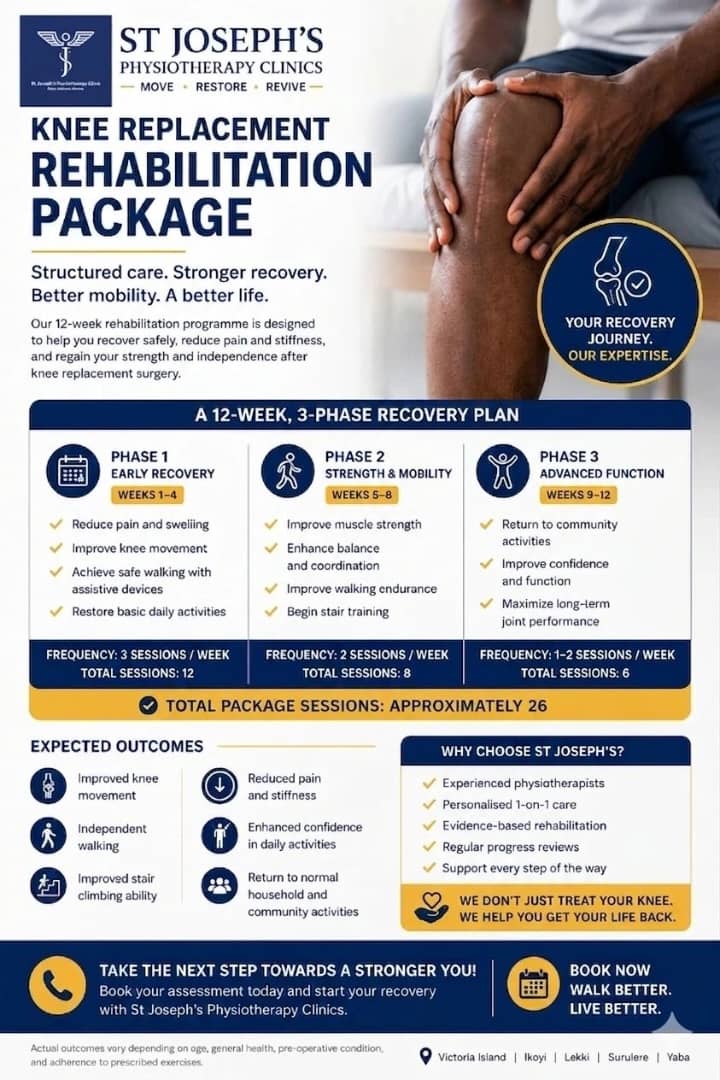
Complete Knee Replacement Rehabilitation Package in Lagos
Knee replacement surgery is a major step toward pain relief and improved mo…

NAMDA threatens strike over unpaid medical lecturers’ allowances
The Nigerian Association of Medical and Dental Academics (NAMDA) has warned…

Resident Doctors Signal End to Strike Threat After High-Level Talks with Gbajabiamila
The threat of a nationwide indefinite strike by the Nigerian Association of…