Seventy six-year old Madam Foyeka-nmi was excited she would be visiting her newly arrived grandson soon. for more than a month, she had waited to hear from her second daughter if she was delivered of her baby, safely.
Thus, when her husband called to confirm if she would come visiting, she was happy. Her son in-law had offered to send his driver to Ilesha to pick her but she refused bluntly. She had insisted she would travel by a com-mercial bus to Lagos.That wasn't her first time of traveling to Lagos; she had made several trips down to Lagos on her own.
On the fateful day, Madam Foyekanmi didn't arrive at her daughter's residence as scheduled. She just disappeared. They looked for her everywhere and still couldn't find her.They called her phone and it was switched off and then everyone began to panic.Three days later, she was found at the police station.A good Samaritan had seen her roaming the streets.The old woman said when she got to the car park in Lagos, she had suddenly forgotten the address and she became confused.
Dr. Bamidele Oni explained that, dementia is often caused by Alzheim-er's disease. He further explained that dementia can also be caused by brain damage incurred from injury, or by HIV infection.Vascular diseases, stroke, depression and chronic drug use are other possible causes. Often times, you might not easily notice the ailment be-cause symptoms usually develop slowly, get worse over time and gets severe enough to interfere with daily tasks.
Experts said that it is normal for people to be forgetful as they grow older and that one in eight people who are 65 years and older usually have a form of dementia. However, here some early warning signs to watch out for.
Memory loss isn't neces-sarily dementia
Dr Oni said that not all memory loss could be linked to dementia. According to him,"If a loved one is experiencing some troubling memory problems, most people often conclude that it's dementia. However, a person needs to have at least two types of impairment that are significant enough to interfere with everyday life to be considered for dementia diagnosis. Aside from mem-ory problems, the person might also have impairment in language, communication, reasoning and focus.
Warning signs
Trouble with memory can be an early sign of dementia.The changes are often subtle and tend to involve short-term memory.Your elderly relative may be able to remember years past, but not what they had for breakfast.
You might notice that your elderly loved one is starting to lose interest in hobbies or activities.They may not want to go out anymore or do anything fun.They may be losing interest in spending time with friends and family and may seem emotionally flat.
Repetition is common in dementia because of memory loss and general behav-ioral changes.You migl-t notice your elderly parent or loved one repeat daily tasks like shaving or collecting items obsessively. They also may repeat the same ques-tions in a conversation after you've already answered them.
Other signs of changes in short-term memory include forgetting where they left something, struggling to remember why they went into a particular room, or for-getting what they were supposed to do on any given day. Your loved one may get lost in familiar places. Mood swings and lapses in judgment are also common, as is poor hygiene. People who were once stylish may start wearing stained clothes and forget to wash their hair.
Don't ignore the signs
It's hard to face the thought that a loved one could have this disease, but it's better to see a doctor sooner than later. First, the diagnosis might be something else.The symptoms could be caused by a highly treatable problem, like a thyroid imbalance. And if it is Alzheimer's, treatments work best when they're used early in the course of the disease.
 Treating dementia
 In some cases, treating the condition that causes dementia may help. Conditions most likely to respond to treatment include de-mentia caused by drugs, tumors, metabolic disorders, and hypoglycemia.
In most cases, dementia cannot be reversed. However, many forms are treatable. The right medication can help manage dementia, including dementia due to Alzheimer's disease.
Dementia patients can also benefit from supportive services from home health aids and other caregivers.An assisted living facili-ty or nursing home may be necessary as the disease progresses.
"Heart failure is a major medical prob-lem with a high chance of hospitalisation and death," said study author, Dr. Johannes Gho, a cardiologist resident at the University Medical Centre, Utrecht in the Netherlands.
Heart failure occurs when the heart can't pump blood efficiently enough to meet the body's demands. Heart attack treatment has led to higher survival rates, leaving more patients susceptible to heart failure later, Gho said in a European Society of Cardiology news release.
For the study, researchers analyzed data from nearly 25,000 people in the United Kingdom who suffered a first heart attack. Nearly 25 percent of these patients devel-oped heart failure within four year's, the investigators found.
Dementia often Linked to witchcraft
In Nigeria, many elderly people with dementia are often labeled as witches and wizards.They are mistreated, called names, bruised and sometimes stoned to death.These people are so tagged because they put up strange behaviours. Meanwhile, can signs and symptoms of dementia be enough for families to suspect that someone among them is a witch/wizard and must killed when bad things happen within the family?
With the increasing number of people surviving into old age in Africa, dementia is becoming an im-portant public health problem. Understanding the social dynamics of dementia in resource-poor set-tings is critical for developing effective interventions. People should be well informed that people with dementia are not witches and they are not cursed.
They are only ill and the ailment can be treated if they are taken care of on time.There should be more understanding about dementia, so that many elderly women or men who get confused and wander at night are not humiliated by mobs of on-lookers who accuse them of witchcraft.
Certain risk factors increased the risk of heart failure after the first heart attack, Gho and his col-leagues said. For example, every 10-year rise in age was associated with 45 percent higher risk, and the poorest patients had a 27 percent increased risk. Diabetes, also significantly increases the risk of heart failure, by 63 percent and 44 percent, respec-tively.
Other health conditions associated with a higher risk of heart failure after a first heart attack include: peripheral arterial disease, high blood pressure, and a type of heart attack known as STEMI (ST elevation myocardial infarction).
"Patients with ischernic, heart disease are at the highest risk [for heart failure].This includes those who have had a myocardial infarction, also called heart attack," Gho said.
"Research studying incidence of heart failure following [heart attack] is limited and mainly stems from the thrombolytic era, when drugs were used to dissolve " blood clots," he explained.Today, stent-ing is the preferred treatment for heart attack, where a small mesh tube is used to open the blocked artery, he said.
On the one hand, stenting has improved treat-ment for heart attack, so the risk of heart failure would be expected to decrease, Gho said."On the other hand, because treatment has improved, more patients are alive after suffering a heart attack to subsequently get heart failure," he added.
"Finding which heart attack patients are most likely to get heart failure would help us target pre-ventive therapies," he said.
The findings were scheduled for presentation Tuesday at a meeting of the European Society of Cardiology's Heart Failure Association in Florence, Italy. Research presented at meetings is considered preliminary until published in a peer-reviewed medical journal.
By: Bolatito Adebayo
Saturday Sun
ABUJA: Training Schedule for Basic Life Support BLS, Pediatric Advanced Life Support (PALS), Advanced Cardiovascular Life Support ACLS, First Aid, CPR, AED
PORTHARCOURT: Training Schedule for Basic Life Support BLS, Pediatric Advanced Life Support (PALS), Advanced Cardiovascular Life Support ACLS, First Aid, CPR, AED
LAGOS: Training Schedule for Basic Life Support BLS, Pediatric Advanced Life Support (PALS), Advanced Cardiovascular Life Support ACLS, First Aid, CPR, AED
STOP paying for airtime and electricity, Let your phone pay its bills with ScreenT
You may also like

Comrade Lemii Christian Emerges Chairman of NANNM Rivers State Branch in Historic Victory
PORT HARCOURT, NIGERIA Following the long awaited National Association of N…

FG Supports Robotic Surgery Expansion to Reduce Medical Tourism
Nigeria is taking another step toward strengthening specialised healthcare …
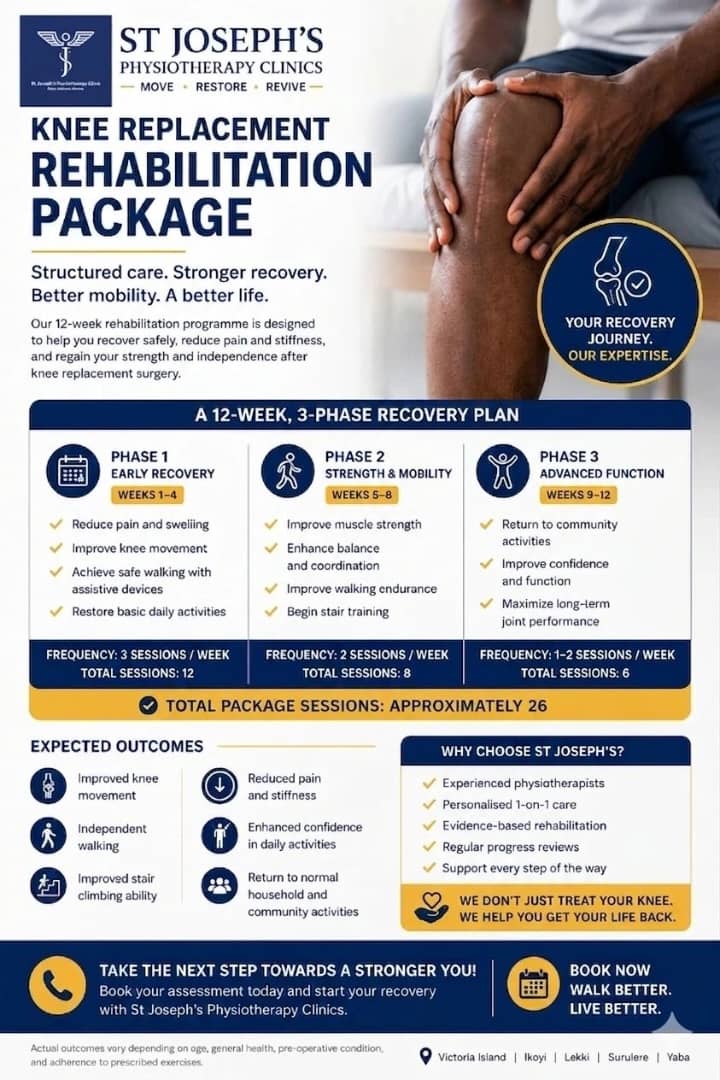
Complete Knee Replacement Rehabilitation Package in Lagos
Knee replacement surgery is a major step toward pain relief and improved mo…

NAMDA threatens strike over unpaid medical lecturers’ allowances
The Nigerian Association of Medical and Dental Academics (NAMDA) has warned…

Resident Doctors Signal End to Strike Threat After High-Level Talks with Gbajabiamila
The threat of a nationwide indefinite strike by the Nigerian Association of…