The Food and Drug Administration, FDA, has approved – Ervebo – the first vaccine for the prevention of Ebola Virus Disease, EVD, caused by Zaire ebolavirus in individuals 18 years of age and older.
The approval of Ervebo, manufactured by Merck, is supported by a study conducted in Guinea during the 2014-2016 outbreak in individuals aged 18 years and older. The study was a randomised cluster vaccination study, in which 3,537 contacts, and contacts of contacts, of individuals with laboratory-confirmed EVD received either “immediate” or 21-day “delayed” vaccination with Ervebo.
The safety of Ervebo was assessed in approximately 15,000 individuals in Africa, Europe and North America. The most commonly reported side effects were pain, swelling and redness at the injection site, as well as headache, fever, joint and muscle aches, and fatigue. Ervebo is administered as a single-dose injection, and is a live-attenuated vaccine that has been genetically engineered to contain a protein from the Zaire ebolavirus.
“While the risk of Ebola virus disease in the U.S. remains low, the U.S. government remains deeply committed to fighting devastating Ebola outbreaks in Africa, including the current outbreak in the Democratic Republic of the Congo,” said Anna Abram, the FDA deputy commissioner for policy, legislation and international affairs. “Today’s approval is an important step in our continuing efforts to fight Ebola in close coordination with our partners across the U.S. Department of Health and Human Services, as well as our international partners, such as the World Health Organisation. These efforts, including today’s landmark approval, reflect the FDA’s unwavering dedication to leveraging our expertise to facilitate the development and availability of safe and effective medical products to address urgent public health needs and fight infectious diseases, as part of our vital public health mission.”
EVD is contagious and is transmitted through direct contact with blood, body fluids and tissues of infect-ed wild animals or people, as well as with surfaces and materials, such as bedding and clothing, contaminated with these fluids. Onset of symptoms of EVD can be sudden and can include fever, fatigue, muscle pain, headache and sore throat.
This is followed by vomiting, diarrhea, rash, impaired kidney and liver function, and in some cases internal and external bleeding. EVD has an incubation period that ranges from two to 21 days. Individuals who provide care for people with EVD, including health care workers who do not use correct infection control precautions, are at the highest risk for infection.
ABUJA: Training Schedule for Basic Life Support BLS, Pediatric Advanced Life Support (PALS), Advanced Cardiovascular Life Support ACLS, First Aid, CPR, AED
PORTHARCOURT: Training Schedule for Basic Life Support BLS, Pediatric Advanced Life Support (PALS), Advanced Cardiovascular Life Support ACLS, First Aid, CPR, AED
LAGOS: Training Schedule for Basic Life Support BLS, Pediatric Advanced Life Support (PALS), Advanced Cardiovascular Life Support ACLS, First Aid, CPR, AED
STOP paying for airtime and electricity, Let your phone pay its bills with ScreenT
You may also like

FG Supports Robotic Surgery Expansion to Reduce Medical Tourism
Nigeria is taking another step toward strengthening specialised healthcare …
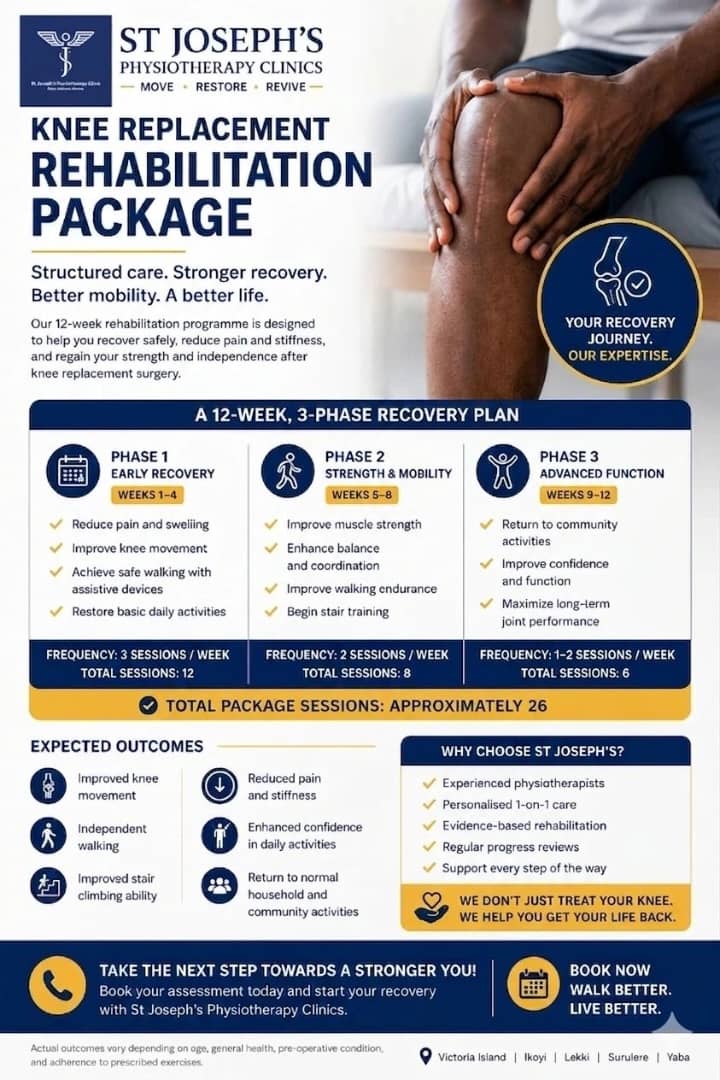
Complete Knee Replacement Rehabilitation Package in Lagos
Knee replacement surgery is a major step toward pain relief and improved mo…

NAMDA threatens strike over unpaid medical lecturers’ allowances
The Nigerian Association of Medical and Dental Academics (NAMDA) has warned…

Resident Doctors Signal End to Strike Threat After High-Level Talks with Gbajabiamila
The threat of a nationwide indefinite strike by the Nigerian Association of…
AMLSN Issues Strong Rejoinder to NAMDA on Public Service Establishment Matters
The Association of Medical Laboratory Scientists of Nigeria (AMLSN) has rel…