•Patient recounts ordeal
Beatrice Okeke (not real name), was diagnosed with tuberculosis (TB) at the age of 19. During her treatment, she developed a multi drug-resistant strain of the disease (MDR-TB) a strain of TB that is resistant to the first drug choices.
Although she is now cured of TB, she could still recalled the unpleasant experience with MDR-TB and her long struggle back to health.
She said: “I got infected after caring for my father who later died of TB in January; 2012. I didn’t know I had already contracted it until I fell very sick. I was diagnosed with TB in April 2012 at St. Kizito hospital Ajah. It was there I started and completed my treatment by December that same year. The nurse told me that the treatment would take eight months and after that, I will completely be cured.
“After about four months, I felt much better and I found it difficult continuing with my drugs because of the side effects. I started skipping my drugs. Four months later, another sputum test was carried out and it was discovered that I had multidrugresistant tuberculosis (MDR-TB).”
Following her diagnosis, Beatrice was referred to Infectious disease hospital (IDH) Yaba where she was hospitalized for another 8 months.
“I will never forget the pain of the eight months of injection I received. Aside the injections, I had to take series of drugs which affected my hearing, I was depressed, and I lost my appetite and was nauseous. I felt exhausted and thought of just dying. But I finally made it through all the rigorous treatment and now am free of TB”.
According to Head of TB research, Nigerian Institute of Medical Research, NIMR, Yaba, Lagos, Dr. Dan Onwujekwu, about 2.5 per cent of every infected TB patient in Nigeria will develop MDR-TB.
“This is according to the World Health Organization (WHO) TB estimate for the country which says we have about 107 TB cases per 100,000 of the population. About 4,000 MDR-TB is estimated in the country. This burden is made worse by the co-existent between TB and HIV. TB is the commonest opportunistic infection for people living with HIV and the number one killer,” he said. He explained that these MDR-TB cases need to be found out and treated so as to control more spread of TB among the populace.
“Despite government’s effort in addressing the issue of MDR-TB treatment, detecting and controlling the spread of MDR-TB is still a major problem.
But, we are happy that the second line drugs for the treatment of MDR-TB are currently available at special treatment centres such as Mainland hospital Yaba, University of Port Harcourt Teaching hospital and University of Ibadan Teaching Hospital (UCH), and other places”.
However, these drugs are costly and the treatment involves the patient being hospitalized for about eight months with daily dose of injection.
“Not only is this form of TB expensive, it takes 24 months to treat, eight months as an in-patient at the facility and 12 months as outpatient. It is therefore preferable if TBs are cured with the first line drugs without developing into MDR –TB”, he said.
However, he added that there is hope for those with MDR-TB because the drugs and labs for the treatment are available now. He noted that some patients when diagnosed with MDR-TB do not want to stay the complete eight months on admission or complete the treatment they require to get cured. This he said is one of the challenges facing the control of TB in the country.
A chest physician at Lagos University Teaching Hospital (LUTH), Dr. Cyril Chukwu, explains that new forms of drug-resistant TB strains are emerging which is resistant to some of the second line drugs.
“un- f o r – tunately, a n e w form of extensively drug-resistant TB (XDR-TB) is emerging, which is resistant to at least four first line anti-TB drugs such as; isoniazid and rifampicin, any of the flouroquinolones (such as moxifloxacin or ofloxacin) and to at least one of the three injectable second-line drugs (amikacin, capreomycin or kanamycin). He explained that MDR-TB like other forms of TB is spread through the air following coughing, sneezing, talking or spitting by the infectious TB patient.
According to him, many TB cases are still undetected. This he explains is because an immune strong person will not necessarily become sick when infected with TB.
“The TB can stay dormant in the person for years. In this case, the TB becomes latent; meaning that the person has TB but is not yet sick with the disease so cannot transmit it.
The bacteria becomes active in cases such as; HIV positive cases, advancing age or some medical conditions which can reduce the person’s immunity”.
Figures from WHO 2013 global TB, says a total of 180,000 TB cases occur annually in the country, with Nigeria ranking 11 among countries with high cases of tuberculosis in the world.
But this figure is said to be largely underestimated compared to the recent National TB prevalence survey figure, according to the Minister of States for Health, Dr. Khaliru Alhassan in his address earlier this year, during the world TB day.
BY FRANKA OSAKWE
ABUJA: Training Schedule for Basic Life Support BLS, Pediatric Advanced Life Support (PALS), Advanced Cardiovascular Life Support ACLS, First Aid, CPR, AED
PORTHARCOURT: Training Schedule for Basic Life Support BLS, Pediatric Advanced Life Support (PALS), Advanced Cardiovascular Life Support ACLS, First Aid, CPR, AED
LAGOS: Training Schedule for Basic Life Support BLS, Pediatric Advanced Life Support (PALS), Advanced Cardiovascular Life Support ACLS, First Aid, CPR, AED
STOP paying for airtime and electricity, Let your phone pay its bills with ScreenT
You may also like
Comrade Lemii Christian Emerges Chairman of NANNM Rivers State Branch in Historic Victory
PORT HARCOURT, NIGERIA Following the long awaited National Association of N…

FG Supports Robotic Surgery Expansion to Reduce Medical Tourism
Nigeria is taking another step toward strengthening specialised healthcare …
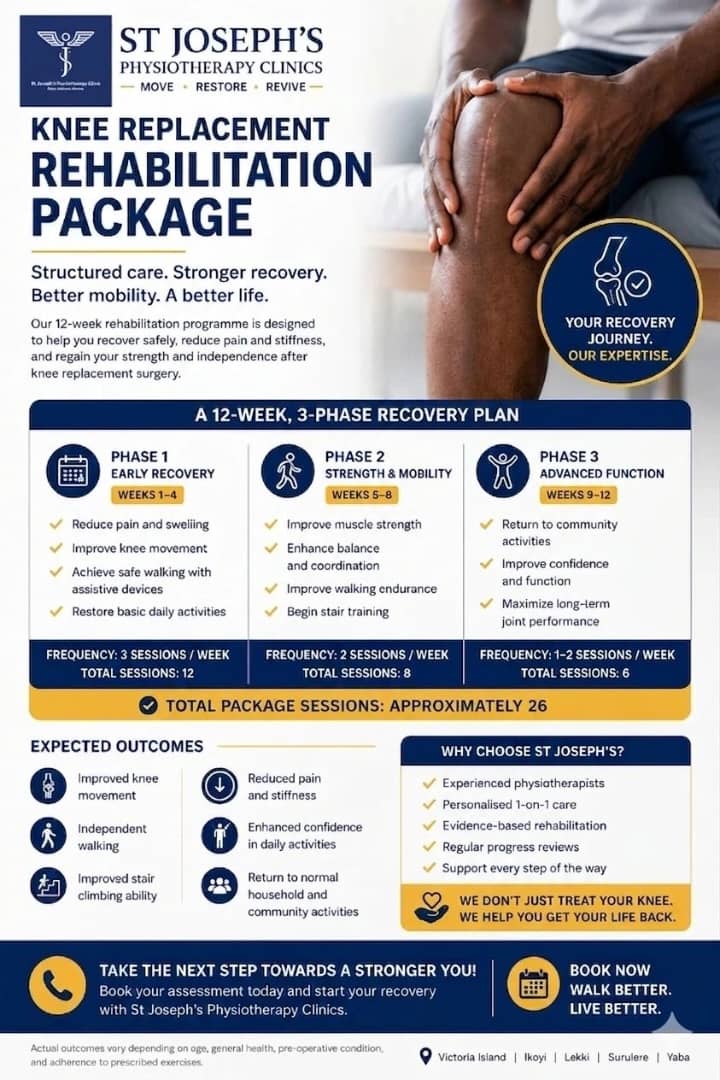
Complete Knee Replacement Rehabilitation Package in Lagos
Knee replacement surgery is a major step toward pain relief and improved mo…

NAMDA threatens strike over unpaid medical lecturers’ allowances
The Nigerian Association of Medical and Dental Academics (NAMDA) has warned…

Resident Doctors Signal End to Strike Threat After High-Level Talks with Gbajabiamila
The threat of a nationwide indefinite strike by the Nigerian Association of…