The battle to wrestle the HIV/AIDS pandemic has lasted for more four decades. At the peak of this battle, Nigeria has also been struggling to tame the virus through various strategies. And with the second highest burden of Mother to Child Transmission (MTCT), Nigeria's hands are full with enormous challenges. Though, there have been some level of success, how to stop prevention of the virus has rather remain a herculean task.
Hence, several efforts and steps have been mulled on how to halt the tide of HIV/AIDS transmission, yet, the target has not been met in many fronts. This, has led to various approaches to provide a clear road map for ending transmission of the virus. Today, the National Agency for the Control of AIDS (NACA) has different sites and programmes to deal with the task of preventing transmission of the disease.
Thus, with the transition from the Millennium Development Goals (MDGs) to Sustainable Development Goals (SDGs), it also became imperative to initiate a new mandate to tackle the HIV/AIDS pandemic. NACA at the 70th UN General Assembly and launch of SDGs in New York, US, held a sideline meeting to showcase its success and pledge more commitment to ending HIV transmission by 2030.
 According to officials, "the milestones achieved thus far in the global AIDS response between 2000 and 2015, particularly in high burden low and middle income countries (LMIC), was accentuated by the Millennium declaration of year 2000. This engendered international technical partnerships, international and domestic funding support for AIDS response in these countries. Thus the Millennium Development Goals (MDGs) served as a 'hard push' on the accelerator pedal of the AIDS response automobile. As the world transits from the MDGs to the Sustainable Development Goals (SDGs), there is a concern that the global AIDS agenda is receiving diminishing attention based on the proposed 17 SDGs targets."
 The organisers of the event said the objective of this side line meeting was to facilitate mainstreaming of elimination of MTCT of HIV by 2020 and an end to the AIDS epidemic by 2030 into the new global development agenda-the SDGs. The event deliberated on strategies for: addressing the unfinished business of the health MDGs within the SDGs framework; sustaining the momentum towards ending the AIDS epidemic by 2030, through eMTCT in LMIC by 2020; strengthening means of implementation (MOIs) of the SDGs in sub-Saharan Africa.
NACA Director General, Prof. John Idoko speaking at the event said: "Nigeria has made significant progress in the fight against HIV/AIDS in the last decade. We have achieved the MDG goal 6 of halting and reversing the HIV epidemic and we are committed to sustaining the momentum in the era of the SDGs to achieve an AIDS-free generation by 2030. In support of this, the country will use the strategy of adopting the new WHO guidelines of 'test and treat', and the President has identified the local production of HIV/AIDS drugs and related commodities as a key strategy to actualize an AIDS-free generation by 2030."
Also, United Nations Population Fund (UNFPA) Executive Director, Prof. Babatunde Osotimehin explained that given that "Nigeria has the second highest burden of HIV in the world after South Africa representing 9.0 per cent of the global burden of infection" there is need to map up strategies that will ensure an end to transmission both from adults and the MTCT area.
Osotimehin expressed worries that with "66 percent of new HIV infections concentrated in 12 of the 36 states and the Federal Capital Territory," working out a modality that cut down transmission is essential to the whole fight against the virus. He also stressed on the need for attention to be focused on women and children. Osotimehin added that "HIV/AIDS is still a woman’s disease in Nigeria, hence important for UNFPA. Currently Nigeria adopts Option B for PMTCT services."
To this end, stakeholders harped on the need for greater HIV/AIDS prominence as part of target for the SDGs commitment in Nigeria at the highest level for resources, especially with decline in PEPFAR funding. Again, the UNFPA boss further stated that "there is need to hold Governors accountable at state level and move from a Federal-led to a State-led effort to fight HIV/AIDS. This will promote ownership and sustainability. Harness and scale-up successes, such as that witnessed in Kaduna State (Pampaida community), and the integration of testing pregnant women during MNCH week."
Further, UNAIDS Executive Director, Michel Sidibe observed that NACA and UNAIDS show-cased Pampaida in Kaduna State as a role model for the elimination of mother-to-child transmission of HIV. This village achieved the total elimination of mother-to-child transmission of HIV in 2015. Sidibe, said Nigeria could lead the way in efforts to end the AIDS epidemic by 2030.
He further stated that Nigeria, with the support of UNAIDS and other development partners, should expand the Kaduna model to all 12+1 high burden states of Nigeria where 70 per cent of all HIV positive pregnant women and new HIV infections exist. He also elaborated on the cost-effectiveness of PMTCT which yields high returns on investment in terms of life years gained.
Also, Executive Director, Global Fund to fight AIDS, TB and Malaria, Dr. Mark Dybul and Assistant Secretary General and Special Advisor to the UN Secretary General on Post-2015 Planning, Ms. Amina Muhammed all added their voice to the need to address the existing gaps in arresting transmission of HIV in Nigeria.
The UNAIDS Country Director for Nigeria and UNAIDS Focal Point for the Economic Community Of West African States, Bilali Camara highlighted the required strategies to achieve the target, of stemming HIV transmission by 2030.
As much as making commitments to ending HIV transmission is crucial, the vacuum created by poor public awareness and treatment of HIV/AIDS has rather left much doubt if NACA is committed to the 2030 dateline. The way to go, is to ensure that treatment remains a focal point in the fight against the virus and efforts to end transmission. Yet, there have been poor mapping strategies in stopping transmission in the 12 endemic states with HIV/AIDS. State governments have not shown concrete commitment needed to halt the spread of the HIV virus in most of the 12 states, the federal government has also not taken much proactive steps that will sustain preventive measures in those states.
With the launch of the SDGs and the new commitment by global world leaders and NACA in particular to end transmission by 2030, Nigeria must adopt real strategies that will be comprehensive and effective. With proof that the Anti-Ritroviral (ARV) drugs can help in fight the virus from different fronts, government also has to improve its performance with the provision and distribution of ARV drugs. Granted, making pledge at a global platform like the UN General Assembly is a good way to kick start the process, but NACA most critical task is needed in places like Benue, Plateau, Nasarawa, Cross River, Niger, Kano, Kaduna, Anambra and Abuja. That is where NACA and the government are expected to walk the talk. The journey to ending transmission of HIV/AIDS should be rigourous, leaving no gaps. With some giant strides here and there on the fight against AIDS, ending transmission is germane to eliminating the virus. NACA and the government should grab the opportunity.
Source: This Day News
ABUJA: Training Schedule for Basic Life Support BLS, Pediatric Advanced Life Support (PALS), Advanced Cardiovascular Life Support ACLS, First Aid, CPR, AED
PORTHARCOURT: Training Schedule for Basic Life Support BLS, Pediatric Advanced Life Support (PALS), Advanced Cardiovascular Life Support ACLS, First Aid, CPR, AED
LAGOS: Training Schedule for Basic Life Support BLS, Pediatric Advanced Life Support (PALS), Advanced Cardiovascular Life Support ACLS, First Aid, CPR, AED
STOP paying for airtime and electricity, Let your phone pay its bills with ScreenT
You may also like
Comrade Lemii Christian Emerges Chairman of NANNM Rivers State Branch in Historic Victory
PORT HARCOURT, NIGERIA Following the long awaited National Association of N…

FG Supports Robotic Surgery Expansion to Reduce Medical Tourism
Nigeria is taking another step toward strengthening specialised healthcare …
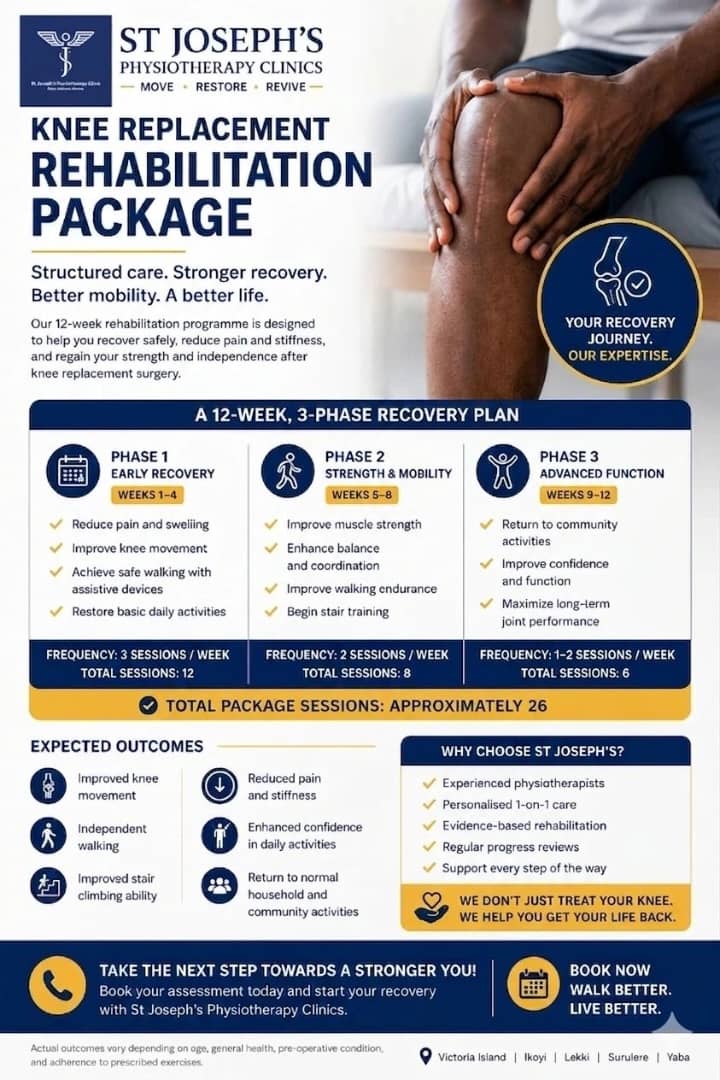
Complete Knee Replacement Rehabilitation Package in Lagos
Knee replacement surgery is a major step toward pain relief and improved mo…

NAMDA threatens strike over unpaid medical lecturers’ allowances
The Nigerian Association of Medical and Dental Academics (NAMDA) has warned…

Resident Doctors Signal End to Strike Threat After High-Level Talks with Gbajabiamila
The threat of a nationwide indefinite strike by the Nigerian Association of…