The National Universities Commission (NUC), on Thursday, 3 December 2015, convened a meeting of relevant stakeholders to review the proposed Doctor of Pharmacy (PharmD) Programme to be introduced to the Nigerian University System. The overall aim is for stakeholders to collaborate more towards the ensuring successful establishment of the programme.
According to Anthony Nwaobi of Medicalworld Nigeria, The PharmD programme is expected to offer advanced training that equip graduates with requisite knowledge and skills that would enable Pharmacist to offer services in line with current global best practices in healthcare delivery
In a welcome address, the Chairperson of the stakeholders' meeting, NUC Visiting Professor, D. N. Onwukaeme, said that the Commission had organised several Stakeholders' meetings in the past, one of which culminated in a consensus that PharmD programme should be taught for a six-year duration, and the degree a minimum qualification to practice. She added that towards working to achieve this, some new courses were introduced while the current scope of Clinical Pharmacy was expanded. According to her, the action was premised on the fact that Clinical Pharmacy had been adequately established, with appropriate expertise, facilities and best curriculum delivery methods in place before the establishment of the PharmD programme. The overall objective was to make
graduates of Pharmacy more patient-oriented rather than product-oriented.
She affirmed that the envisaged upgrade in the Pharmacy training was due to the dynamism of Pharmacy education and practice, stressing that the Commission was open for further interactions on the programme.
The Visiting Professor noted that PharmD programme was a major shift that required the approval of a higher authority because of the training and envisaged services of the graduate which needed to be properly entrenched in the healthcare system. She said that the Commission expected all the professions to be abreast of advancement, in terms of knowledge and skills, for better service delivery. To achieve this lofty dreams, she said, those in the Pharmacy profession should be undaunted in the pursuit of the establishment of the programme by providing all the enabling conditions especially the resources.
She reiterated the need for the proposed PharmD degree to be mainstreamed in Nigerian Universities.
To this end, the following set of objectives were for the present stakeholders' meeting to pursue: ·
.To chart a course for the proposed Pharm D Programme;
·To create more awareness on the current resource requirements and best practices among the Universities that will run the programme;
·To renew the quest for the proposed programme and create a common understanding among the stakeholders for the realisation of the desire to establish the programme in Nigeria universities; and
·Create a forum for synergy of efforts between NUC and other Stakeholders for the proposed programme.

In a goodwill message, President of the Pharmaceutical Society of Nigeria (PSN), Pharmacist Ahmed Yakasai, noted that there was the need for the practitioners to key in and catch up with current global trends in the field of Pharmacy. He expressed the hope that, at the end of the meeting, a proper course must have been charted for Nigeria to be part of the leading countries in the Pharmacy profession for the benefit of the citizenry.
In another goodwill message, the Executive Secretary, Pharmaceutical Manufacturers Group, under the auspices of the Manufacturers Association of Nigeria (MAN), Pharm. Olakunle Okelola, commended the NUC for ensuring that standards were met in all programmes in the Nigerian University System (NUS), especially
in Pharmacy. He noted that this development would, in due course, reposition the Nigerian universities to be at par with their counterparts elsewhere. He assured the participants of the Society's readiness to receive the products of the PharmD programme into the industry and also requested that a conversion programme should be put in place for those who were already holders of the B. Pharm. Degree.
In one of the main presentations, the Nigerian Association of Pharmacists and Pharmaceutical Scientists in the Americas (NAPPSA), Education Committee Chairman, Dr. Teresa Pounds Isichei, gave the participants a detailed overview on the justification for PharmD Programme in Nigeria, stressing that there was the need for pharmacists to move away from the traditional role of dispensing and compounding drugs to that of collaborative medication management with physicians as well as other health care professionals, to ensure optimal health outcomes.
She added that the adoption of a PharmD degree in Nigeria would allow pharmacists to increase their participation within the multidisciplinary healthcare environment, thereby helping to increase positive healthcare outcomes and more importantly, decrease healthcare expenditures. Dr. Isichei noted that PharmD Education as a minimum degree to practice would give room for Residency and Fellowship, which would enhance specialisation in any of these six specialty areas of Pharmacy: Ambulatory Care Pharmacy, Critical Care Pharmacy, Nuclear Pharmacy, Nutrition Support Pharmacy, Oncology Pharmacy, Paediatric Pharmacy, Pharmacotherapy and Psychiatric Pharmacy. She said that the PharmD curriculum would provide pharmacists with specialised clinical training that focused on the development of professional competencies and confidence in the provision of evidence-based patient-oriented care.
In another presentation, titled “PharmD Developments and Deliverables in Nigerian Universities”, former Dean, Faculty of Pharmacy, University of Benin, Professor A. Okhamafe, stated that PharmD programme would use evidence-based clinical and research data to create disease management programmes and evaluate scientific evidence, in order to select appropriate drugs for a patient population to help patients achieve the desired results from their drug therapy. He added that the PharmD degree training would create competencies needed to guide prescribers to choose drugs that would meet patient's need and also educate them about their individual prescription history. Professor Okhamafe observed that PharmD would also create capacity to take up projects and programmes
in the area of health sciences with special focus on pharmacoeconomics, medication error and pharmacovigilance. He noted that the PharmD programme would adopt a six-year duration of study that retained the core Basic & Pharmaceutical Sciences of the existing BPharm programme, while expanding the clinical pharmacy component from four to six-fold, in terms of contact hours. He explained further that the first four years of the PharmD was largely similar to the first four years of the five-year BPharm programme. He, however, recommended that the fifth and sixth year of the PharmD programme should be devoted more to various aspects of the clinical pharmacy training in practice sites and simulated studies.
At the end of the meeting, the participants were unanimous on the need to establish the programme in Nigerian universities, which had been considered long overdue. The current BPharm, therefore, should be upgraded to pharmD programme in view of the enhanced knowledge and skills embedded in the new programme for greater practise and benefit of the patient.
Participants at the meeting included representatives from the Nigerian Universities, Pharmacists' Council of Nigeria, Pharmaceutical Society of Nigeria, Pharmaceutical Group Manufacturers' Association of Nigeria, Nigeria Employers'' Consultative Association and Nigerian Association of Pharmacists and Pharmaceutical Scientists in the Americas.
ABUJA: Training Schedule for Basic Life Support BLS, Pediatric Advanced Life Support (PALS), Advanced Cardiovascular Life Support ACLS, First Aid, CPR, AED
PORTHARCOURT: Training Schedule for Basic Life Support BLS, Pediatric Advanced Life Support (PALS), Advanced Cardiovascular Life Support ACLS, First Aid, CPR, AED
LAGOS: Training Schedule for Basic Life Support BLS, Pediatric Advanced Life Support (PALS), Advanced Cardiovascular Life Support ACLS, First Aid, CPR, AED
STOP paying for airtime and electricity, Let your phone pay its bills with ScreenT
You may also like
Comrade Lemii Christian Emerges Chairman of NANNM Rivers State Branch in Historic Victory
PORT HARCOURT, NIGERIA Following the long awaited National Association of N…

FG Supports Robotic Surgery Expansion to Reduce Medical Tourism
Nigeria is taking another step toward strengthening specialised healthcare …
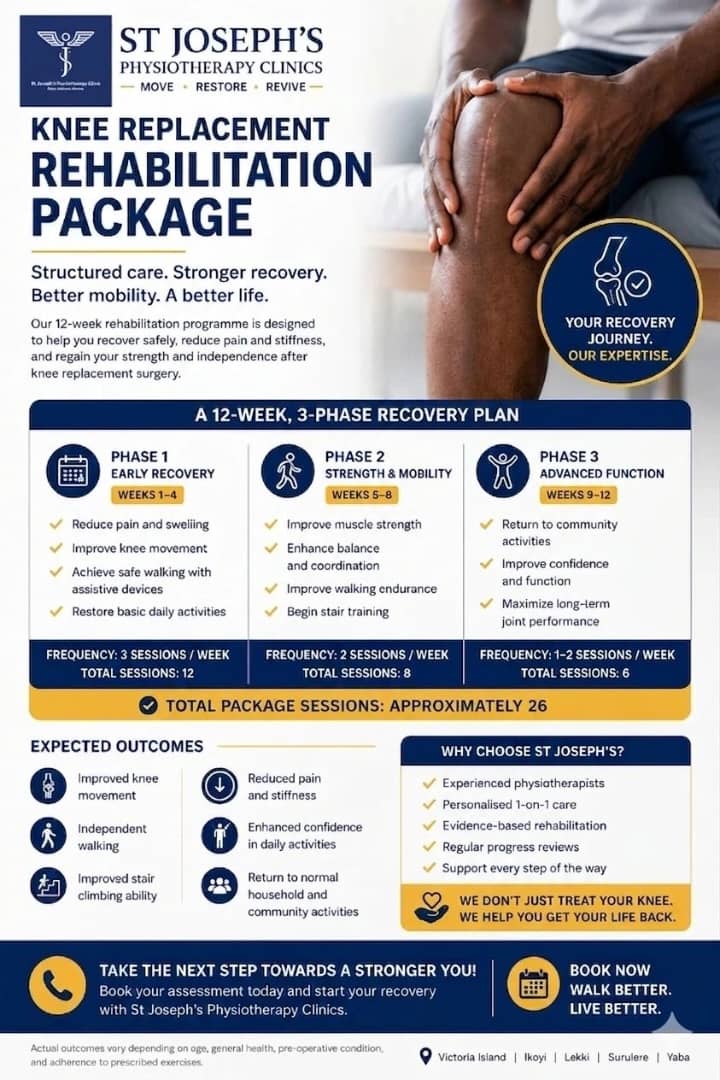
Complete Knee Replacement Rehabilitation Package in Lagos
Knee replacement surgery is a major step toward pain relief and improved mo…

NAMDA threatens strike over unpaid medical lecturers’ allowances
The Nigerian Association of Medical and Dental Academics (NAMDA) has warned…

Resident Doctors Signal End to Strike Threat After High-Level Talks with Gbajabiamila
The threat of a nationwide indefinite strike by the Nigerian Association of…
