Your group recently expressed some reservations about the new National Drug Distribution Guidelines (NDDG) announced by the Federal Ministry of Health. How exactly does these affect local manufacturers?
The new NDDG as announced by the Federal Ministry of Health was fraught with a lot of dangers.
PMG-MAN leadership saw the dangers of this policy and set up a committee to look into it and advise government. From the committee report, it was clear to all stakeholders that if the guideline were implemented as constituted, would have resulted to the following: Monopoly or ‘cartel’ as the industry supply chain will be controlled by foreign companies. Just imagine what will happen when another person, especially a foreign company controls your supply chain. He will become the channel captain and dictates the pace of the industry. This would have been a disaster.
Another thing that is going to happen to us we said very clearly is that there will be closure of major pharmaceutical companies especially the Small and Medium scale Enterprises (SMEs).
Now there will be high cost of drugs to patients because they have introduced another layer of chain.
There will also be dearth of research and development for new products. You cannot introduce a new product any longer because they cannot survive.
More importantly also is that there will be loss of over 300,000 jobs in the first few months of its implementation.
What does the NDDG mean? What it means is the policy as constituted demands that manufacturers and importers can only sell their products to a few mega distributors. These mega distributors of mainly Asian extraction were not also willing to take all the products of local manufacturers. The implication of this is that the mega distributors will abandon new products that are not in high market demand and the poor manufacturer will be left to his fate, as he or she has no alternative route to sell his product. The policy runs against all business logic in the contemporary free market enterprise world. No sane person will be willing to invest in the manufacture of new products or molecules knowing very well that the mega-distributors will not stock his product and he or she has no escape route to sell his or her product. This is why we are saying that the NDDG as presently constituted will kill the industry if we allow it to stand. But we are very glad that the government is listening to us and is trying to make an alternative.
The position of PMG-MAN on NDDG is very clear, and this has been communicated to the Federal Ministry of Health and its agencies.
For the industry to grow and meet stakeholders and patients expectations, local manufacturers must be allowed to have alternative point of sales for distributing their products outside the mega distributors.
We are also of the strong opinion that unregulated market places where drugs are sold must gradually be phased- out by providing alternative regulated platform where all regulatory agencies are allowed to enforce their regulatory function within the purview of the governing extant laws.
We are glad that the government is listening to us and are taking the lead to review the NDDG with a view to protecting the entire pharmaceutical industry from collapsing.
.jpg)
So you are not calling for abolishment of the NDDG but a review?
We are calling for a review because the industry wants the drug distribution channel to be sanitized. We are in full support of the sanitization. However, we are saying that it must follow a process that makes provision for the growth of the industry, a process that allows the industry to be sanitized at various channels. We are saying critically that you cannot clean this system by only imposing a mega distributor, who does not contribute anything. We are working with government to sanitise other levels chains of distribution including the retail and wholesale system. We have made it clearly to government that the problem we have in Nigeria is the wholesale system.
Another major issue we have in Nigeria is that of fake drugs. What is your group doing to curtail the incidence of fake drugs in Nigeria? Is the incidence reducing?
PMG-MAN is in constant collaboration with NAFDAC and other healthcare professionals to stamp-out this ugly incidence of fake drugs. It is gladdening to note that the incidence is rapidly coming down, but there is no margin for error when it comes to health or life. We are committed to zero tolerance on fake and adulterated products starting from members. Apart from taking lives, fake drugs are taking a lot of employment and income including GDP. So we are saying no fake and adulterated drugs.
Do you think the introduction of anti-faking devices has helped in anyway?
Well it is still premature to say. The anti-faking devices are still relatively new but you see the DG of NAFDAC and his team has a concept. Of course it is cutting edge technology but we will give them time to be able to evaluate whether this is working or not. I am very sure if it is working they may have to reinforce it and be able to find a way to make it adaptable to other products. So I will say it is still premature for us to contemplate in terms of how effective it is.
We have a new President, Muhammad Buhari. If you could sit with the President, what recommendations will you make as regards the pharmaceutical industry?
If I were to meet the President and set the agenda for pharmaceutical industry intervention in Nigeria, I will summarily advise as follows: Declare the pharmaceutical sector as an emergency because of its importance to the entire healthcare delivery system and job creation in Nigeria.
I will also ask him to reverse the CET in favour of local manufacturing and defend his position before his colleagues in the ECOWAS on the basis that about 85 per cent of all pharmaceutical industries in ECOWAS region are cited in Nigeria.
I will also want him to know clearly that he must direct the Federal Ministry of Finance to immediately release and disburse the N200 billion Pharmaceutical Intervention Fund to industries at a single digit interest rate.
I will also like to tell him to begin to enforce the National Drug Policy that makes it mandatory that government at all levels must give priority to locally manufactured drugs during procurement planning and tender pre-qualifications.
I will also want him to immediately put on prohibition list all drugs that the local manufacturers have adequate and sufficient capacity to meet the national need. If that is done it will also conserve foreign reserve.
The PMG MAN and other manufacturers in Nigeria, do they have the capacity to manufacture all the country’s drug needs?
The combined capacity of PMG-MAN members together with other non-member local manufacturers is enough to meet the country needs in some essential medicines.
They are however some products-groups were the local capacity is very low. Such areas include high-tech products like biological, vaccines and so on.
The issue of capacity is relative; I think when the industry is challenged through local patronage and other favourable policies from government, then, we can evaluate the actual local capacity of PMG-MAN members in relation to the total drug needs of the country. Today, the actual capacity utilization for the industry stands at about 33 per cent. This shows that at full capacity, the industry could meet the national drug needs in so many therapeutic categories. We think the industry has the capacity to meet national drug needs except in few areas.
But the federal government is planning for local manufacturing of vaccines and planning to work with the private sector. Has PMG-MAN been contacted?
I am aware and also aware that one of our principals in Korea is one of them. The local manufacturers as a group have not been contacted but we also know that government is planning that. Maybe they have not contacted us because they feel we do not have the capacity. However, one of our member- May& Baker- is in partnership with government.
Are you in anyway recommending ban on drug importation as a way of encouraging local industry?
PGM-MAN is not advocating for a blanket banning of all drugs imported into the country. What is reasonable is that all Drugs in which local manufacturers have sufficient capacity should be placed on prohibition list. This list will continue to grow as the industry show progress on other therapeutic groups. Other developing countries have also toed this path of sustainable growth strategy.
What percentage of your raw material for production is sourced locally? What are you doing to solve the problem?
In the pharmaceutical Industry, raw materials consist mainly of the Active pharmaceutical Ingredients (API) and excipients. Today, less than five per cent of the total raw materials are sourced locally. However, for companies that are into liquid preparations, this percentage may increase to 20 to 30 per cent if water is considered as part of the raw materials. This clearly shows that the Federal Government needs to revisit the industry’s plea on harnessing the outputs of petrochemical industries.
By: Chukwuma Muanya
Guardian News
ABUJA: Training Schedule for Basic Life Support BLS, Pediatric Advanced Life Support (PALS), Advanced Cardiovascular Life Support ACLS, First Aid, CPR, AED
PORTHARCOURT: Training Schedule for Basic Life Support BLS, Pediatric Advanced Life Support (PALS), Advanced Cardiovascular Life Support ACLS, First Aid, CPR, AED
LAGOS: Training Schedule for Basic Life Support BLS, Pediatric Advanced Life Support (PALS), Advanced Cardiovascular Life Support ACLS, First Aid, CPR, AED
STOP paying for airtime and electricity, Let your phone pay its bills with ScreenT
You may also like
Comrade Lemii Christian Emerges Chairman of NANNM Rivers State Branch in Historic Victory
PORT HARCOURT, NIGERIA Following the long awaited National Association of N…

FG Supports Robotic Surgery Expansion to Reduce Medical Tourism
Nigeria is taking another step toward strengthening specialised healthcare …
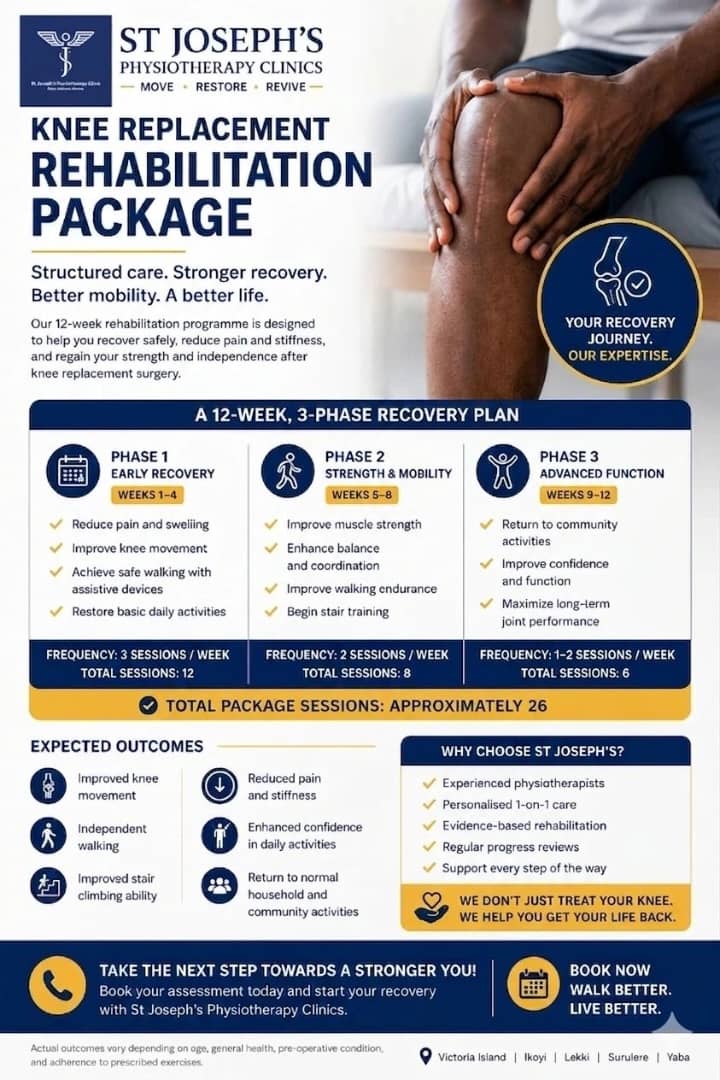
Complete Knee Replacement Rehabilitation Package in Lagos
Knee replacement surgery is a major step toward pain relief and improved mo…

NAMDA threatens strike over unpaid medical lecturers’ allowances
The Nigerian Association of Medical and Dental Academics (NAMDA) has warned…

Resident Doctors Signal End to Strike Threat After High-Level Talks with Gbajabiamila
The threat of a nationwide indefinite strike by the Nigerian Association of…