Curious About unraveling the truth behind so alleged misconducts and unprofessionalism reported to haverooted itself in 'govemment health institutions, a team of Health & Wellbeing journalists took a secret tour to the National Orthopaedic Hospital Igbobi, Lagos (NOHIL), to investigate and unravel the real truth behind the years long rumours and allegations and below was what we got.
Life has dealt a cruel blow at Maurice Anyanwu, a 62-year-old father of 5. A general notion has it that life begins at forty but for Anyanwu, sufferings and painful experiences began in his forties. Although almost 63 now, he is still struggling with this challenge, yet optimistic that with his admission into the National Orthopaedic Hospital Igbobi, Lagos (NOHIL), he sees light at the end of the tunnel.
The story behind the 13 years of excruciating pains of Anyanwu, which has turned the erstwhile bread winner of his family into an absolute dependent man dates back to his days as a crane operator at Niger Duck. That fateful day in 2002, the bustling Anyanwu who was about 49 at that time had gone to work like every other day, unaware of the impend ing danger. As he progressed in his daily routine, a metal pipe hanging above him fell down from its place hitting his right leg and shattering the bone.
Since that day, Anyanwu's place has been in hospitals. The ailment has drained his life savings, thus salvaging his situation is now a kind of community effort but in spite of this he still remains thankful for being alive. His only regret he stressed was that his 13 years of ailment would not have lasted more than 2 years if only he had shunned malicious rumours and availed himself for treatment at NOHIL, commonly known as Igbobi. As he sat on his bed, at the H ward of Igbobi, Anyanwu could not hold his joy as he confessed to his newly found hope after series of surgery at Igbobi.
"My story is a long one. This thing happened since 13 years and 10 months ago, that was 2002. I had been going to other hospitals but I started coming here October, 2015. I must confessed that all the other places I have been going since 2002 have been like a wasted effort but since I came here, I can see now that my leg is better, I can now use it to move, for 13 years I have been using clutches. If only I did not listen to rumours people spread outside there that if! come to Igbobi, they will cut my leg; the way r am seeing things, this leg would not have lasted for more than two years."
For 52 years old Ejike, a patient at ward of NOHIL who has also gone through series of surgeries including plastic surgery at the hospital, the' realization of how professional the team of doctors are, how neat the hospital is and how caring the health workers has an entirely distinct picture from the one hewas used to hearing of the hospital at the outside world.
"The services I have been getting here are not bad compared to what I hear out there; when you mention Igbobi, people will discourage you from going, there is this general notion that when you get there, they would just cut your hand. The only problem I think could lead to that is when the patient is not responding financially such that when the time for maybe operation is far gone, the injured area might be badly affected.
NOHIL who confessed to the level of professional care they have been receiving at the hospital; this is an entirely different picture from rumours ravaging the nation on how the orthopaedic hospital has become a death trap and place where cases of broken bones are simply resolved by amputation.
These rumours have so much dented the image of the hospital that many Nigerians prefer to seek care abroad especially when it comes to advanced surgeries in orthopaedic care.
However, for every smoke, it is believed that there must be a fire. But even if some of the notions held against the hospital might have had an atom of truth, the Medical Director (MD) ofNOHIL, Dr. Olurotimi Odunubi when confronted said unprofessionalism is today a thing of the past in NOHIL, going by the enormous development and restructuring that have taken place in the hospital in the last 7 years.
Odunubi, said the hospital which once had all the surgeons practicing like general orthopaedic surgeons have now been divided into 5 sub-specialties such that they now have highly skilled personnel in various specialties. Adding that with this advancement, surgeries which people hitherto went abroad to perform is now done successfully at the hospital.
"Our main area of progress is in the development of highly skilled orthopaedic techniques in patients with orthopaedic diseases, we look at patients with various diseases, and we divided the service provision into five major sub specialties, the paediatric sub-specialty, the arthroscopy, we have arthrosplastic which is joint replacement, we have spine and special trauma. Before this time, all the orthopaedic surgeons were practicing like general orthopaedic surgeons. But now, orthopaedic practices have gotten more sophisticated that these sub-divisions are necessary so that people can focus in their various skills providing this kind of sub- specialization to the patients. We have done this now in the last seven years and it is improving the availability of highly skilled surgeons in the hospital.
 "Since we discovered for instance the joint replacement, the turn up has tripled; before the discovery, we had one or two in a month but right now the average is 6; this is because the public has now developed more confidence in the success of the surgery, they can see more and more patients that have had the surgery done successfully and therefore they are presenting themselves for treatment. These were surgeries that people used to go abroad for but we have made them available in the country, same thing with spine surgery and also arthroscopy. The arthroscopy is like key hole surgery, the access to the joint is through a very small hole, an incision and then an instrument is passed, then the surgeon can look at his screen and be guided on what to do and therefore the recovery time is faster, damage done to tissues in terms of access to where you want to go is minimal and so the person can go back to his normal life activities as soon as possible."
 Even with this advancement, the MD said more was still needed to be done in order to also because of the more structures we have added; a lot of air conditioners and some other advancements have been added to the new buildings that have been put up in the hospital. So on the average now we are paying about N5.8million naira every month for electricity, it used to be N3.8 million. In February when the new tariff came, the first we saw was 5.8millionand that was February bill. Now in March, I would just use March as an example, the electricity supply has been very poor because of that we are running generator, am sure you must have passed some of the generators. We buy diesel of about 2.4million naira every week, that adds up to about 9.6 million naira every month on diesel, so add 9.6 million to 5.8 million, we are even buying more diesel than we are paying for the electricity and that is just on electricity alone. I have not talked about maintenance of those generators, to keep this hospital running during working hours, we have to put on a 750kva generator, two 500kva and one 250kva generator to supply minimum electricity and when office closes at 4pm at least that 750kva must be running to supply the wards, and then we consume about 1200 litres of diesel to run those generators every day. The electricity is so key to keeping the hospital running, even water, apart from pub- jus lie water supply which Lagos state provides, sui we also have boreholes, about three of them all which we need to maintain, even Lagos state has increased their tariff for water supply, we tie were paying N250, 000 before but now it is w; N400, 000 every month for water which they addon't even supply all the time."
Another thing our team discovered during lie the course of investigation was that patientsthough satisfied with services received also differ in the cost at which these services were rendered. Most of them think cost of services were a little higher than what they expected toget in a government institution. This was buttressed by Anyanwu and Ejike when they said a that you can get a world class care at Igbobi ifyou are capable of footing the bills.
When confronted with this, the NOHIL boss stated the case of diminishing fund, hike in utility bills, the recerit value of the naira among the causes of this. Despite these, he said they have tried to keep the cost of services as low as possible knowing that most patients were not able to pay for the old bill alone an additional one.
"Recently with the naira falling most of the contractors that we engage to supply consumables to the hospitals things like cotton wools, gloves, needles, syringes have not been able to supply at the old prices anymore because most of these consumables are imported, even implants, the ones we use to fix fractures are all imported. When you give them the contract they would just write you, 'we are not able to supply' and you won't get any other person to supply, unless at a higher price because of the value of the naira that has fallen and this cost has to be passed to the patients, patients that are not able to pay even the old bill now have to pay a new increased bill, so those are the challenges we are facing in terms of maintaining services, so it is not just a question of improving services even to clos sustain what are providing presently, it is re- any ally a challenge."
He pointed out that inability of some patients to pay for services rendered to them off was threatening the stronghold of the system, adding that last year alone, bad debts recorded from patients was not less than N42 million; this he said was after some philanthro- talpists have cleared the bills of some patients.
"Apart from dwindling government. resources, the fact that we cannot get the patients to pay their bills is also a major challenge. A situation where most of the patients are poor, you provide service and you are not able to recover the cost of the service provided; if as a government hospital, we have tried to keep the cost of service for as low as possible for everybody but even that low cost not everybody is able to afford it; and the poor people where will they go? They can't go to private hospital, they can only go to hospitals like this. Again, there is a government policy that if there is an emergency, you provide the care first, and then you present the bill to the patient after ensuring that the life is saved, so If sometimes when you· present the bill, large percentage of Nigerians pay, but some just n don't have the money to pay and therefore the used resources are not been replenished. Those type of incident either run down the system or make the system not to sustain what it is able.to deliver."
Asked how they handle discharged patients who are not able to clear their bills, Odunubi said, "there are some group of patients right from their admission, they have nobody, maybe they were picked on the road by the police, road safety corps or somebody and there is no relative has showed his face to say that they are related to them, right from day one you know that these ones are problematic, the hospitals has to bear the cost of treat- men. There are some that initial payment was done by somebody and then every other person disappears, you continue treatment and at the end of the treatment they are discharged and they are owing. Now we have a medical welfare social department, part of their job is to evaluate whether the patient is truly a pauper or not by interviewing the patients, doing home visits, if there is an address the patient has given before and verifying that address, whether there are relations that can payor not, even some are homeless. So if they verify truly that the patient is a pauper and has no means of paying, we allow them to go, there are some that we verify that they have means of paying, we go after those people and put d pressure on them to pay.
"Now we also have some philanthropists that have come to the aid of such patients so it is not just the hospital carrying the burden alone, some good individuals and foundations that have been helping, they go to the medical social workers and ask of patients that are owing and they pay, some do it even routinely, some do it at their birthdays or they are celebrating and they ask for patients that are owing."
On ways of ensuring no patient is exploited, Odunubi said, there is SERVICOM office close to accident and emergency ward where any patient can walk into and lay complains about poor services, poor attitude, not getting value for money, some people come to this office to lay their complaints, some do that through the hospital's website, and sometimes it is by phone calls. He added that there are also complain boxes all over the hospital and that any staff convicted always faces some penalties depending on the offence.
By: Azoma Chikwe, Nkiru Odinkemelu and Ogechukwu Agwu
Daily Sun News
ABUJA: Training Schedule for Basic Life Support BLS, Pediatric Advanced Life Support (PALS), Advanced Cardiovascular Life Support ACLS, First Aid, CPR, AED
PORTHARCOURT: Training Schedule for Basic Life Support BLS, Pediatric Advanced Life Support (PALS), Advanced Cardiovascular Life Support ACLS, First Aid, CPR, AED
LAGOS: Training Schedule for Basic Life Support BLS, Pediatric Advanced Life Support (PALS), Advanced Cardiovascular Life Support ACLS, First Aid, CPR, AED
STOP paying for airtime and electricity, Let your phone pay its bills with ScreenT
You may also like
Comrade Lemii Christian Emerges Chairman of NANNM Rivers State Branch in Historic Victory
PORT HARCOURT, NIGERIA Following the long awaited National Association of N…

FG Supports Robotic Surgery Expansion to Reduce Medical Tourism
Nigeria is taking another step toward strengthening specialised healthcare …
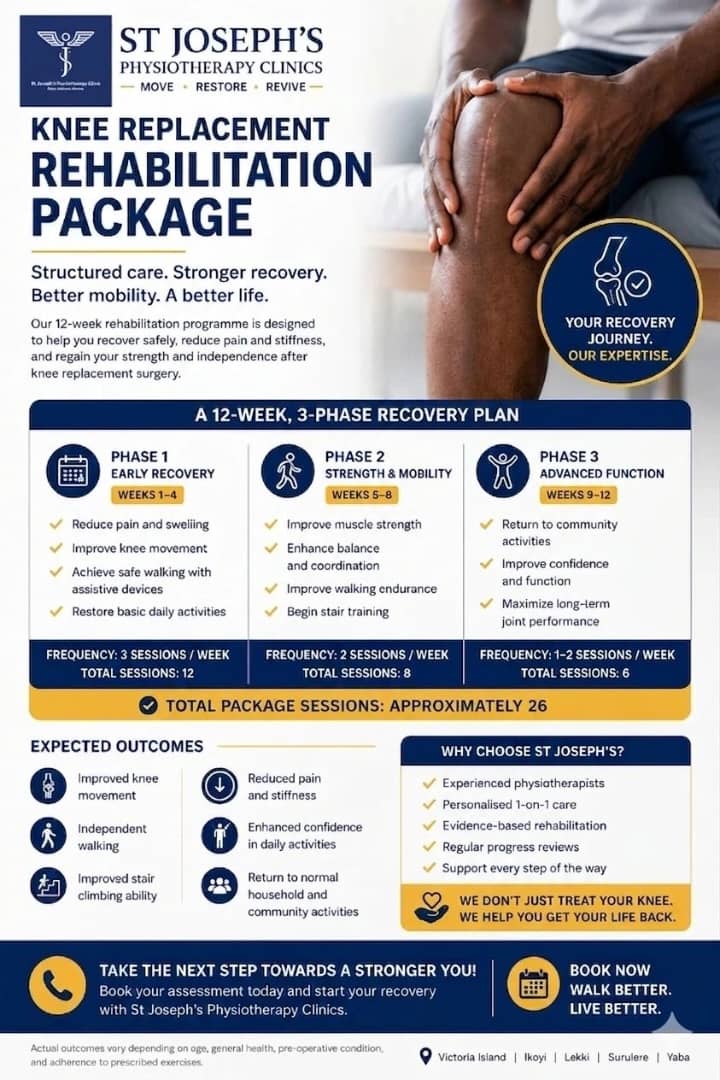
Complete Knee Replacement Rehabilitation Package in Lagos
Knee replacement surgery is a major step toward pain relief and improved mo…
NAMDA threatens strike over unpaid medical lecturers’ allowances
The Nigerian Association of Medical and Dental Academics (NAMDA) has warned…
Resident Doctors Signal End to Strike Threat After High-Level Talks with Gbajabiamila
The threat of a nationwide indefinite strike by the Nigerian Association of…