Enugu — The World Health Organisation (WHO) on October 20 declared Nigeria an Ebola free country. Since WHO made the declaration, Nigerians have been celebrated this success story achieved through concerted efforts by all stakeholders, including governments at all levels and the private sector.
Going by this declaration, Nigeria has been declared free from this dreaded virus which was introduced in Nigeria on July 20 when an infected Liberian, Patrick Sawyer, boarded a plane to Lagos.
WHO recommends that the end of Ebola outbreak in a country could be declared once 42 days pass and no new case is recorded.
Ikenna Okeke, a lawyer in Enugu, praised the Federal Government and others who contributed to end Ebola in Nigeria, saying that everybody deserves commendation for this feat.
It could be recalled that most Enugu residents had lived in fear in the days of Ebola, especially when a nurse who had contact with Sawyer, the index case in Nigeria, escaped quarantine in Lagos and returned to Enugu to join her husband. The nurse was deported to Lagos where she tested negative to the virus.
Since Nigeria has been declared Ebola free, our correspondent tried to find out how people have been living in Enugu after Ebola. It was discovered that most commercial banks that used to test customers' temperature with infrared thermometers in the days of Ebola, have ceased to do so. The use of sanitizers in banks, offices and private homes has also reduced, according to our findings. Our observations, however, show that public and private schools in Enugu State still comply with preventive measures as directed by the federal and state Governments for curbing the Ebola Virus Disease (EVD).
When Daily Independent visited some primary and secondary schools in the Enugu metropolis, it was observed that the students were subjected to regular hand washing with liquid soap and the use of sanitizers. Heaps of buckets and basins were also seen inside many classrooms in the schools visited. While the private schools visited had infrared thermometers for temperature measurement, it was observed that the public schools lack the equipment. A teacher at the Cathedral of Good Shepherd Nursery and Primary School, Independence Layout, Enugu, told Daily Independent that the sanitizers, buckets, liquid soap and infrared thermometers were provided for them by the Anglican Church, which owns the school. But, the Principal of Government Day Secondary School Independence Layout, Enugu, Mrs. Kate Nwakaego Ugwuoti, said they complied with the preventive measures, but through self-help.
"We know what we should do. We sent our teachers to training. Our students know about hand washing and use of sanitizers. We procured enough water. We have a well here constructed by Rotary Club but to complement, we buy water regularly from tankers. But, all these things were made possible by the school through the School Management Committee, which comprises the representatives of the parents and the community leaders, like the traditional ruler of our host community. The committee takes good care of the school irrespective of what government is doing" she said.
Ugwuoti, however, noted that they were yet to be given infrared thermometers, even though the state government promised to provide the equipment for schools.
At New Haven Primary School 4, the Headmistress, Mrs. Benedeth Ozioko, said: "You can see sanitizers, buckets and soaps even here in my office. We have it in all our classrooms. But, we don't have thermometers." Ozioko said she used overhead money given to her to buy all the required items for Ebola prevention. She, however, regretted that the overhead from the ministry no longer comes as and when due, adding that she relied on the one she received long ago to cater for the Ebola matter.
Our correspondent, however, gathered from pharmacy shops that the patronage of the sanitizers has dropped tremendously since Nigeria was declared Ebola free.
"The patronage of sanitizers has dropped. At the peak of the Ebola scourge, we recorded very high patronage. The market was booming. But now, the patronage has dropped drastically," a staff of Appollo Pharmacy in New Haven area, one of the biggest pharmacy shops in Enugu said. A staff of Ivy Pharmacy in Trans Ekulu corroborated a drop in the patronage of sanitizers since the announcement of the country's Ebola free status.
"It was just as if people stopped buying sanitizers as soon as this announcement was made. Prior to outbreak of Ebola, we used to have sanitizers but the patronage was low. But when Ebola started, there was astronomical rise in the patronage of sanitizers. People kept trooping in and asking us of sanitizer. But since they announced that Nigeria is free from Ebola, the patronage has dropped. We used to sell cartons of sanitizers, but now, it is not like that. I don't think we sold up to 30 yesterday. This is the situation" our source said.
On the other hand, bush meat sellers in Enugu who were almost thrown out of business at the peak of Ebola crisis in the country, said normalcy has started returning to their business. A bush meat seller in Udi town, Mrs. Ngozi Igwe, recalled that most of their customers ran away for fear of contacting Ebola through bush meat.
"About two months ago, if you come here, you will not see anybody, but you can see my customers enjoying themselves here now. We are hopeful that business will boom again soon" Mrs. Igwe said. John Ude, who sells bush meat at Ozalla junction in Nkanu West local government area said, adding that business has started picking up quite unlike the very low patronage while the Ebola affliction lasted.
"When that Ebola came and medical expects announced that it could be contracted through bush meat, all our customers ran away. You known we have the University of Nigeria Teaching Hospital (UNTH), a stone throw away from here. Most of the doctors and other staff there were our customers before, but when Ebola came, they stopped coming. Now, they are gradually returning. Business is picking up and we know by the end of the year, things will normalize" he said.
By Emmanuel Nzomiwu
AllAfrica
ABUJA: Training Schedule for Basic Life Support BLS, Pediatric Advanced Life Support (PALS), Advanced Cardiovascular Life Support ACLS, First Aid, CPR, AED
PORTHARCOURT: Training Schedule for Basic Life Support BLS, Pediatric Advanced Life Support (PALS), Advanced Cardiovascular Life Support ACLS, First Aid, CPR, AED
LAGOS: Training Schedule for Basic Life Support BLS, Pediatric Advanced Life Support (PALS), Advanced Cardiovascular Life Support ACLS, First Aid, CPR, AED
STOP paying for airtime and electricity, Let your phone pay its bills with ScreenT
You may also like
Comrade Lemii Christian Emerges Chairman of NANNM Rivers State Branch in Historic Victory
PORT HARCOURT, NIGERIA Following the long awaited National Association of N…

FG Supports Robotic Surgery Expansion to Reduce Medical Tourism
Nigeria is taking another step toward strengthening specialised healthcare …
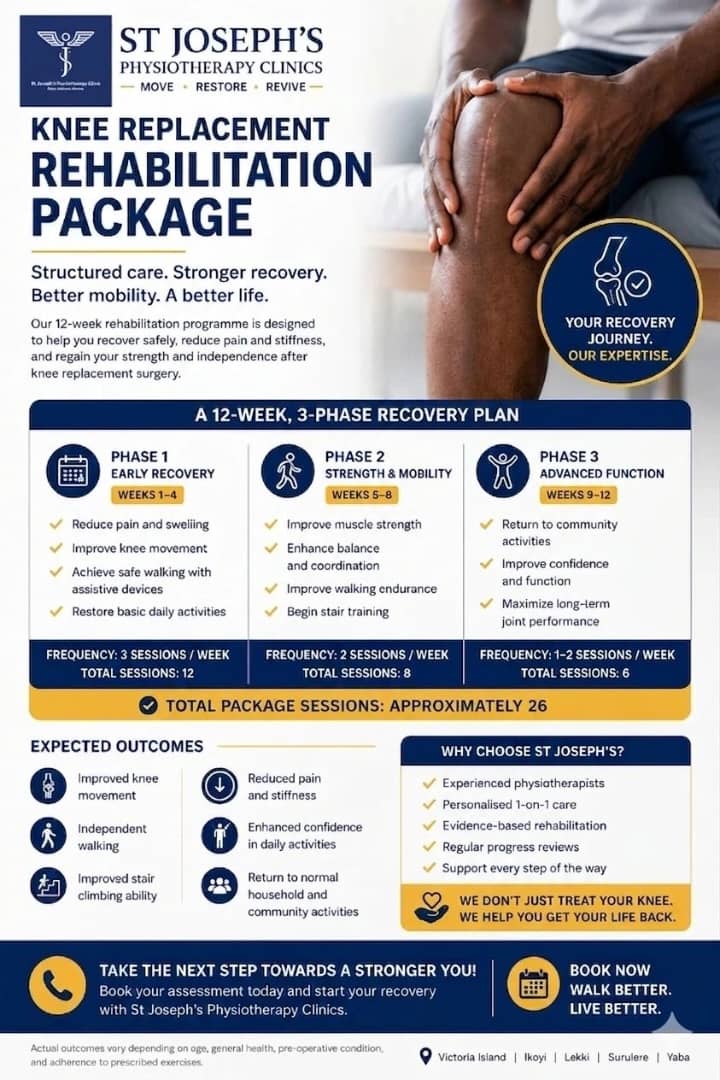
Complete Knee Replacement Rehabilitation Package in Lagos
Knee replacement surgery is a major step toward pain relief and improved mo…

NAMDA threatens strike over unpaid medical lecturers’ allowances
The Nigerian Association of Medical and Dental Academics (NAMDA) has warned…

Resident Doctors Signal End to Strike Threat After High-Level Talks with Gbajabiamila
The threat of a nationwide indefinite strike by the Nigerian Association of…