Mr Sanjo Akintunde Oyeniyi , Head of sales and marketing, Bond Chemicals Industries Limited, Lagos in this interview with Sade Oguntola talks on the need to peg exchange rate for pharmaceutical companies given the sector’s importance in the nation’s development as well as caution mothers on wrong use of syrups for children.
Bond Chemicals Limited was initially set up as a retail outlet for Pharmaceutical Products in 1976 by Sir Chief Adebowale Omotosho, but later metamorphosed to Bond Chemical Industries Limited in 1988. Already it is five times its size at inception, how was this feat achieved?
Sir Adebowale Omotosho, our chairman, is a highly visionary and energetic leader, who has not relented since Bond Chemist started in Ilupeju and later transformed into a modern pharmaceutical company. The mission of the company, mainly into manufacture of pharmaceutical drugs and foods, including hot drinks such as gin and whisky, remains ensuring every of its medicines meet the desired quality and excellence in pharmaceuticals for all users.
Even in difficult business environment, where the purchasing power of the people is low, people still want efficacious products. Quality products will always still stand out. This is the belief of the company. We strictly maintain the quality of our products; this is what makes us to stand out.
 Nobody will want to take any Nigerian products when they are substandard. But when they see good Nigerian products; Nigerians would not mind patronising whenever.
 It is just an assumption that many Nigerians only want to patronise imported products rather than Nigerian–made products despite their quality. They are now discovering that many imported products are either fake or substandard. Now, they prefer to buy products from companies that they can identify, whose products are good.
Has it been easy ensuring every of your medicines meet the desired quality and excellence in pharmaceuticals for its users given the production challenges in Nigeria?
It has not been easy. In fact, it is more profitable to import medicines for sales than to manufacture them in Nigeria.
But being an indigenous company, Bond Chemicals Industries management had remained committed to providing medicines for Nigerians to support the country’s attainment of self sufficiency.
The belief of Sir Omotosho is that as a Nigerian company, we should provide for our own people, but it has not been easy.
There are many challenges, including poor power and water supply. Bond Chemical factory in Awe, Oyo State is almost a country to itself given that it provides its own electricity, water and security. That is what an average industry actually passes through in Nigeria today. We are hoping that with the change in government, things will improve.
How have all these imparted on the cost of medicines from this company?
The selling cost of a drug is dependent on the profit desired and whether the company wants to remain in business or not. But emphasis of our chairman has always been that as a company producing products for Nigerians, such must be affordable for its users. As such, we had maintained patient-friendly prices.
With about 72 brands of medicines, including drugs for children such as paracetamol and basic antibiotics, our drugs come at patient-friendly prices, are of high quality; and are distributed all over the country, including where Boko Haram is striking. These gives our products edge over those manufactured by other companies.
It will be heart-warming to know that Bond Chemicals Industries is the only company in Nigeria manufacturing hydroxyl urea, a drug for management of sickle cell disease. The drug, which has been extensively used in Europe and so on, has not been so much available in Africa, because of its cost.
Bond Chemicals is bringing it out at a patient-friendly cost and in smaller packages of 250mg and 100 mg, unlike the 500kg that is obtainable outside Nigeria.
Why did you go into hydroxyl urea production for sickle cell disease mangement?
No doubt, Bond Chemicals Limited had spent more on its production than it realised from its sales. But this is expected when bringing out an innovation.
Already, we are partnering with the Sickle Cell Foundation and talking with the Federal Ministry of Health being the only company producing hydroxyl urea in Nigeria.
For instance, I was a representative of Bond Chemicals Limited in the drafting of standard management protocol for treating people with sickle cell disease.
What caution do you give to mothers on children syrups and liquid formulations as a drug manufacturing company?
Many mothers still give their children paracetamol syrup that might have been opened two weeks afterwards.
We produce a lot of paediatric products, including our own brand of paracetamol called Bonadol. Like every other liquid preparation for children, once the seal has been broken, air enters and as such its usage should be between one and four days.
Of course, putting such liquid drugs in cold, dry place or fridge may help preserve it further, but we recommend its use and discard after four days of opening that bottle or at most one week when it is kept in a cool, dry place, say a fridge.
It does not mean that the product will become poisonous after 10 days, but we usually specify this to be on the safer side for all paediatric products in the liquid form.
Policy somersault is deemed as a major inhibition to industrial growth and economic development in the country. How has this affected Bond Chemicals Limited?
Policy summersault usually experienced when there is a change in government is not good for the local industry at all. A new government comes in and announces guidelines and you as a local manufacturer quickly go to implement. By the time another government comes in this is upturned. It is not good for the local industry.
In advanced countries, policies are retained over a long period. It allows the manufacturer to plan. In Nigeria, policy summersault do not allow for good planning. It usually gives local manufactures lots of stress.
To be self-reliant, lot of countries ensure their banks are not only money making machines. They are made to support local industries to ensure the development and growth of the nation.
Source: Tribune News
ABUJA: Training Schedule for Basic Life Support BLS, Pediatric Advanced Life Support (PALS), Advanced Cardiovascular Life Support ACLS, First Aid, CPR, AED
PORTHARCOURT: Training Schedule for Basic Life Support BLS, Pediatric Advanced Life Support (PALS), Advanced Cardiovascular Life Support ACLS, First Aid, CPR, AED
LAGOS: Training Schedule for Basic Life Support BLS, Pediatric Advanced Life Support (PALS), Advanced Cardiovascular Life Support ACLS, First Aid, CPR, AED
STOP paying for airtime and electricity, Let your phone pay its bills with ScreenT
You may also like

Comrade Lemii Christian Emerges Chairman of NANNM Rivers State Branch in Historic Victory
PORT HARCOURT, NIGERIA Following the long awaited National Association of N…

FG Supports Robotic Surgery Expansion to Reduce Medical Tourism
Nigeria is taking another step toward strengthening specialised healthcare …
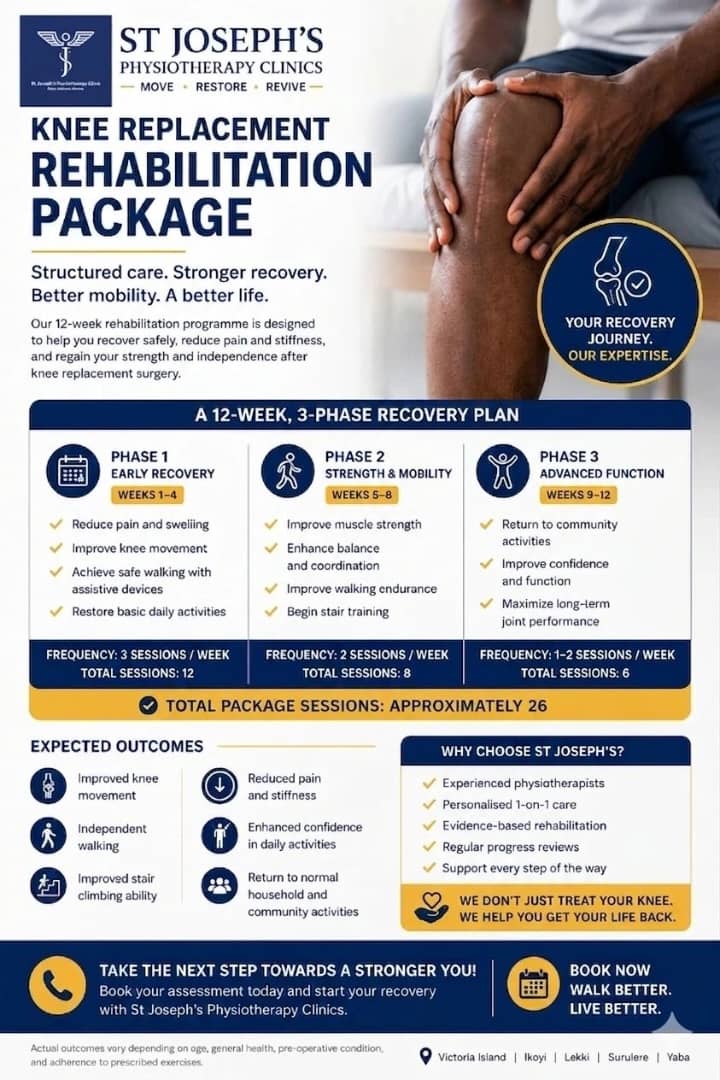
Complete Knee Replacement Rehabilitation Package in Lagos
Knee replacement surgery is a major step toward pain relief and improved mo…

NAMDA threatens strike over unpaid medical lecturers’ allowances
The Nigerian Association of Medical and Dental Academics (NAMDA) has warned…

Resident Doctors Signal End to Strike Threat After High-Level Talks with Gbajabiamila
The threat of a nationwide indefinite strike by the Nigerian Association of…