The just concluded phase of the Measles immunisation in the southern part of the country has raised the hope of containing infant-related diseases, as the National Primary Health Care Development Agency appears to be strengthening its mechanism for effective immunisation coverage of vaccine preventable diseases, amid challenges. Paul Obi who monitored the exercise, writes
As the federal government expedite action to put a halt to vaccine preventable diseases, the need to expand the scope of immunisation coverage is also sacrosanct to achieving that target. Routine immunisation has proven to be a key component in the fight against infant related diseases. The urgency to nip in the bud existence of some of these diseases lies squarely on the effectiveness and efficiency of immunisation.
The National Primary Health Care Development Agency (NPHCDA), as the lead agency charged with the responsibility of eradicating most of the vaccine preventable diseases appears to understand this dynamics and challenge within the health sector. It is this understanding that has very often kept the tempo of immunisation afloat. Thus, routine immunisation, according to NPHCDA Executive Director, Dr Ado Muhammad, has improved tremendously over the years.
But according to GAVI International, despite these achievements so far, moves to eradicate diseases like measles have failed to stay on track. Figures released by the organisation in December last year estimated that about 100,000 people worldwide die from the disease annually. The most vulnerable are children under five years of age. Chances of catching up with the disease are lower where vaccination is effective and thorough.
To that end, GAVI maintained that “data-driven measles and rubella campaigns to ensure children who have not been reached through routine immunisation are protected, as well as supporting parts of the Measles and Rubella Initiative’s work to tackle any outbreaks. Under the new approach, these campaigns will be better planned and synchronised with other immunisation activities and be more targeted at the hardest to reach children. They will also be independently monitored,” the body observed.
GAVI officials argued that “countries cannot begin to hope to eliminate measles until they get epidemics under control. The package of support we have agreed will save lives and give developing countries a golden opportunity to reform how they protect their children against measles.” For measles vaccination in developing countries, GAVI stressed that there are various range of strategies. The organisation added that “with a heavy reliance on large-scale immunisation campaigns. coordinated by M&RI, these, together with global increases in routine measles coverage, have been successful in driving down the numbers of deaths caused by measles – from more than half a million in 2000 to 114,900 in 2014. However, the Global Vaccine Action Plan target for measles to be eliminated from four WHO regions by the end of 2015 is significantly off track and highly unlikely to be achieved.”
GAVI CEO, Dr Seth Berkley, on his part explained that “measles is a key indicator of the strength of a country’s immunisation systems and, all too often, it ends up being the canary in the coalmine.” He further contended that “Where we see measles’ outbreaks, we can be almost certain that coverage of other vaccines is also low. Today’s decision will help to not only sustainably reduce the number of deaths from measles, but it will also help countries improve their coverage with other vaccines.”
 In Nigeria, to domesticate the above mentioned measures have been the focus of NPHCDA through various channels. This, Muhammad believed, was at the root of ensuring full immunisation coverage and curtailing the spread of vaccine preventable diseases. Consequently, the agency’s national measles immunisation programme across the 17 southern states of the country provides an avenue to breach existing gaps in immunisation coverage.
 In Abia State, where the January phase for the measles immunisation was monitored, there were cases of success on one hand and challenges on the other. For instance, in Umuahia North, though there were cases of opposition, the deployment of vaccinators to Churches across the state was very instrumental to ensuring a larger coverage of the population – of children between nine months to five years.
Speaking to THISDAY, Head, Department of Health and Coordinator of the Primary Health Care (PHC) services, Umuahia North, Mrs. Uzoma Ogbuehi, said their experience has been fruitful. She said: “It has been nice. We have been around, we have been to Churches, care givers are very, very cooperative, in as much as they are few that will tend to ask a lot of questions which we answered them, some of them we allayed their fears that the immunisations are safe and free. And we are given from nine years irrespective of the immunisation status of that child.
She explained that notwithstanding the challenges, the officials were still able to weather the storm. Ogbuehi observed that “in as much as the funding came in very late, there are bottlenecks, like the administrative bottlenecks and stuff like that. The donors actually funded it early enough but, the bottleneck was the ministry trying to clear and all of that. You know, we recruited some ad-hoc staff which we have to pay them. Just like I said earlier on, some parents are not comfortable; they would always want to find out why are you immunising my child?
“We also explain, in as much as we get some religious set that will say they don’t accept some drugs and some will intercept the immunisation. The percentage is very minimal but, we also try to vaccinate all that we can find in the churches.” On the success of the exercise, Ogbuehi stated that “we have achieved like 85 per cent and we are getting vaccinators. You know, measles is not just any other vaccine and cannot be given by anybody. We needed that trained man power. It was difficult like, we have 100 teams, we have two vaccinators per team and it was not easy for us to get trained vaccinators that will do the job, but we have to make sure that we also make use of trained members,” she said.
Speaking to THISDAY, a team leader of the vaccinators, Rosemary Kanu, reported few cases of vaccine rejection. Kanu said “we have little challenges by children. Sometimes, the mothers will not allowed them to take these injections, but, some will allow and another thing is that, children are always giving us headache and the people that will hold these children. Well, the people that hold these children, they are trying and that is the little challenges we have. We are batch four, we have the resettlement in full, because, I’m in team 63 and we have to move to resettlement where I draw my map, this is my map for tracking the children and also to help know the particular place I was supposed to drop. We draw it and we use paper for it. When you go, you just look at it to know where you are going,” Kanu stated.
Across the state, where THISDAY visited, public awareness on measles immunisation was very intense as witnessed with the display of banners and public address systems around communities. Though, misgivings surrounding immunisation has reduced drastically mostly in the south, the need for improved information dissemination and education on the subject remains crucial. Even with that, tracking is also another challenge that need to be addressed. By effectively tracking infants within the age bracket for immunisation, government is able to close the gaps with much assurance of the process. Administrative bottlenecks are also issue that should be tackled. Ensuring that measles immunisation is efficient both in coverage and impact is the best to combat all forms of vaccine preventable diseases. With that, even the challenges can be overcome.
Source: This Day Live News
ABUJA: Training Schedule for Basic Life Support BLS, Pediatric Advanced Life Support (PALS), Advanced Cardiovascular Life Support ACLS, First Aid, CPR, AED
PORTHARCOURT: Training Schedule for Basic Life Support BLS, Pediatric Advanced Life Support (PALS), Advanced Cardiovascular Life Support ACLS, First Aid, CPR, AED
LAGOS: Training Schedule for Basic Life Support BLS, Pediatric Advanced Life Support (PALS), Advanced Cardiovascular Life Support ACLS, First Aid, CPR, AED
STOP paying for airtime and electricity, Let your phone pay its bills with ScreenT
You may also like
Comrade Lemii Christian Emerges Chairman of NANNM Rivers State Branch in Historic Victory
PORT HARCOURT, NIGERIA Following the long awaited National Association of N…

FG Supports Robotic Surgery Expansion to Reduce Medical Tourism
Nigeria is taking another step toward strengthening specialised healthcare …
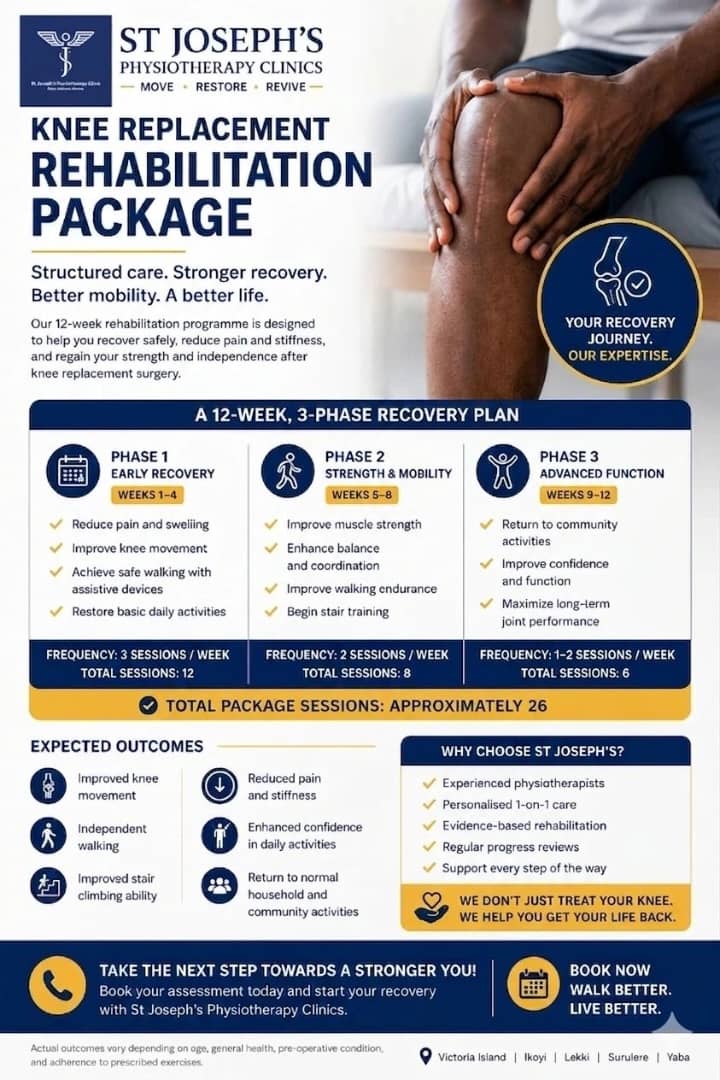
Complete Knee Replacement Rehabilitation Package in Lagos
Knee replacement surgery is a major step toward pain relief and improved mo…

NAMDA threatens strike over unpaid medical lecturers’ allowances
The Nigerian Association of Medical and Dental Academics (NAMDA) has warned…

Resident Doctors Signal End to Strike Threat After High-Level Talks with Gbajabiamila
The threat of a nationwide indefinite strike by the Nigerian Association of…