The National Universities Commission (NUC), last week, convened a meeting of all stakeholders, comprising Deans of Faculties of Medicine and Provosts of Colleges of Medical and Health Sciences, began the evaluation of the new implementing steps outlined on the draft Benchmark Minimum Academic Standards (BMAS), for the Bachelor of Medicine, Bachelor of Surgery (MBBS) programme, with a view to improving upon it to enhance the training of Medical Doctors in the Nigerian University System(NUS). While reviewing the draft BMAS at the three-day Capacity Workshop, held, at the NUC Auditorium, Abuja, the stakeholders recommended that MBBS programme should henceforth be run for the duration of seven years from the present sixyear structure.
Speaking at the opening ceremony, the Executive Secretary, NUC, Professor Julius A. Okojie, OON, said that the idea behind the review was to ensure an all-inclusive curriculum that would enable the universities produce graduates with requisite skills and potentials. He said that the new BMAS was competency-based and would thereby substantially address most of the challenges faced by Nigerian universities in the training of Medical Doctors in the country. He
emphasised that those in whose hands the lives of people were entrusted upon, must be adequately trained and competent enough to discharge their responsibilities efficiently.
Professor Okojie noted that the importance of the medical profession could not be over emphasised, especially in the area of ensuring the well-being of the citizenry. He, therefore, urged Nigerian universities to ensure that they streamlined their medical programmes so as to be in tandem with the new MBBSBMAS. He also called for improved service delivery by those in the profession and for them to work towards meeting the new Sustainable Development Goals (SDGs) of the United Nations in the health sector.
The Executive Secretary further explained that the Workshop was organised to enable the stakeholders brainstorm as well as finetune the new document. He added that the curriculum review was necessitated by the fact that the frontiers of knowledge in all academic disciplines had been advancing with new information generated as a result of research.
Professor Okojie said that other compelling reasons included the need to update the standard and relevance of the discipline in the pursuit of university education in the country as well as to integrate Entrepreneurial Studies as new platforms that would equip all graduates of Nigerian universities with the appropriate skills, competences and dispositions that would make them globally competitive and capable of contributing meaningfully to Nigeria's socioeconomic development.
 In his remarks, NUC Visiting Professor and former Chief Medical Director, University of Benin Teaching Hospital (UBTH), Eugene Okpere, said that the Workshop provided ample opportunities for interactions and knowledge sharing among the participants, who, he said, were critical stakeholders' in the medical profession. He charged them to make necessary inputs that would help in revamping the teaching and learning of all medical-related programmes in the system. He noted that there were some identi
 fied challenges associated with the training and practical aspect of the programmes, such as lack of modern facility; students spending additional years after the prescribed years, occasioned by incessant strikes by universitybased unions; among others, and advised the stakeholders to tackle these challenges headlong, in the best interest of the NUS.
Professor Okpere stated that the Commission, on its part, had made significant contributions towards enhancing the teaching and learnin g o f m e d i c a l - r e l a t e d programmes. He added that work on the draft MBBS-BMAS had been going on for about two years and that it had gone through several stakeholders' reviews. He said that the document had also been sent to 11 distinguished Professors of Medicine for their inputs as well as other critical stakeholders, before being presented to them for final review.
In a goodwill message, the President, National Association of Colleges of Medicine (NACOM), Professor S O. Ogunsola, noted that the document was developed after a long journey of reviews by stakeholders. He recalled that NUC had sent the draft to NACOM, in 2013, for its inputs during which, he said, a committee was set up by the Association that looked into it and made appropriate recommendations to the BMAS.
In another goodwill message, former President, Nigerian Medical A s s o c i a t i o n ( N M A ) , Dr.DomincOsagie, said that the MBBS-BMAS provided solution to the lingering inter-professional rivalry that had long pervaded the system and medical practice. He acknowledged that the review was novel as it was aimed at imparting entrepreneurial skill on the trainees and ensuring the production of more matured set of graduates. Participants at the Workshop later broke into plenary sessions and syndicate groups.
ABUJA: Training Schedule for Basic Life Support BLS, Pediatric Advanced Life Support (PALS), Advanced Cardiovascular Life Support ACLS, First Aid, CPR, AED
PORTHARCOURT: Training Schedule for Basic Life Support BLS, Pediatric Advanced Life Support (PALS), Advanced Cardiovascular Life Support ACLS, First Aid, CPR, AED
LAGOS: Training Schedule for Basic Life Support BLS, Pediatric Advanced Life Support (PALS), Advanced Cardiovascular Life Support ACLS, First Aid, CPR, AED
STOP paying for airtime and electricity, Let your phone pay its bills with ScreenT
You may also like
Comrade Lemii Christian Emerges Chairman of NANNM Rivers State Branch in Historic Victory
PORT HARCOURT, NIGERIA Following the long awaited National Association of N…

FG Supports Robotic Surgery Expansion to Reduce Medical Tourism
Nigeria is taking another step toward strengthening specialised healthcare …
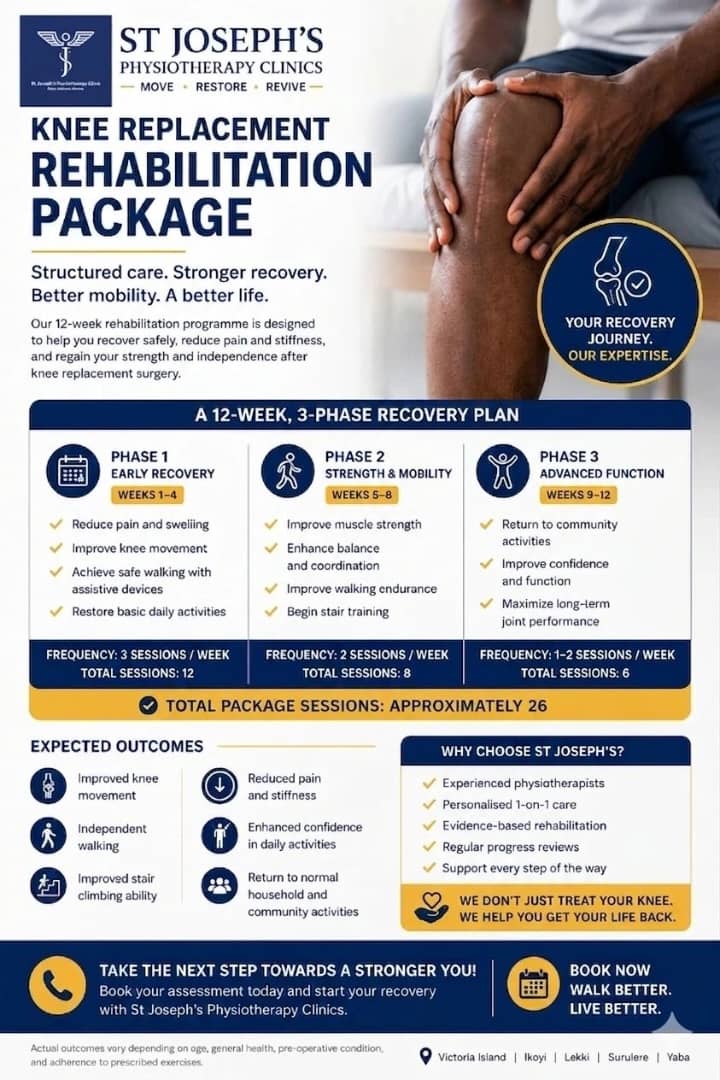
Complete Knee Replacement Rehabilitation Package in Lagos
Knee replacement surgery is a major step toward pain relief and improved mo…

NAMDA threatens strike over unpaid medical lecturers’ allowances
The Nigerian Association of Medical and Dental Academics (NAMDA) has warned…

Resident Doctors Signal End to Strike Threat After High-Level Talks with Gbajabiamila
The threat of a nationwide indefinite strike by the Nigerian Association of…