Report by the Director-General
1. This report responds to the request of the Executive Board in decision EB134(2) in January 2014 to the Director-General to report to the Sixty-eighth World Health Assembly, through the Board at its 136th session, on the outcome of the Second International Conference on Nutrition.
2. The joint working group established by the Director-General in response to decision EB134(2) to prepare a draft outcome document for the Conference met several times. Its output, namely the draft political declaration and framework for action, was finalized by an open-ended working group of Member States that met in Rome on 10–12 October 2014.
3. The Conference was held in Rome on 19–21 November 2014. Participants included representatives of 164 Members of FAO and WHO, observers (including United Nations and other intergovernmental organizations), ministers and other high-level government officials, special guests and civil society and private sector organizations, totalling more than 2200 people. Over the two days before the Conference special meetings were organized for civil society organizations, private sector representatives and parliamentarians. The Conference itself included thematic roundtables and side events.

4. At its first session, the Conference adopted the two outcome documents, namely the Rome Declaration on Nutrition (Annex 1) and its companion Framework for Action (Annex 2).
OUTCOME DOCUMENTS
Context
5. The Rome Declaration acknowledges that undernutrition, vitamin and mineral deficiencies, obesity and diet-related noncommunicable diseases are global challenges, that different forms of malnutrition coexist within most countries, that current food systems are being increasingly challenged to provide adequate, safe, diversified and nutrient-rich food for all, and that trade policies are to be conducive to fostering food security and nutrition for all. It recognizes that the root causes of malnutrition are complex and multidimensional, and expresses deep concern that, notwithstanding significant achievements in many countries, recent decades have seen modest and uneven progress in reducing malnutrition in all its forms. It sets out a vision for a world with coherent policies to promote a diversified, balanced and healthy diet at all stages of life, with national health systems integrating nutrition, coordinated action among different actors and sectors, empowerment of consumers, and policies that pay special attention to women.
ABUJA: Training Schedule for Basic Life Support BLS, Pediatric Advanced Life Support (PALS), Advanced Cardiovascular Life Support ACLS, First Aid, CPR, AED
PORTHARCOURT: Training Schedule for Basic Life Support BLS, Pediatric Advanced Life Support (PALS), Advanced Cardiovascular Life Support ACLS, First Aid, CPR, AED
LAGOS: Training Schedule for Basic Life Support BLS, Pediatric Advanced Life Support (PALS), Advanced Cardiovascular Life Support ACLS, First Aid, CPR, AED
STOP paying for airtime and electricity, Let your phone pay its bills with ScreenT
You may also like
Comrade Lemii Christian Emerges Chairman of NANNM Rivers State Branch in Historic Victory
PORT HARCOURT, NIGERIA Following the long awaited National Association of N…

FG Supports Robotic Surgery Expansion to Reduce Medical Tourism
Nigeria is taking another step toward strengthening specialised healthcare …
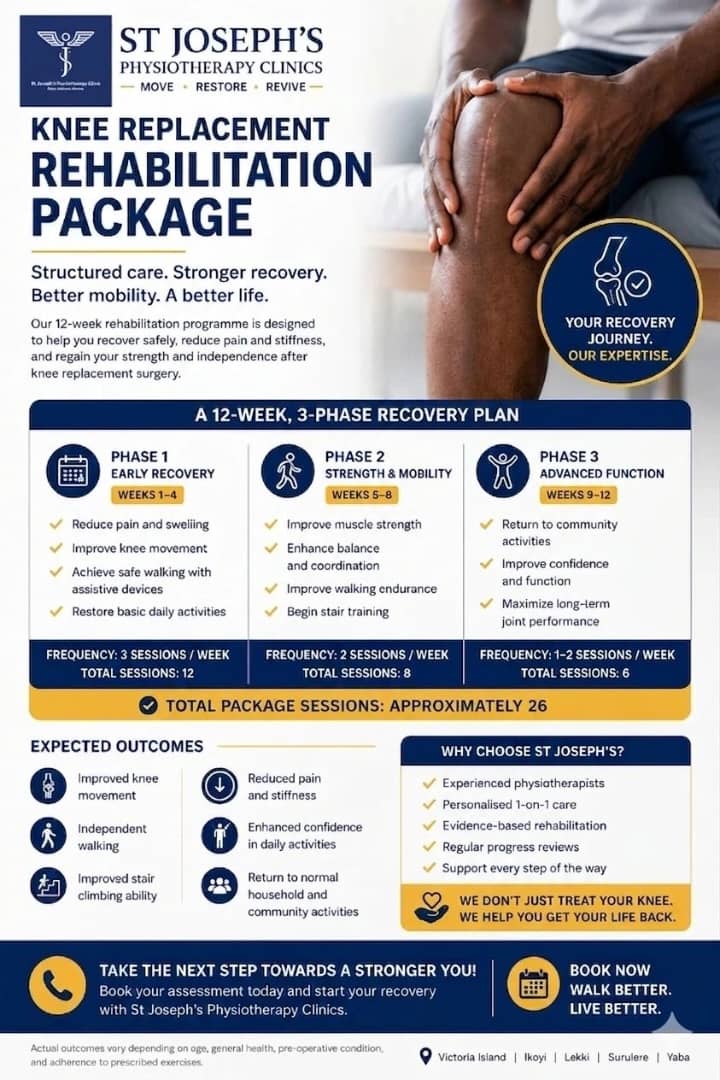
Complete Knee Replacement Rehabilitation Package in Lagos
Knee replacement surgery is a major step toward pain relief and improved mo…

NAMDA threatens strike over unpaid medical lecturers’ allowances
The Nigerian Association of Medical and Dental Academics (NAMDA) has warned…

Resident Doctors Signal End to Strike Threat After High-Level Talks with Gbajabiamila
The threat of a nationwide indefinite strike by the Nigerian Association of…