A 90 year-old grandmother of a close family friend had developed brain tumour which had been carefully managed by a family physician that has a private medical practice.
Under the care of the family doctor which is known in the United Kingdom (UK) as a GP, the patient, Mama Ebun Toloye responded very well to treatment in the last seven months that the condition had been diagnosed.
In the preceding weeks in February, 2015, the condition of mama’s health took a down turn. The tumour had obstructed her airways, making breathing an uphill task.
At that stage, the medical team managing her had referred mama to the Lagos University Teaching Hospital (LUTH) which has in stock both cancer treatment facilities and skilled personnel.
As mama’s son made enquiries in LUTH with a view to move her there for further treatment, he was strongly advised against taking her mother there for treatment.
“Why should mama not be taken to LUTH,” a worried Babatunde Toloye had asked. For him, LUTH was the biggest tertiary hospital that can boast of some good medical equipment and specialised professionals and it should be the place to take mama to. On their part, the doctors that advice against taking mama to LUTH know better.
Resident doctors in LUTH had been on strike for over four weeks last year and as at the time Mama’s son made the enquiries, there was no indication of ending the strike.
Ultimately being faced with seeking care for his mother at the VIP section of LUTH which was functional but would attract charges as high as N100,000 daily and going to other hospitals, Babatunde opted to seek services abroad. That is just the experience of one patient.
It would be recalled that majority of the patients that sought care in LUTH during the same period were turned back. Some, who could not afford seeking care abroad, either sought care in other public or private hospitals while a few returned home to lick their wounds.
Although, common sense prevailed on the doctors to end the strike and return to work, almost one year after, several of the factors that led to that strike remain unsolved.
About three weeks ago, resident doctors in LUTH appear to be moving back to the trenches again, telling those who care to listen that the stage is set again for another set of crisis.
This time around the issue was months of delayed payment of resident doctors salaries. LUTH doctors are not the only doctors affected.
Two weeks ago, resident doctors from the University of Benin Teaching Hospital (UBTH) similarly lamented the hardship their members were facing as a result of unpaid December 2015 and January 2016 salaries.
This was disclosed in a statement issued by the President of the Association of Resident Doctors (ARD-UBTH) and signed by Dr. Owen Omorogbe and Secretary General, Dr. Eustace Oseghale.
“The burdens inherent in this period have caused our members to seek loans and credit facilities to pay for their examinations and update their courses, school fees of their children and dependants as well as house rents and other compulsory expenses.
A Resident doctor is a medical school graduate who is participating in a sixyear program and training in a specialised area of medicine such as cardiology, ophthalmology, orthopaedics, oncology, surgery, among others.
Residents, as they are more commonly called, have a dual role in the health care system in that they are simultaneously learners and medical care providers.
In Osun State, resident doctors have not been spared the trauma from nonpayment of salaries. The Association of Resident Doctors at LAUTECH Teaching Hospital, Oshogbo, was among doctors sacked by the Osun State Governor, Rauf Aregbesola.
The doctors had embarked on an indefinite strike on September 28, 2015 because of payment of half salaries and poor condition of service. Furthermore, in Imo State, faceoff between doctors and the Imo State Government, leading to closure of all hospitals in the state, is yet to be resolved.
Ironically, the situations highlighted in some of the states of the federation are paramount in spite of the live-saving role the resident doctors are expected to play.
From east to west, up to the northern parts of the country, the work of doctors especially resident doctors is being stifled. Not only does this impact negatively on care services, the training of the doctors similarly suffer, resulting to the production of unskilled specialists.
Apart from delay in payment of resident doctors’ salaries, residents also experience disparity with regards to how much of their salary is paid.
Giving an insight into this challenge, a former President of ARD-LUTH, Dr. Rahmon Moronkola said Based on the Federal Government circular that placed residents on appropriate grade level, “LUTH has been paying percentage salary, ranging from 74 per cent of the salary or a little above that.”
The payment however varies. “compared to our colleagues in the Federal Medical Centre (FMC) Ebutte Metta, the Federal Neuro Psychiatric Hospital Yaba and the National Orthopaedic Hospital Igbobi that are getting their full salary, we are getting percentage of our salary.”
 Explaining why there is disparity, Moronkola said, “Some chief medical directors just want to ferment crisis. They keep saying there isnt enough money, yet they pay some workers full salary while paying others a percentage of their salary.
 Another problem is the tax regime which is not uniform. Although, the Federal Government has a new tax policy, it is yet to implement it, giving the CMDs room to apply any tax regime they deem fit.
“If I compare the tax I pay to that of my colleagues in FMC Ebutte Metta and the National Orthopaedic Hospital Igbobi, it is twice or thrice what they pay.
Ironically, despite the unfavourable tax regime, he said resident doctors that pay less tax earn more salaries. Confirming delayed payment, the Chief Medical Director of LUTH, Prof. Chris Bode said that LUTH, along with the University College Hospital (UCH) Ibadan; UBTH, Benin, Obafemi Awolowo University Teaching Hospital Complex, OAUTHC, Ile-Ife, and some other Federal hospitals experienced a delay in payment of December salaries due to a shortfall in personnel emoluments in 2015.
“Shortfalls were experienced from the central pool from where government platforms pay some medical workers (GIFMIS) and not because of what any hospital did or failed to do.
“The situation has been going on for the past few months and are part of the nationwide financial difficulties the new Government is trying hard to ameliorate,” Reacting to the the ordeal doctors undergoing training face, a former President of the National Association of Resident Doctors (NARD), Dr. Olayinka Atilola laid the blame on a system which gets services of employees without paying salaries.
He said, “A resident doctor is a qualified doctor that is still training to become a specialist. The training is rigorous, and takes 100 per cent of his time.
The resident doctor in this case hardly has time for his family and may not have any time to make extra income. So, within two months of not getting salary, such a doctor is down and dry.”
Although, the background is not that something is deliberately targeted at resident doctors but that whatever mismanagement has happened, the states cannot pay salaries.
It is biting most hard on hard core professionals who are busy like the resident doctors. Similarly, he noted that this trend has hit mostly state hospitals including some federal hospitals.
On how this is affecting training, Atilola said residency training is time bound, covering an average of six years, during which time residents are expected to have acquired certain skills.
According to him, whatever disrupts activities in the hospital disrupts the training. He however noted that residents are human and therefore deserve their wages to enable them fulfill their own personal obligations.
Hence whenever their operations are riddled with so many crisis including strikes in hospital settings, their training is similarly disrupted.
“Unfortunately, this disruptions has started to affect the quality of specialist doctors graduating from medical colleges,” he added. Atilola reasoned that if the quality of specialists produced suffer it will eventually impact on the quality of manpower that is available for the country.
Similarly, the quality of manpower available for the country will also have spillover effect on the overall quality of healthcare that is available in Nigeria.
While explaining the important role resident doctors play in care delivery, he said although the medical consultants are the final decision makers resident doctors are the foot soldiers.
He added: “The mainstay of healthcare delivery in the country is the resident doctors. However they conceive what is wrong with the patients is a function of how much skill they have and that may also influence the judgment of the under consultant under whom they train.
To that extent, they are one of the critical components of healthcare delivery system within teaching hospitals.” According to Atilola, any country that is not taking its resident doctors seriously is not investing in the future of healthcare of its country.
“This is based on the fact that resident doctors are the young, brilliant, energetic youths that are likely to make innovations; Besides, they are not yet burdened with complicated family and social issues.
Hence they are the main workforce of teaching hospitals.” On the way out, he urged the three tiers of government to rework their priorities, cutting down on unnecessary expenditure so as to make money for wages available.
This will ensure that anybody that is working would be paid. In his reaction, another former National President of NARD, Dr. Prince Dan-Jumbo blamed the problems militating against residency training in the country on lack of policy governing the programme.
“Government should fund both local and international training for resident doctors, he said. While calling on the government to halt medical tourism for government officials, Dan-Jumbo called for the overhauling of hospitals.
While lamenting the poor funding of various public hospitals, he urged the governments to adopt the public private partnership (PPP) approach.
“They can go into partnership; it has worked in Lagos State University Teaching Hospital,” he said. In addition, the former National President of NARD, called for the establishment of more hospitals to expand training centres for residency training.
Furthermore, considering that virtually 90 per cent of doctors that render services in hospitals are resident doctors, Dan-Jumbo lamented that if the training residents receive is inadequate, “it transforms to poor patient care.”
By Appolonia Adeyemi
New Telegraph News
ABUJA: Training Schedule for Basic Life Support BLS, Pediatric Advanced Life Support (PALS), Advanced Cardiovascular Life Support ACLS, First Aid, CPR, AED
PORTHARCOURT: Training Schedule for Basic Life Support BLS, Pediatric Advanced Life Support (PALS), Advanced Cardiovascular Life Support ACLS, First Aid, CPR, AED
LAGOS: Training Schedule for Basic Life Support BLS, Pediatric Advanced Life Support (PALS), Advanced Cardiovascular Life Support ACLS, First Aid, CPR, AED
STOP paying for airtime and electricity, Let your phone pay its bills with ScreenT
You may also like
Comrade Lemii Christian Emerges Chairman of NANNM Rivers State Branch in Historic Victory
PORT HARCOURT, NIGERIA Following the long awaited National Association of N…

FG Supports Robotic Surgery Expansion to Reduce Medical Tourism
Nigeria is taking another step toward strengthening specialised healthcare …
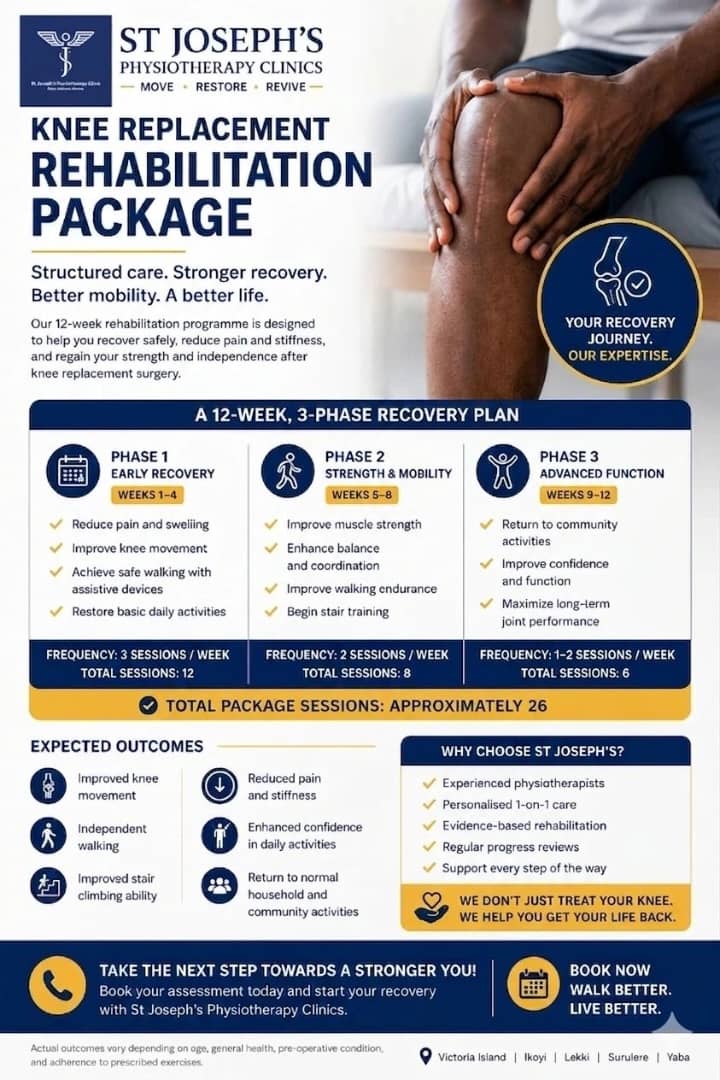
Complete Knee Replacement Rehabilitation Package in Lagos
Knee replacement surgery is a major step toward pain relief and improved mo…

NAMDA threatens strike over unpaid medical lecturers’ allowances
The Nigerian Association of Medical and Dental Academics (NAMDA) has warned…

Resident Doctors Signal End to Strike Threat After High-Level Talks with Gbajabiamila
The threat of a nationwide indefinite strike by the Nigerian Association of…