The School of Pharmacy, Zaria (now defunct) established in 1930, to train dispensers for the hospitals and clinics within the northern region pioneered the training of Pharmacy cadre professionals in the North. Five years later, and precisely on 23rd July, 1935, a child was born to the family of Alhaji Suleiman, (Ma’ajin Kano) later (Walin Kano) son of Isma’il (Limamin Kano) of blessed memory. The child was named Dahiru in honour of his maternal grandfather, Alkali Dahiru. Indeed his mother Hadizatul Kubra, (Mainama) and others out of respect called him Alkali during his youth.
The life and times of Pharmacist Dahiru Suleiman Wali took him to various part of the North, Nigeria and the world in search of education or in the practice of his chosen profession which is pharmacy. From his birthplace of Kano where he started studying the Koran at an early age from his stepmother, Mallama Umma (Ummar Makaranta), he was later enrolled into Kofar Kudu Primary School, Kano City from 1942 to 1948 and then to Kano Middle School from 1948 to 1952.
Dahiru Wali was sent to Katsina Secondary School (1952-1954) and to the now defunct School of Pharmacy, Zaria (1954-1957). He qualified as a pharmacist in 1957. In 1961, he proceeded to Technical College, Bath, England and graduated in 1963. After Bath, his quest for higher education took him to Salford University, still in the UK for a combined honours degree in Chemistry and Zoology in 1965 and graduated in 1968.
 It was at Bath, UK that he met his present wife, German-born Jutta and they were married on 28th August, 1964. They have two children, Muhammad Ujudud (Andreas), named after a deceased brother of Mallam Wali, and Aisha (Melanie), now married to Alhaji Ibrahim Dikko. Ujudud Andreas Dahiru Wali is a University of Ibadan trained medical doctor and now a specialist in Intervention Cardiology and working in Harrisburg, Pennsylvania in the USA. Hajiya Aisha Melanie Dikko, the second child of the Wali’s is a graduate of Business Administration and lives with her husband in Lagos.
 Ancestry and family of Mallam D.S Wali
The father of D.S Wali, Wali Suleiman (1890-1939 is son of Ismaila, the Chief Imam of Kano during the early reign of Emir Alu “Maje Lokoja” (1894-1903). His mother, Hadiza (alias Mainama) was the first wife of Wali Suleiman and daughter of Alkali Dahiru, after whom D.S Wali was named.
The grandfather of Mallam D.S Wali was a direct descendant of a very prominent Islamic scholar, Dukkoyi Dan Bagyane who was a contemporary of an associate of Sheikh Usman Danfodiyo. It was Sheikh Usman Danfodiyo who instructed him to move from Gaya to Tsangaya to strengthen Islamic rule in the area. His grave is in Tsangaya town in Gaya local government of Kano State.
The grandparents of Mallam D.S Wali took an active role in the Jihad, went to Sokoto to pay homage to Sheikh Usman Danfodiyo and returned to Kano to strengthen Islamic rule.
The father of Mallam D.S Wali died leaving behind four wives and 15 children (11 males and four females). He was a prominent Islamic Scholar and an intellectual who spoke Arabic fluently. He ensured that his children had sound Islamic and Western education and he greatly encouraged girl education. The siblings of Mallam D.S Wali rose to prominence in many fields of human endeavour as follows:- Two of them judge (Alkali) and Deputy Grand Khadi of Kano State:- Isma’il (Imamu) Wali and Adamu (Na’ibi) Wali respectively.
Chief Imam of a prominent mosque along Zaria Road in Kano: Sheikh Na’ibi S. Wali.
Educationists
His son, Hafiz Wali established National Teachers Institute (NTI), Kaduna and was the CEO for 13 years.
Administration
Isa Wali was clerk to the Northern House of Assembly and later Nigeria’s High Commissioner to Ghana. He was an advocate of women’s rights and published several articles in Nigerian Citizen and Gaskiya Ta fi Kwabo on Women in Islam in the 1950s. Alfa Wali was Permanent Secretary and Secretary to the Government of Kano State and a Permanent Secretary in several federal ministries and later a Federal Minister of Agriculture in Abuja.
Health
Two of Wali Sulaiman’s children are prominent health professionals (Dahiru, a Pharmacist (subject of this article) and Sadiq, a professor of Medicine, Foundation Chief Medical Director, Aminu Kano Teaching Hospital and Chief Personal Physician to five Nigerian Heads of State).
Military
Another son of Wali Sulaiman, Abbas, the grandson of Emir Abdullahi Bayero, joined the Nigerian Army and rose to the rank of Brigadier General.
Working Career
The career of Mallam D.S Wali started in 1957 at the General Hospital, Ilorin upon graduation as an intern pharmacist as a staff of the then colonial government of Northern Nigeria. After the one-year internship, he was posted to Bida General Hospital in present day Niger State and served as pharmacist in charge in 1958. He was in Bida for only one year also. He was next posted to Kaduna Nursing Home (now Barau Dikko Teaching Hospital of Kaduna State University) again as the Pharmacist-in-charge. His work in Kaduna was more challenging as the population was higher then that of Bida and the town more elitist, with people who required more drug information due to their level of education and curiosity more than the people of Bida.
Mallam D.S Wali worked as an industrial Chemist at Parke-Davis factory, Hounslow, Middlesex, UK after his graduation from Bath College, England. upon the completion of his studies at Salford University, UK, Mallam D.S Wali relocated with his family to Nigeria and back home to his native Kano. He joined the Kano State Ministry of Education where he was posted to Dala Girls Secondary School as vice principal and Science teacher. He worked for only one year and decided to use his pharmacy certificate and secured a job with United African Company (UAC) (present UACN Plc). He was posted to Zaria (where he trained as a pharmacist earlier) to oversee the A.J. Seward factory, a subsidiary of UACN. Kano and Kaduna were both under his supervision. The Company produces pharmaceuticals, cosmetics and other household commodities. He was later posted to Kingsway Chemists of Nigeria Ltd, a subsidiary of UACN and relocated to head office in Lagos. Mallam D.S Wali retired from UACN in 1975 to start Tsamiya Pharmaceuticals Ltd in Kaduna which he formed and superintended as its pharmacist and owner for twenty-eight (28) years till 2003 when he voluntarily retired from pharmacy practice.
Thus, the working career of Mallam D.S Wali took him to the U.K, the headquarters of the commonwealth which colonized Nigeria; to Lagos, the capital of Nigeria of that time and to Kaduna, the capital of Northern region. His postings to Ilorin, Bida, Zaria, Kano as well as earlier education in Katsina were significant as these cities were firmly under the Fulani rule as established by the Jihad of Sheikh Usman Danfodiyo who granted flags to Mallams Alimi, Dendo, Musa, Suleiman and Ummarun Dallaji during the first decade of the 19th century signaling the beginning of Fulani rule, and the Islamic revivalist movement that was actively participated by the grandparents of Mallam D.S Wali.
Establishment of Tsamiya Pharmaceutical Company Kaduna (1975-2003).
The infamous traffic congestion of Lagos when the city served officially as Nigeria’s political capital from independence in 1960 till 1976, appeared to have provided the eventual career path for Mallam D. S. Wali, and led to the establishment of his retail pharmacy practice along Ahmadu Bello Way in Kaduna in 1975. What started as a normal domestic challenge to Jutta, (Mrs. Wali), his wife, during her daily school runs to drop and pick both little Ujudud (Andreas) and Aisha (Melanie) when the couple were in Lagos with Mallam D.S Wali working for UAC, became the major reason for their relocation to Kaduna.
One thing led to another and eventually Tsamiya Pharmaceutical Company, was incorporated in Kaduna. To Jutta (Mrs. Wali) and indeed Mallam D. S. Wali, the Lagos traffic situation was simply intolerable. It got to a point that Jutta had to address her husband with the famous statement: ‘‘Nigeria, yes, Lagos no’’. Mallam D. S. Wali had to respect the wish of his dear wife and in retrospect, that family’s decision was the best for them as events later indicated.
The Lagos traffic situation has improved tremendously from the chaotic days of the mid-seventies. Again as fate would have it, Aisha, the second child of the Wali’s, now live a comfortable life in Lagos with her husband, and both Mallam D. S. Wali and his wife, Jutta, frequent Lagos for either the former to attend meetings of the Board of First Bank, Plc where he currently serves as a director and to also be with their daughter and grandchildren or socially for the later to also be with the daughter and grandchildren.
Another angle to the motivation for establishing the Tsamiya Pharmaceutical Company Ltd could be due to the inadequate number of private pharmacies in Kaduna and indeed the northern part of Nigeria at that time and even now .The leading private retail pharmacy practices in Kaduna at that time were Hamdala Chemists, Ltd and S.O.S. Safety Chemists superintended by two reputable pharmacists, Pa Adefarasin and Mr. Soremekun, respectively. Whatever the case, it was that single act which appeared to have provided a platform as a trajectory whereupon. Mallam D.S. Wali launched himself into private pharmacy practice and to change its mode of practice in Kaduna, the north and indeed the country at large in the next 28 years.
Wali superintended Tsamiya Pharmaceutical Company Ltd as a retail pharmacy practice in Kaduna. The practice operated in different places within Kaduna. At inception in 1975, it was along the very busy and high profile Ahmadu Bello Way. The practice later relocated to a more serene property on Sardauna Crescent in 1981. This appeared a wise and strategic decision, as access and the availability of parking spaces for vehicles were much easier and adequate respectively to both patients and other customers that trooped to the premises in large numbers daily.
The pharmacy premises at Sardauna Crescent was more spacious and allowed a separate area for the display of pharmaceutical products, and other home items. Also it had a separate private consulting area where Mallam. D. S. Wali offered pharmaceutical care to his patients. It should be noted that at that material time, the concept of pharmaceutical care within the confines of pharmacy practice, especial at the level of private retail pharmacies, had not gained currency in Nigeria. However, the best was yet to come for Tsamiya Pharmaceutical Company in terms of corporate structure, a high profile image and indeed a high net worth of immovable asset to the delight of the financial advisers of the company to reflect an impressive balance sheet.
This opportunity came in 1993 when the multi-story brand new building along Yoruba Road (opposite Magajin Gari’s Office) was completed and the practice moved there and Tsamiya Pharmaceutical Company, Ltd., Kaduna was no longer a tenant, but indeed a landlord. This singular act of the completion of the building and its eventual occupation was one of the most important landmark achievements of the company.
However, in his characteristic humility, Mallam. D. S. Wali never saw it as such and would never openly discuss it as an achievement. To him, it was merely a structure for him to serve humanity better. This fact was corroborated by Hajiya Maryam Yusuf (alias Hajiya Tsamiya) who had been with Mallam. D. S. Wali and Tsamiya Pharmaceutical Company Ltd as a staff for over 20 years, hence, her alias as Hajiya Tsamiya. She stated that the staff members insisted on having a befitting opening ceremony to officially open the building, but Mallam D. S .Wali declined. The building, on two floors, is made up of a large hall that served as the retail pharmacy area, an inner consulting room for pharmaceutical care, a pharmaceutical store and an accountant’s office all on the ground floor among other offices.
By Dr. Ahmed Tijjani Mora.
Leadership News
ABUJA: Training Schedule for Basic Life Support BLS, Pediatric Advanced Life Support (PALS), Advanced Cardiovascular Life Support ACLS, First Aid, CPR, AED
PORTHARCOURT: Training Schedule for Basic Life Support BLS, Pediatric Advanced Life Support (PALS), Advanced Cardiovascular Life Support ACLS, First Aid, CPR, AED
LAGOS: Training Schedule for Basic Life Support BLS, Pediatric Advanced Life Support (PALS), Advanced Cardiovascular Life Support ACLS, First Aid, CPR, AED
STOP paying for airtime and electricity, Let your phone pay its bills with ScreenT
You may also like

Comrade Lemii Christian Emerges Chairman of NANNM Rivers State Branch in Historic Victory
PORT HARCOURT, NIGERIA Following the long awaited National Association of N…

FG Supports Robotic Surgery Expansion to Reduce Medical Tourism
Nigeria is taking another step toward strengthening specialised healthcare …
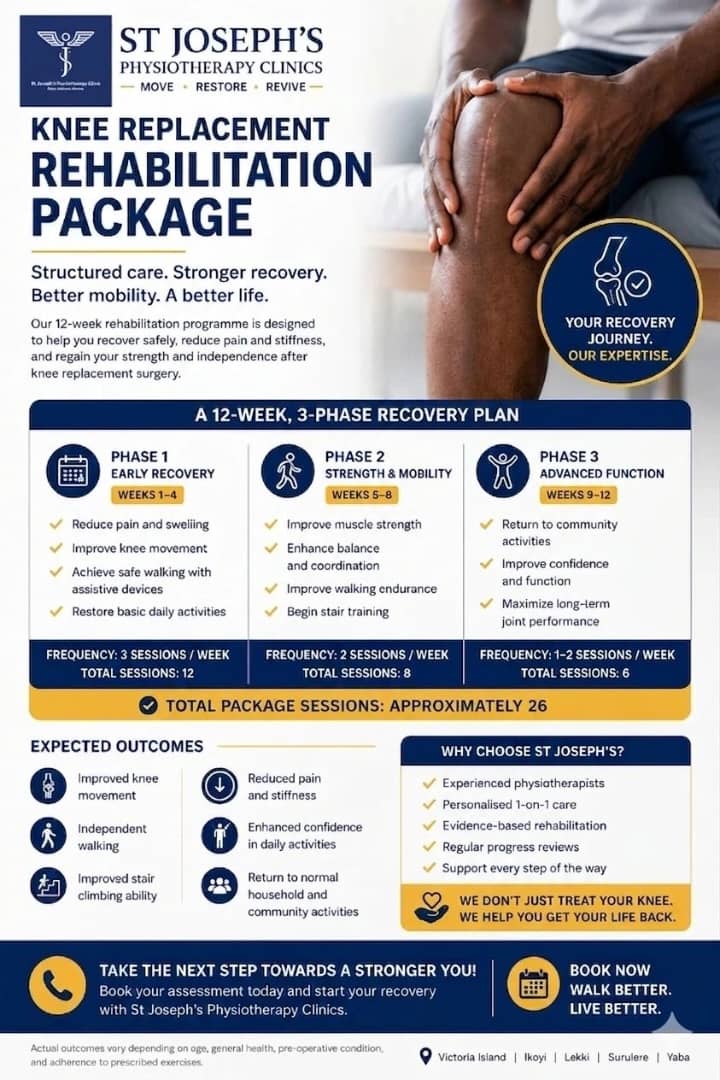
Complete Knee Replacement Rehabilitation Package in Lagos
Knee replacement surgery is a major step toward pain relief and improved mo…

NAMDA threatens strike over unpaid medical lecturers’ allowances
The Nigerian Association of Medical and Dental Academics (NAMDA) has warned…

Resident Doctors Signal End to Strike Threat After High-Level Talks with Gbajabiamila
The threat of a nationwide indefinite strike by the Nigerian Association of…
