Following the euphoria that have greeted the delisting of Nigeria from the list of Polio endemic countries, the World Health Organistion (WHO) yesterday expressed serious concern over state governors’ decision to dump their counterparts funding commitment towards polio eradication.
WHO said in Abuja that it was worried that many state governments, particularly in northern Nigeria, have abandoned their financial commitments towards eradicating polio, arguing that this could reverse the gains already recorded in the fight.
The WHO Director-General, Dr Margaret Chan, made the reservation during her assessment visit to Nigeria on the country’s polio eradication efforts.
She commended the federal government for its financial contributions to the fight in making sure that such effort is reflected on her domestic budget.
“Lately, there has been growing concern among the partners that the financial commitment at the state level appears to be declining and I hope it is not because we have achieved this landmark. Some states did not release funds for the recent vaccination rounds and we know that this will negatively affect the quality of the programme,” WHO boss said.
 According to the WHO DG, “I would want to request and encourage the federal and state governments to continue meeting the financial commitments to sustain the momentum at polio eradication efforts. We have come a long way and we must until next two years when the country will have been certified free and we can turn attention to other things.”
 Chan who was represented by WHO Regional Director for Africa, Dr Matshidiso Rebecca Moet, said she was in Nigeria to congratulate the country for achieving the interruption of wild polio virus without any reported case for more than 15 months now.
Meanwhile, President Muhammadu Buhari while receiving the report of WHO from the Director General who was represented by the regional Director for Africa, Moeti, at the Presidential Villa in Abuja yesterday, said the federal government would continue to regard the fight against polio in the country as an emergency until Nigeria is declared free of the disease by the WHO in 2017.
Buhari said though the country had attained a milestone in the fight against polio by not recording any fresh case in the last 14 months, the government would not be complacent but would continue to invest in advocacy and campaigns against the disease.
The president also promised to ensure the inclusion of the basic health care fund in the 2016 budget to ensure universal access to basic healthcare with a focus on the poor and the vulnerable in the country.
This was as he added that his administration would henceforth prioritize tropical deceases because they affect mainly the poor and vulnerable.
He said: “As you are aware our efforts to eradicate this crippling disease started in 1998. It has taken a lot of toll on our country in terms of human and material resources. We are however not relenting as we are determined to achieve our collective goal of saving our children from further paralysis from polio.
“I want to assure you that there will be no complacency, as we will maintain and improve on our surveillance system as well as raise the childhood population immunity against the polio virus to avoid any spread of the disease.
“The federal government will sustain the current momentum and we shall continue to regard this campaign as an emergency until we are declared polio free in the next two years.
“On August 31, 2015, I held a meeting with the High Advocacy group whereby the Federal Ministry of Health was given a clear directive to come up with measures for enhanced effort towards ensuring the sustenance of this campaign.
“In pursuance of this anti-polio drive I held an expanded meeting of state governors and other stakeholders involving mainly representatives from the eleven polio high risk States where the main issues requiring government attention were raised and discussed.
“I would like to reiterate the federal government’s commitment towards the achievement of a polio free Nigeria in 2017. The government will sustain the needed funding for operations and vaccine procurement for the programme. Also, the Presidential Taskforce on Polio Eradication will be reconstituted under the leadership of the FederalMinistry of Health to provide political direction and oversight in order to avoid complacency and relapse.
“I would like to place on record my recommendation for the vaccinators, community mobilizers, partners, parents and care-givers who have supported the polio eradication initiative of government through the years.”
“I would like to commend the support of our traditional and religious leaders who have contributed immensely to the polio eradication efforts. By the same token we thank development partners, particularly WHO, UNICEF, Bill & Melinda Gates Foundation, USAID, US-CDC, Rotary International, and a host of others who contributed financially and materially to the over-all efforts.
“For sustainability, it is important that the fight against polio and other communicable and non-communicable diseases, is anchored on a strong health system. The National Health Act has made provision for universal access to basic healthcare with a focus on the poor and the vulnerable as well as the basic healthcare privision funds to support its implementation.
“I have already instructed the Federal Ministry of Finance to provide for the basic healthcare provision fund under the 2016 Budget Appropiration. We are also working on a revised National Health Policy which would have the achievement of Universal Health Coverage as its main ultimate goal.”
He stated than another concern of the health ector under his administration was addressing the significant morbidity and mortality rates caused by neglected tropical diseases.
According to him, these diseases disproportionately affect the poor and the vulnerable and as such are major concerns of his administration.
“We shall ensure that these diseases are no longer neglected,” the president added.
Permanent Secretary, Ministry of Health, Linus Awute, who briefed newsmen after the presentation to the president called on the states and local government administrations in the country to perform their responsibilities and intensify advocacy at the grassroots levels in order to prevent a relapse.
He pointed out that whatever the federal government was doing should be taken as interventions as the main responsibility for primary health care lied with both states and local governments in the country.
By: Tobi Soniyi and Paul Obi
This Day News
ABUJA: Training Schedule for Basic Life Support BLS, Pediatric Advanced Life Support (PALS), Advanced Cardiovascular Life Support ACLS, First Aid, CPR, AED
PORTHARCOURT: Training Schedule for Basic Life Support BLS, Pediatric Advanced Life Support (PALS), Advanced Cardiovascular Life Support ACLS, First Aid, CPR, AED
LAGOS: Training Schedule for Basic Life Support BLS, Pediatric Advanced Life Support (PALS), Advanced Cardiovascular Life Support ACLS, First Aid, CPR, AED
STOP paying for airtime and electricity, Let your phone pay its bills with ScreenT
You may also like
Comrade Lemii Christian Emerges Chairman of NANNM Rivers State Branch in Historic Victory
PORT HARCOURT, NIGERIA Following the long awaited National Association of N…

FG Supports Robotic Surgery Expansion to Reduce Medical Tourism
Nigeria is taking another step toward strengthening specialised healthcare …
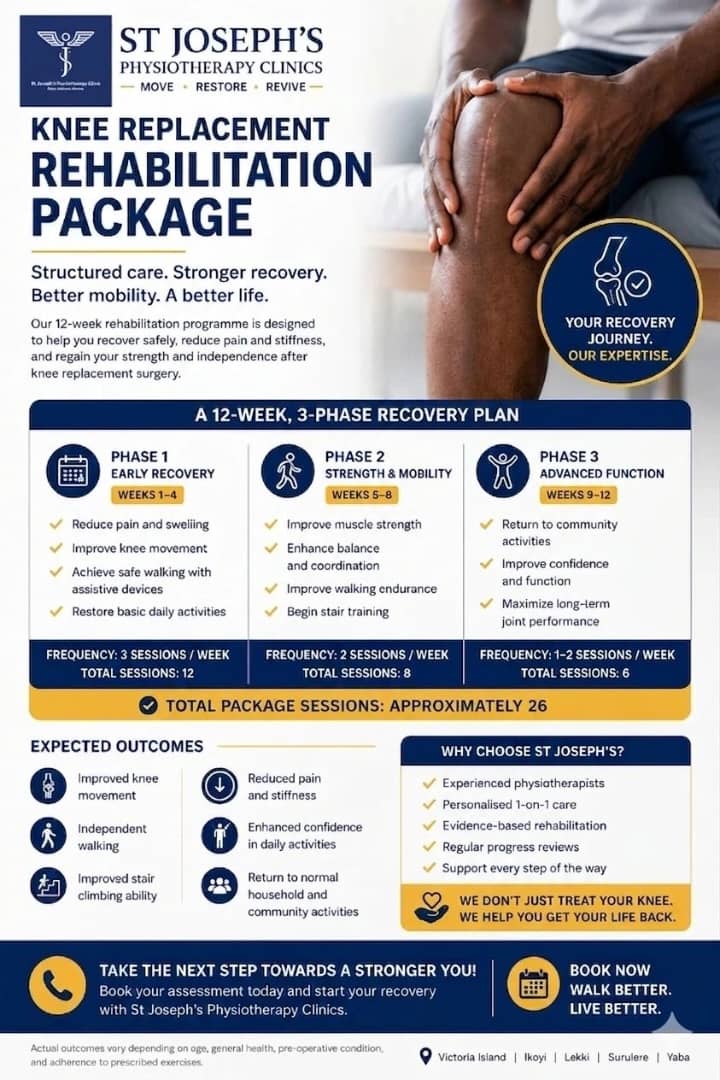
Complete Knee Replacement Rehabilitation Package in Lagos
Knee replacement surgery is a major step toward pain relief and improved mo…

NAMDA threatens strike over unpaid medical lecturers’ allowances
The Nigerian Association of Medical and Dental Academics (NAMDA) has warned…

Resident Doctors Signal End to Strike Threat After High-Level Talks with Gbajabiamila
The threat of a nationwide indefinite strike by the Nigerian Association of…