The arrangement to commercialize parastatals of government and concession public health facilities in Imo state was actually initiated by Governor Rochas Okorocha in his first tenure as governor of the state. The governor apparently, may have come to this resolution unilaterally and have since wrapped up the transaction to relinquish the health facilities of the state to concessionaires.
There was hardly any expert consultation on the concessioning project, according to labour unions and pro-life advocates in the state. The Nigerian Medical Association (NMA), Imo state chapter had since dissociated itself from the privatization policy of the state as the project in their view was ill-conceived.
In a media chat with newsmen, the NMA state chairman, Dr. Hyacinth Emele had lamented that following the concessioning deal, Governor Rochas Okorocha had commenced the construction of brand new 27 General Hospitals across the 27 council areas of the state defying every counsel to the contrary.
the doctors condemned the concessioning of public health institutions in the state to private individuals and dismissed the ongoing construction of 27 general hospitals as a, ‘self-serving exhibition, waste of scarce resources and a dangerous gamble with public health in Imo.’
The doctors who had earlier advised the governor to do a pilot study with only three hospitals in each senatorial district while uplifting existing facilities, providing adequate manpower, equipment, finances, training and retraining of doctors, expressed shock that government was continuing with the concessioning plan after the failed concessioning of the Umuguma Specialist hospital to a consortium represented by Governor Rochas Okorocha’s former Special Adviser on Health, Dr. Sylvanus Amaeshi.
The doctors in clear terms inferred that the concessioning plan of the governor was largely driven by pecuniary gains. Speaking also in an interview, Dr. Darlington Akukwu of the Catholic Medical Practitioners Association of Nigeria, Imo state Chapter said that government seems to be interested only in making profits at the hospital.
He argued that with that as the motivation, healthcare services under a concessionaire cannot be affordable. He said, “All the free health programmes sponsored by the Federal Government, NGOs, UNICEF and WHO in such areas like reproductive health; maternal and child health; HIV/ AIDS, Roll Back Malaria; immunization; tuberculosis and ebola would cease as the agencies would pull out their sponsorship since the facilities have gone into private hands and driven by profits.”
Akukwu explained that in corporate governance, there are sectors of the government that are revenue generating and there are sectors that are strictly for social services. He noted that health and education fall with the social services sector of government. Continuing he said, “Health for instance is an area where government discharge its social responsibilities to the people.
Everything in government is not about buying and selling; it is not every sector that you evaluate profit in terms of naira and kobo. You consider the health indices of the people which is why it is often said that a healthy nation is a wealthy nation. As far as health is concerned you cannot always expect to evaluate return on government investment by way of cash. Such indices like child and maternal mortality rate; HIV/AIDS prevalence; immunization successes and even life expectancy of the people are far more important than cash.”
Commenting on the development, the Chairman of the Global Prolife Alliance (GPA), Dr. Philip Njemanze alleged that the ongoing privatization of public health institutions in the state is a measure designed to take advantage of the loopholes in the National Health Act 2014 which virtually gives impetus to organ trafficking by international biotechnological firms using corrupt Nigerian proxies.
According to Njemanze, international biotechnology companies involved in embryonic stem cell research in the industrialized countries apparently sponsored the passage of this NHA 2014, to obtain a steady supply of human ovarian eggs and sperms for the industry to perfect human organ cloning research.
Said he, “According to a European Union Report, Nigeria is already the world’s leading human ovarian egg trafficking country through the then illegal activities of foreign and local in-vitro fertilization clinics owned by biotechnology companies. These human ovarian egg trafficking activities are now legalized under the NHA 2014.
And aided by corruption in government, the Biotechnological Cartel has acquired under government privatization programs, the major hospitals in Nigeria, to expand their human ovarian egg poaching and trafficking activities under this shoddy healthcare reform law (NHA 2014).”
While human organ trafficking is outlawed in the United States and the European Union, Njemanze regretted that Nigeria has no legislative protection whatsoever, which is why corrupt governments are putting public health facility in the hands of proxies of international biotechnological companies.
“The case in Imo is a tragedy where the entire public healthcare institution comprising over 560 health centres to all the general hospitals have been handed over to foreigners whose identity and antecedent are unknown to anybody in the state”, Njemanze said.
Earlier in his first tenure, Okorocha had announced a concessioning deal between the state and Apollo Hospital in India, a move that triggered a heavy backlash as pro-life activists descended on the state questioning the real motives behind the concessioning deals. They had wondered why the state government would want to hand over its hospitals to an organization (Apollo Hospital) that was at the time under Interpol investigation for human organ trafficking.
The agitations temporarily shut down the governor’s concession plan at the time and the privatization arrangement was assumed to have been shelved until recently when indications began to emerge that the 11 existing general hospitals; the 27 additional general hospitals under construction and about 560 primary health care facilities across the state have been concessioned to private entities without any public consultation or participation.
So when a detachment of the Imo Security Network, a vigilante outfit of Governor Rochas Okorocha stormed the 11 general hospitals in the state last week, chasing away patients and hospital workers and putting the facilities under lock and key, Imo people were not just outraged by the impunity of the act but by the fact that the concession deal has long been signed and sealed with the Imo populace in the dark. Shrouded in secrecy by design, perhaps, Imo people know nothing about the terms of the deal; neither are the new operators of the health facilities nor the financial involvements of the deal known.
 The rules of engagement and ethical checks put in place to regulate the operations of the concessionaires, if there are any, are still unknown to the Imo public who are supposed to be the beneficiaries of the privatization programme. It was the public outrage that greeted the lockdown of the hospitals that forced agents of the government to state the obvious.
Ifeanyi Nwachukwu, an official of the government committee told our correspondent that the lockdown became necessary to enable government live up to its concession agreement. Said he, “The people the hospital was concessioned to had notified the hospitals of their plans to take over the facilities with a deadline fixed for October 1, 2015 and also to fumigate the facilities, but the hospital managements had not been cooperative and responsive. And you know fumigation cannot happen while workers and patients are still in the hospitals, which was why the lockup became necessary.”
Meanwhile, the Chairman of the Nigerian Labour Congress, Imo state, Comrade Austin Chilakpu decried the incident explaining that labour had moved round all the locked general hospitals in the state unlocking them and returning workers to their duty posts.
He noted that labour would resist the move until the right things were done in the right way. Chilakpu maintained that the lockup was all about the concessioning plot of the governor but noted that, “the Federal Ministry of Labour through the Industrial Arbitration Panel had directed that the status quo must remain for now, until government and workers discuss and come to a mutual agreement on issues before any concessioning can take place.” Reacting to the resistance put up by the organized labour in the state, government insists that there is no going back on the hospitals privatization deal.
A statement signed by Governor Rochas Okorocha’s spokesman, Sam Onwuemeodo, reads in part, “The truth is that the government is not going back on the policy of concessioning the managements of the parastatals and the hospitals. The labour leaders and the workers in the affected parastatals are only expected to be patriotic by supporting the government’s effort aimed at repositioning these parastatals and hospitals.”
Onwuemeodo’s statement also indicates that workers at the parastatals, health facilities and organized labour cannot dictate to government on the policy matters. “It is important to state that the parastatals and the hospitals belong to the state government. The workers in them are also in the employment of the state government.
The labour leaders and some of the workers in the parastatals and hospitals cannot come now to dictate to the government how these places should be run”, the statement read. Already, the new managements of the affected outfits have commenced fumigation, painting and other maintenance works in them especially in the health centres and general hospitals.
By: STEVE UZOECHI
You may also like
Comrade Lemii Christian Emerges Chairman of NANNM Rivers State Branch in Historic Victory
PORT HARCOURT, NIGERIA Following the long awaited National Association of N…

FG Supports Robotic Surgery Expansion to Reduce Medical Tourism
Nigeria is taking another step toward strengthening specialised healthcare …
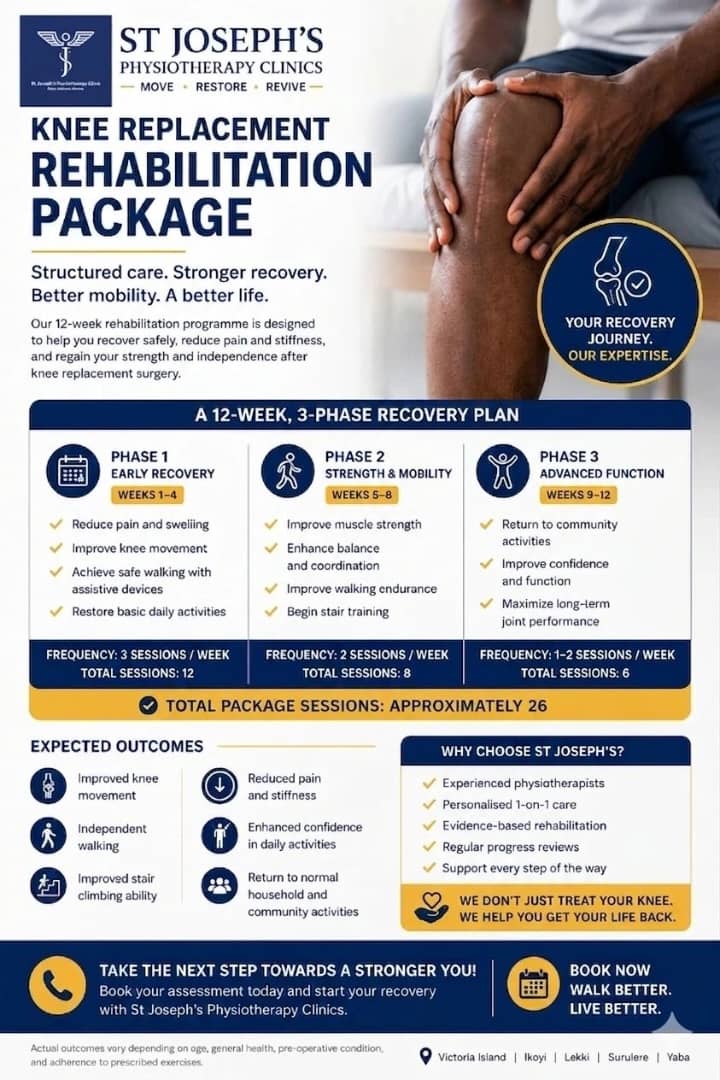
Complete Knee Replacement Rehabilitation Package in Lagos
Knee replacement surgery is a major step toward pain relief and improved mo…

NAMDA threatens strike over unpaid medical lecturers’ allowances
The Nigerian Association of Medical and Dental Academics (NAMDA) has warned…

Resident Doctors Signal End to Strike Threat After High-Level Talks with Gbajabiamila
The threat of a nationwide indefinite strike by the Nigerian Association of…