On 21st March 2014, the Ebola virus was confirmed to be the cause of an illness spreading through the forested areas of Guinea bordering Sierra Leone and Liberia. This outbreak that had been ongoing quickly spread initially to Liberia, then to Sierra Leone, Nigeria, Mali and Senegal. As at 11th October 2015, the total number of cases recorded was 28,490 and 11,312 deaths.
It is indeed a year today that Nigeria, against all odds, achieved a great feat of terminating the Ebola Virus Disease (EVD). Nigeria was declared free of Ebola on 20th October 2014 by the World Health Organisation, which makes that date 20/10, a special date for public health practitioners in the country and indeed other followers of global health developments around the world. It was a feat that contributed to the preservation of Global Health Security, contrary to the heavy skepticism experienced locally and internationally when the Ebola Virus Disease struck Nigeria.
The outbreak was met with great commitment and resilience. The Nigeria Centre for Disease Control mobilised the public health infrastructure/resources within 12 hours. The great leadership, both political and financial, that was provided by Federal and State Governments was complimented by the patriotism of professional bodies, communities, corporate bodies as well as donors and implementing partners. It was indeed this historic partnership that contributed to the preservation of regional and global security.
Between July and September 2014, Nigeria had 19 confirmed cases of Ebola out of which 8 died. This left Nigeria with 11 survivors of EVD who were properly integrated back into the society with very minimal risk of stigmatization.
The outbreak response which brought together the finest hands in the control, showed the true capacity of Nigeria. It has since become a pivot for how our beautiful country should tackle problems proactively and in times of emergencies. We came together at the most time of need, irrespective of religious, ethnic or party affiliations and fought an invisible enemy and conquered. This fight therefore showed the importance of Unity in Diversity.
In the past one year, Nigeria has not lowered her guard. We remain vigilant through enhanced surveillance, not only for Ebola but also for all diseases that constitute public health emergencies. This was demonstrated by the numerous responses and investigations of the Ebola scare, particularly, the recent one at the University of Calabar Teaching Hospital (UCTH). Within the same year, Nigeria availed her resources to the ongoing response to EVD outbreak in West Africa. The Nation led African countries under the auspices of the African Union to raise volunteer health workers to participate in the African Union Support for Ebola Outbreak in West Africa (ASOEWA). This was launched with the Africa Against Ebola Initiative, a private sector-led platform, which raised millions of dollars to ensure the sustainability of the pan African initiative.
Nigerian artistes, philanthropists and citizens championed by Alhaji Aliko Dangote and Chief Executive officers of several Mobile Telecommunication Companies donated their resources and time to this African cause. 200 healthcare workers from Nigeria rose to the brotherhood call, which made us the largest contributors of manpower to the pool of 855 volunteers from Africa. The contribution of these great heroes has since led to the interruption of EVD in Liberia and brought to the barest minimum, the transmission in Guinea and Sierra Leone. It is significant to note that all our volunteers returned uninfected and have since reintegrated into the Nigerian society. All these volunteers shall serve as our reservoir foot soldiers, which deserve national recognition for meritorious service to the nation.
The Nigeria Centre for Disease Control (NCDC) will soon establish a survival clinic in collaboration with our tertiary health institutions to address the issue of relapse in survival.
 The management of the Federal Ministry of Health (FMOH) has set up a template for Ebola containment with an Emergency Operation Centre under the National Primary Health system. Also, the Department of Public Health, FMOH, is continuing active surveillance with Port Health Services at the points of entry. Additionally, the NCDC will fortify the disease surveillance activities for early detection and response. The effectiveness of this has been shown by the recent Ebola alert from the University of Calabar Teaching Hospital.
 Since Nigeria was declared Ebola free, the global Ebola control environment has changed based on new evidences around care for Ebola in pregnancy, survivors related symptoms, discovery of Ebola vaccine, relapse of the disease and most recently evidence of sexual transmission of the disease by survivors carrying the virus in their semen and vaginal secretions. These recent developments have changed our understanding of the clinical and epidemiological characteristics of this disease. This poses stronger challenge to us and our neighbours who have these survivors in their thousands and also signifies that the fight is far from being over. We have therefore held on to the fact that Nigeria Ebola freedom is not going to be full celebration until the transmission of the disease in the human population reaches zero in West Africa.
Let me therefore use this medium to acknowledge the efforts of our heroes who continue to make us live this life of peace today. Indeed, without their efforts our economy, social and political lives will not be the same today. If you look closely at other nations that have been ravaged by this outbreak, you can easily imagine what could have been possible.
The sacrifice of late Dr. Adadevoh, the entire team at First Consultant Hospital in Lagos, all Health workers and their family members dead and alive, remain one we shall forever cherish. We must recognize the Nigerian Field Epidemiologist Programme Team and the Volunteer Team who worked in contact tracing, social mobilization and case management.
The strong collaboration and the effort of the Lagos and Rivers State Governments must also be strongly acknowledged at this time.
Let me also specially appreciate the group of young people behind our global phenomenon, Ebola Alert. This group, led by Dr. Lawal Bakare, continues to keep Nigeria and the rest of the world Alert with Ebola messages and updates. They managed information on Ebola and addressed rumours relating to the disease. They have even taken the innovation further and showcased Nigeria to the world as one of the innovation spots for excellent use of technology for disease outbreak.
The Nation continues to appreciate the full support from the World Health Organisation, UNICEF, US CDC, Doctors without Borders (MSF), JICA, NPHCDA, Dangote Foundation, Elumelu Foundation, Bill and Mellinda Gates Foundation, and a host of local and international organizations who donated resources and time to helping the nation contain the Ebola Virus Disease. Permit me to specifically express our gratitude to the United States Government, Government of the Peoples Republic of China, Government of Malaysia, Federal Republic of Germany, the United Kingdom, the European Union and the Government of Japan.
This is the time to mention the contribution of the private sector, to mention few – the Oil and Gas companies such as Total, Exxon Mobil, Shell, Schlumberger and many others.
The Nigerian health system still has a lot of work to do with regards to achieving the Universal Health Coverage amongst other specific issues. The Ebola outbreak met and left behind other pertinent issues around International Health Regulations, human capital for health, strengthening leadership for health etc. We, therefore, remain committed to the implementation and achievement of the recently articulated United Nations SDG. The Federal Ministry of Health will pursue these goals in collaboration with other line Ministries and partners.
Once again, we congratulate our country and remain proud of this feat forever.
Mr. Linus Awute
Permanent Secretary, Federal Ministry of Health
ABUJA: Training Schedule for Basic Life Support BLS, Pediatric Advanced Life Support (PALS), Advanced Cardiovascular Life Support ACLS, First Aid, CPR, AED
PORTHARCOURT: Training Schedule for Basic Life Support BLS, Pediatric Advanced Life Support (PALS), Advanced Cardiovascular Life Support ACLS, First Aid, CPR, AED
LAGOS: Training Schedule for Basic Life Support BLS, Pediatric Advanced Life Support (PALS), Advanced Cardiovascular Life Support ACLS, First Aid, CPR, AED
STOP paying for airtime and electricity, Let your phone pay its bills with ScreenT
You may also like
Comrade Lemii Christian Emerges Chairman of NANNM Rivers State Branch in Historic Victory
PORT HARCOURT, NIGERIA Following the long awaited National Association of N…

FG Supports Robotic Surgery Expansion to Reduce Medical Tourism
Nigeria is taking another step toward strengthening specialised healthcare …
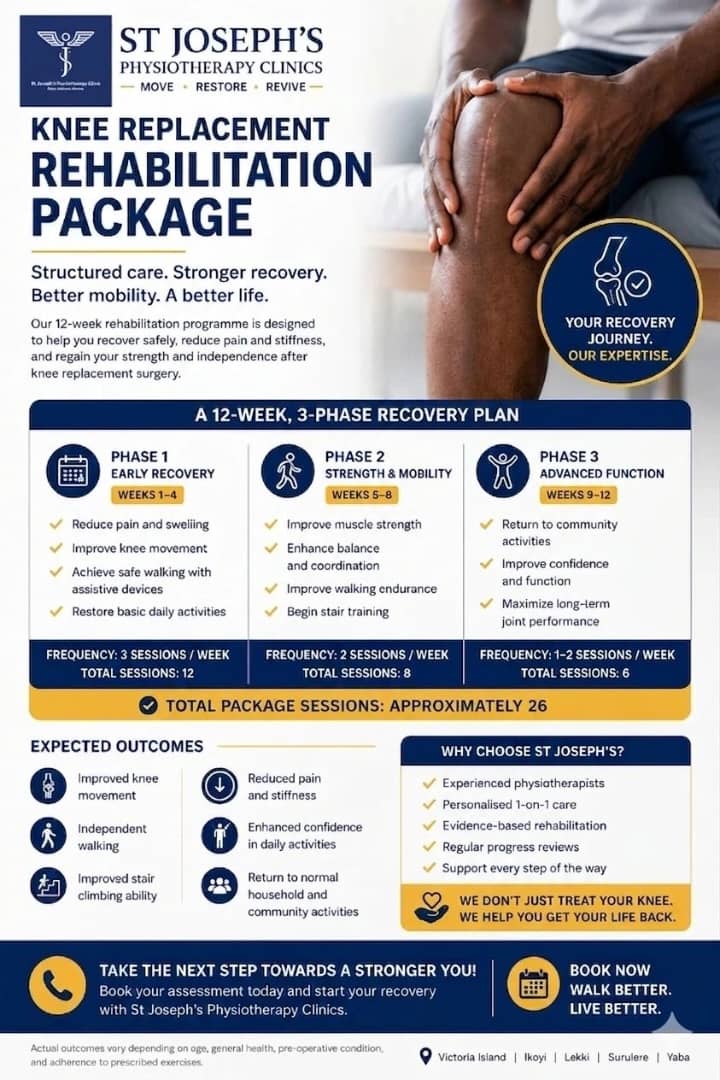
Complete Knee Replacement Rehabilitation Package in Lagos
Knee replacement surgery is a major step toward pain relief and improved mo…

NAMDA threatens strike over unpaid medical lecturers’ allowances
The Nigerian Association of Medical and Dental Academics (NAMDA) has warned…

Resident Doctors Signal End to Strike Threat After High-Level Talks with Gbajabiamila
The threat of a nationwide indefinite strike by the Nigerian Association of…