WITH on end in sight for the three months old strike embarked upon by Joint Health Unions (JOHESU), Abuja residents are now torn between the devil and the deep blue sea.
Low income Nigerians who ordinarily can't afford the services of private hospitals now have limited options.
Poor pregnate women are left to their fate, as many are unable to attend ante-natal services, and many are forced to put to bed at home, as JOHESU strikes bites harder and harder.
Indeed, the frail peace in the health sector has been disrupted by the decision of the Joint Health Sector Union (JOHESU) to proceed on an indefinite strike starting Wednesday Novermber 12,2014.
JOHESU alleged that government had ignored most of the issues which it had hiteerto won on the bi-partite platform of negotiations and entered duly signed Collective Agreements on, haven been favoured by a National Industrial Court ruling on the issue.
In a notice annuncing the commencement of the strike, the Union claimed that the Federal Ministry of Health in particular and government in general had beed using delay tactics to stall the implementation of the agreements.
Members of the Union, who were initially offering skeletal services have since been ordered to commence full blown strike by their leaders following the collapse of dialogue with government.
Findings in Abuja indicate that a handful of the striking workers now offer different levels of services at the many private hospitals in Abuja. With government owned hospitals now wearing ghostly looks, private hospitals have been taking advantage of the situation to declare bountiful harvest.
.jpg)
Dwellers in Abuja's many satellite towns that are unable to afford even the cheapest of private hospitals now flood pharmaceutical jobs for basic health conditions.
Indeed, government-owned hospitals in Abuja are almost deserted, but for skeletal/emergency services offered by doctors.
While the doctors are to render life saving services, the absence of record officers, laboratory officals nurses, and other support staff (who are members of JOHESU), have limited their ability to attend to their general in and out patients.
At the National Hospital, for instance, the everbubbling hospital is reduced to an emergency centre, where only patients with serious emergency cases are attended to using tremporary patient folder and cards. Where certain levels of support services are required, corps members undergoind the National Youth Service Corps are deployed to assist.
But regular ante-natal clinics are conducted, as all the teams conduct their antenatal clinics with minimal hitches. Corps Members are also depolyed to assit. But not many patients know that antenatal clinics were still on, the attendance level at the National Hospital is not as heavy as it usually is.
For all the general hospitals: Kubwa, Gwarinpa, Maitama, Asokoro, Wuse, it is almose a deserted house scenario. Emeregency case are however handled, but with minimal in patient services.
At the General Hospital Kubwa, far instance activities have been restricted due to the JOHESU strike.
The hospital medical director, Dr M. Ahmed Danfulani, told The Guardian than the hospital had been managed by the doctors and the other hospital workers but can't run full course without the nurses and laboratory workers. He urged government to work with JOHESU to end, noting that the hospital could not run without the nurses and laboratory personnel.
Another doctor at the hospital told The Guardian: "There are no much activities in the hospital. Patients are not admitted. But if there is an emergency that needs to be taken care of, we doctors) who are on standby will stabilise the patient then refer them to another hospital for proper medical treatment.
The official added: "If it requires that the patient needs to be admitted in the hosipital, the doctors will administer emergency interventions and then transfer them to another hospital."
Indeed, the hospital environment looked empty. As one enters the hospital, the atmosphere reminds one of a ghost town. The male and female wards were padlocked. The pharmacy was under locks and key. The environment is also empty with no patient.
Though the emergency ward was open, it had not patient admitted. Doctors attended to few patients at the emergenct consulting sector. Patients are given emergency services and dischared or referred to private hospitals, as the case may be.
Meanwhile, the leadership of the Joint Health Sector Union (JOHESU) has been called upon to call off the industrial action, which has partly paralysed activities in many government hospitals across the country.
Supervising Minister of Health, Dr. Khaliru Alhassan, pleaded with the workers to call of the stike in the overall interested of the nation.
"The function of all health workers is required to screen people at the border post for Ebola. As long as there is Ebola out there is any country, Nigeria stands the risk of being affected again he noted.
He stressed: The health sector operates as a team; as a result, all parts must function harmoniously to get the best out of the system."
ABUJA: Training Schedule for Basic Life Support BLS, Pediatric Advanced Life Support (PALS), Advanced Cardiovascular Life Support ACLS, First Aid, CPR, AED
PORTHARCOURT: Training Schedule for Basic Life Support BLS, Pediatric Advanced Life Support (PALS), Advanced Cardiovascular Life Support ACLS, First Aid, CPR, AED
LAGOS: Training Schedule for Basic Life Support BLS, Pediatric Advanced Life Support (PALS), Advanced Cardiovascular Life Support ACLS, First Aid, CPR, AED
STOP paying for airtime and electricity, Let your phone pay its bills with ScreenT
You may also like
Comrade Lemii Christian Emerges Chairman of NANNM Rivers State Branch in Historic Victory
PORT HARCOURT, NIGERIA Following the long awaited National Association of N…

FG Supports Robotic Surgery Expansion to Reduce Medical Tourism
Nigeria is taking another step toward strengthening specialised healthcare …
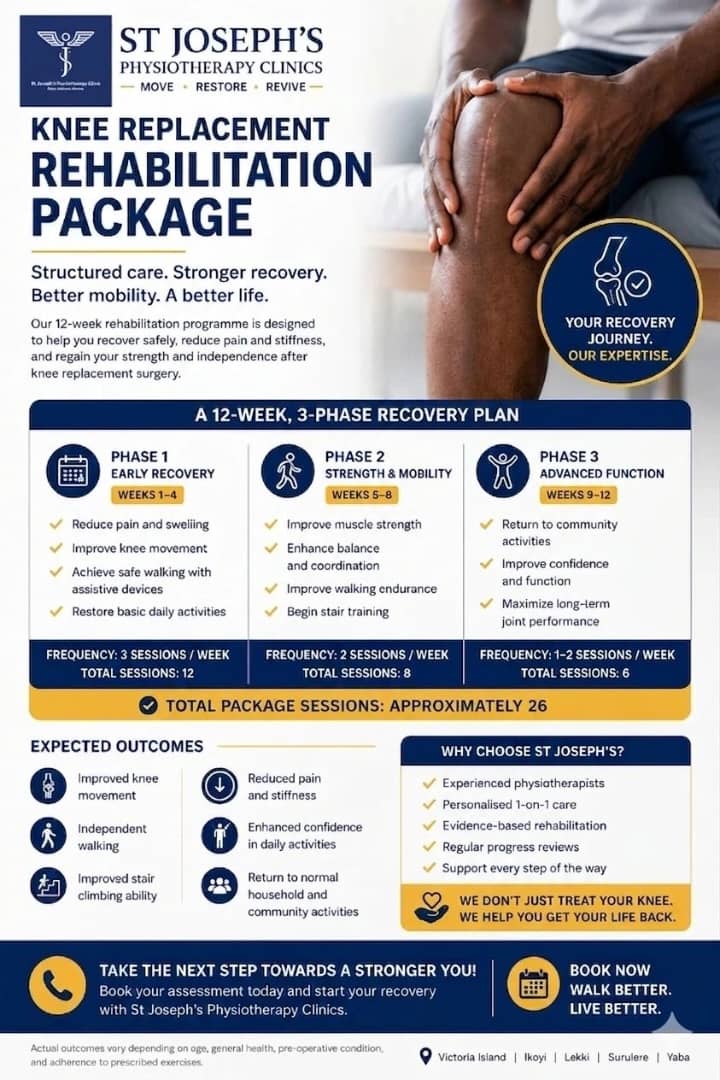
Complete Knee Replacement Rehabilitation Package in Lagos
Knee replacement surgery is a major step toward pain relief and improved mo…

NAMDA threatens strike over unpaid medical lecturers’ allowances
The Nigerian Association of Medical and Dental Academics (NAMDA) has warned…

Resident Doctors Signal End to Strike Threat After High-Level Talks with Gbajabiamila
The threat of a nationwide indefinite strike by the Nigerian Association of…