Ongoing moves by the Federal Government to privatise public hospitals in the country have been generating intense heat in the polity since last year. What appeared the first hint on the contentious subject-matter came about the middle of 2014 when the Medical and Dental Consultants Association of Nigeria (MDCAN) raised the alarm. At a time when medical doctors in government hospitals under the umbrella of the Nigerian Medical Association (NMA) were on nationwide strike for roughly one month over FG’s alleged breach of an agreement it reached with the doctors, the MDCAN had alerted the nation of plans by the Presidency to clampdown on the NMA and privatise all government hospitals.
“In the event that the FG tows this course of action, the military will be deployed to guard the medical institutions with military and para-military medical professionals rendering services in the mean time. All public health institutions will be privatised…”, President of MDCAN, Dr. Steve Oluwole, had stated at the time. Health workers other than medical doctors, under the aegis of Joint Health Sector Unions (JOHESU)/ Assembly of Healthcare Professional Associations (AHPA), again raised the alarm not too long ago, cautioning that the proposed healthcare arrangement would not serve the best interests of the nation and citizens.
Indeed, they alleged that the doctors and agents of Western donor agencies in Lagos State that championed the commercialisation of health facilities were charged with the responsibility of crafting the health policy of the President Muhammadu Buhari administration. It must be clarified, nonetheless, that the Buhari government is not the midwife of the plan. Reports credited it to 2006, when the National Council on Health (NCH) examined the possibility and nodded in approval under ex-President Olusegun Obasanjo’s government. Former President Goodluck Jonathan’s administration also fancied the idea, ostensibly as a convenient vehicle to escape incessant health sector workers’ strikes which it had an overdose of. Presently, there are strong indications that JOHESU/AHPA are at daggers-drawn with the NMA on the matter, as the former are irritated by the idea, while the latter seems in support.

At the recent Annual General Conference of the NMA in Abuja, NMA’s Chair, Dr. Zainab Mairami, urged the FG to explore the need for Public Private Partnership (PPP) initiatives for public health institutions, stressing that the hospitals Nigerians often troop to in developed countries were private sector-driven. Privatising the nation’s public health institutions or subjecting them to PPP operations may sound plausible in a country where government hospitals have remained mere consulting centres to a large extent for decades, lacking in basic equipment, kits and drugs, and suffering from brain-drain and the dearth of skilled manpower occasioned by poor motivation and inhospitable working conditions. But ours is a country where the cat is often positioned before the horse.
The NMA says, for instance, that PPP is the vogue in developed countries, without making any reference to the level of Nigeria’s development relative to the advanced nations it seeks to ape. Besides, apart from the telecommunications sector whose privatization is widely acclaimed to be a huge success, despite inclement operating environment and gargantuan rip-offs and failings of GSM service providers, which other public establishment privatised or run through PPP is really doing well in the interest of ordinary Nigerians?
It is shocking that whereas the major reason governments all over the world are constituted is to cater for the security and welfare of citizens, what is being witnessed in Nigeria is that government is desperate to literally abscond from the people and abdicate its responsibilities in the process. We do not believe that the country’s public health institutions are suffering because Nigeria lacked the wherewithal to elevate them to world standards. Their bane, in our view, revolves around the horrendous official corruption and sabotage dogging the country’s entire health provision ring. Instead of aggravating the already embarrassing medical care woes of the majority, the FG should adopt a policy of zero foreign medical attention for top public officers.
This will provide a powerful incentive for the required health facilities to be developed and properly maintained within the country. It is hard to understand why – if the government got its act right – it should prove impossible to attract medical specialists from any part of the world to serve in Nigeria’s health institutions. If such personnel are internationally scarce, then the FG should be prepared to pay the premium emoluments that they deserve, in the interest of the entire citizenry, rather than settling for selfish policies that will only be of benefit to the well-to-do.
By National Mirror
ABUJA: Training Schedule for Basic Life Support BLS, Pediatric Advanced Life Support (PALS), Advanced Cardiovascular Life Support ACLS, First Aid, CPR, AED
PORTHARCOURT: Training Schedule for Basic Life Support BLS, Pediatric Advanced Life Support (PALS), Advanced Cardiovascular Life Support ACLS, First Aid, CPR, AED
LAGOS: Training Schedule for Basic Life Support BLS, Pediatric Advanced Life Support (PALS), Advanced Cardiovascular Life Support ACLS, First Aid, CPR, AED
STOP paying for airtime and electricity, Let your phone pay its bills with ScreenT
You may also like
Comrade Lemii Christian Emerges Chairman of NANNM Rivers State Branch in Historic Victory
PORT HARCOURT, NIGERIA Following the long awaited National Association of N…

FG Supports Robotic Surgery Expansion to Reduce Medical Tourism
Nigeria is taking another step toward strengthening specialised healthcare …
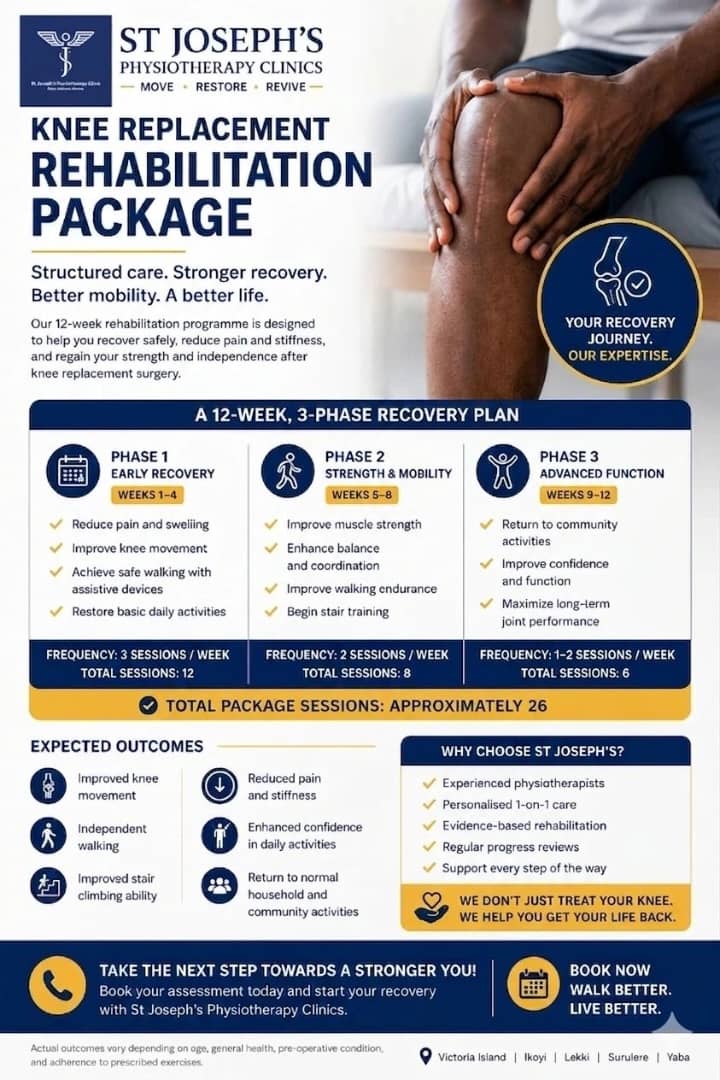
Complete Knee Replacement Rehabilitation Package in Lagos
Knee replacement surgery is a major step toward pain relief and improved mo…

NAMDA threatens strike over unpaid medical lecturers’ allowances
The Nigerian Association of Medical and Dental Academics (NAMDA) has warned…

Resident Doctors Signal End to Strike Threat After High-Level Talks with Gbajabiamila
The threat of a nationwide indefinite strike by the Nigerian Association of…