A new study has restated the harmful effect of sedentary lifestyle, especially prolonged sitting for more than three hours per day. The new study, published in the American Journal of Preventive Medicine found that sitting for more than three hours per day is responsible for 3.8% of all-cause mortality deaths. Investigators also estimate that reducing sitting time to less than three hours per day would increase life expectancy by an average of 0.2 years. In order to properly assess the damaging effects of sitting, the study analyzed behavioral surveys from 54 countries around the world and matched them with statistics on population size, actuarial table, and overall deaths.
Researchers found that sitting time significantly impacted all-cause mortality, accounting for approximately 433,000, or 3.8%, of all deaths across the 54 nations in the study. They also found that sitting had higher impact on mortality rates in the Western Pacific region, followed by European, Eastern Mediterranean, American, and Southeast Asian countries, respectively. “It was observed that even modest reductions, such as a 10% reduction in the mean sitting time or a 30-minute absolute decrease of sitting time per day, could have an instant impact in all-cause mortality in the 54 evaluated countries, whereas bolder changes (for instance, 50% decrease or 2 hours fewer) would represent at least three times fewer deaths versus the 10% or 30-minute reduction scenarios,” explained lead investigator Leandro Rezende, Department of Preventive Medicine, University of Sao Paulo School of Medicine.
“Although sitting is an intrinsic part of human nature, excessive sitting is very common in modern societies,” commented Rezende. “Sedentary behavior is determined by individual, social, and environmental factors, all strongly influenced by the current economic system, including a greater number of labor-saving devices for commuting, at home and work, and urban environment inequalities that force people to travel longer distances and live in areas that lack support for active lifestyles.” The results of this analysis show that reducing sitting time, even by a small amount, can lead to longer lives, but lessening time spent in chairs may also prompt people to be more physically active in general.
 “Although sitting time represents a smaller impact compared with other risk factors, reducing sitting time might be an important aspect for active lifestyle promotion, especially among people with lower physical activity levels,” emphasized Rezende. “In other words, reducing sitting time would help people increase their volumes of physical activity along the continuum to higher physical activity levels.” Scientific analysis of prolonged sitting has shown that while a brief period of sitting here and there is natural, long periods of sitting day-in and day-out could seriously impact individual’s health and shorten life.
 For instance, investigations by Dr. James Levine, co-director of the Mayo Clinic and the Arizona State University Obesity Initiative, and author of the book “Get Up! Why Your Chair Is Killing You and What You Can Do About It,” show that when you’ve been sitting for a long period of time and then get up, a number of molecular cascades occur. For example, within 90 seconds of standing up, the muscular and cellular systems that process blood sugar, triglycerides, and cholesterol— which are mediated by insulin— are activated. This may result in the damage of different organs of the body. “When you sit, blood flows slower and muscles burn less fat, which makes it easier for fatty acids to clog your heart.
Research published in the Journal of the American College of Cardiology, for instance, showed that women who sit for 10 or more hours a day may have a significantly greater risk of developing heart disease than those who sit for five hours or less.” Dr. Levine also analysed the effect of prolonged sitting on the pancreas. According to him, the body’s ability to respond to insulin is affected by just one day of excess sitting, which leads the pancreas to produce increased amounts of insulin, which may lead to diabetes. “Research published in Diabetologia found that those who sat for the longest periods of time were twice as likely to have diabetes or heart disease, compared to those who sat the least.
Sitting for more than eight hours a day has also been associated with a 90 percent increased risk of type 2 diabetes. “Excess sitting may increase your risk of colon, breast, and endometrial cancers. The mechanism isn’t known for certain, but it could be due to excess insulin production, which encourages cell growth, or the fact that regular movement boosts antioxidants in your body that may eliminate potentially cancer-causing free radicals.” Findings presented at the 2015 Inaugural Active Working Summit also found that sitting increases lung cancer by 54 percent, uterine cancer by 66 percent and colon cancer by 30 percent. “Sitting down after you’ve eaten causes your abdominal contents to compress, slowing down digestion.
Sluggish digestion, in turn, can lead to cramping, bloating, heartburn, and constipation, as well as dysbiosis in your gastrointestinal tract, a condition caused by microbial imbalances in your body. “Your brain function slows when your body is sedentary for too long. Your brain will get less fresh blood and oxygen, which are needed to trigger the release of brainand mood-enhancing chemicals. “It’s common to hold your neck and head forward while working at a computer or cradling a phone to your ear. This can lead to strains to your cervical vertebrae along with permanent imbalances, which can lead to neck strain, sore shoulders and back. “Sitting puts more pressure on your spine than standing, and the toll on your back health is even worse if you’re sitting hunched in front of a computer. It’s estimated that 40 percent of people with back pain have spent long hours at their compute
By: Sam Eferaro
National Mirror News
ABUJA: Training Schedule for Basic Life Support BLS, Pediatric Advanced Life Support (PALS), Advanced Cardiovascular Life Support ACLS, First Aid, CPR, AED
PORTHARCOURT: Training Schedule for Basic Life Support BLS, Pediatric Advanced Life Support (PALS), Advanced Cardiovascular Life Support ACLS, First Aid, CPR, AED
LAGOS: Training Schedule for Basic Life Support BLS, Pediatric Advanced Life Support (PALS), Advanced Cardiovascular Life Support ACLS, First Aid, CPR, AED
STOP paying for airtime and electricity, Let your phone pay its bills with ScreenT
You may also like

Comrade Lemii Christian Emerges Chairman of NANNM Rivers State Branch in Historic Victory
PORT HARCOURT, NIGERIA Following the long awaited National Association of N…

FG Supports Robotic Surgery Expansion to Reduce Medical Tourism
Nigeria is taking another step toward strengthening specialised healthcare …
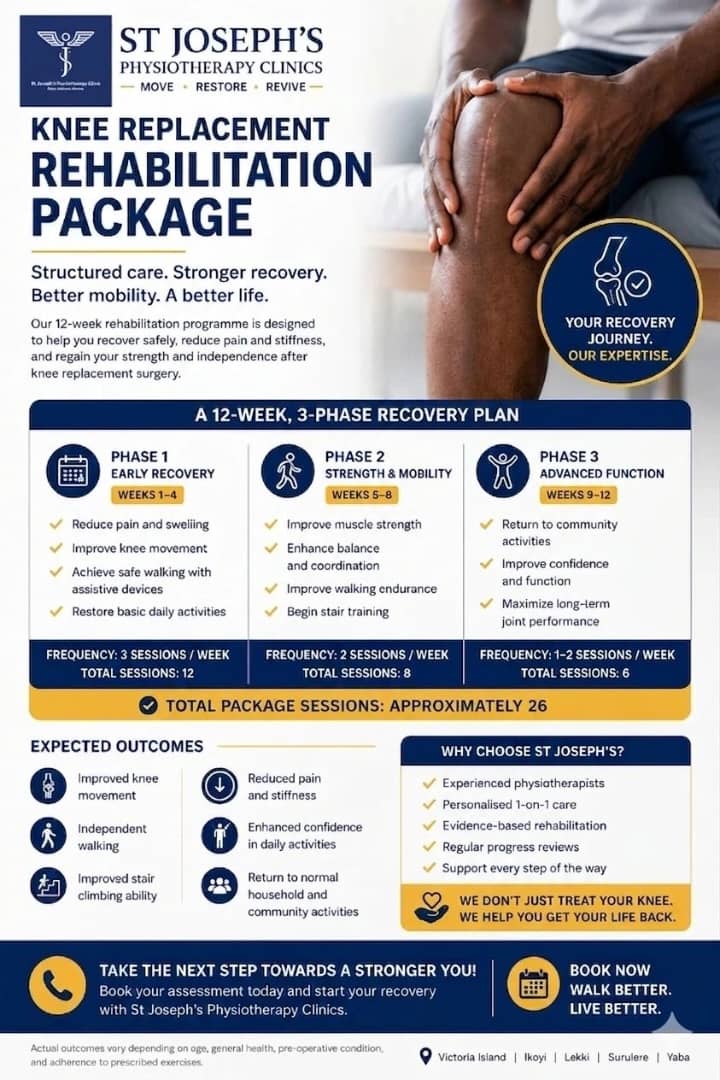
Complete Knee Replacement Rehabilitation Package in Lagos
Knee replacement surgery is a major step toward pain relief and improved mo…

NAMDA threatens strike over unpaid medical lecturers’ allowances
The Nigerian Association of Medical and Dental Academics (NAMDA) has warned…

Resident Doctors Signal End to Strike Threat After High-Level Talks with Gbajabiamila
The threat of a nationwide indefinite strike by the Nigerian Association of…