Discuss the theme of this year’s World Radiology Day
The theme of this year’s International Day of Radiology (IDoR) is ‘Brain imaging.’
In line with the theme of this year’s IDoR event which is ‘Brain Imaging,’ the European Society of Radiology (ESR) worked in close collaboration with experts in the field of neuroimaging. The result is Brainwatch: Detecting and diagnosing brain diseases with imaging, a book providing comprehensive information about how and why radiologists image the brain.
The booklet describes imaging’s role in the five major brain diseases: brain tumour, stroke, Alzheimer’s disease and dementia, Parkinson’s disease, and multiple sclerosis. Experts selected by ACR and the European Society for Radiotherapy and Oncology also contributed chapters on research in brain imaging and radiotherapy in brain malignancies.
ESR teamed up with the International Society for the History of Radiology for the second booklet, which is the third volume of the Story of Radiology series. This booklet includes chapters on the origins of medical physics, Marie Curie and the Radium Institute, the history of MRI, photography and radiology.
This book charts the development of medical imaging, and covers the work of Marie Curie and how radiology was used during the First World War. This is in line with the theme of this year’s World Radiology Day – ‘Brain imaging.’
The annual IDoR was a highly anticipated event for scientists and medical professionals. This year, over 125 societies participated in the event, representing groups from radiology, medical physics and neurology and patient rights groups. More than 60 European radiological societies took part, including 20 North American, 12 Latin American, and 11 Asian societies. The numbers was boosted even further by the first-time participation of five African societies that represent 26 countries. In 2013, 110 radiology and medicine-related societies were involved in International Day of Radiology (IDoR), an initiative created by ESR, RSNA, and the American College of Radiology (ACR).
The event was also a platform to connect with the general public, and to inform them about the advancements and innovations that have been made in the field of radiology over the years.
Nigeria joined other countries to observe the IDoR events, which included; press conferences, public lectures, media outreach, and open days at hospitals, in the hope of expanding awareness of the value of medical imaging for detecting, diagnosing, and managing brain disease. Also, this year’s IDoR also saw the involvement of several patient organizations, including the Stroke Alliance for Europe and a carryover from last year’s event, the European Patients’ Forum.
Establish the link between x-ray and radiology
By coincidence Wilhelm Conrad Röntgen on November 8, 1895 discovered some mystery rays and he called them x-rays. These x-rays are sub-atomic particles that propel energy and they move at a very high speed of 100,000 miles per second and they could come in form of neutrons, electrons and alpha particles and they could penetrate humans to cause cancer. Also, if you expose a pregnant woman at early stage to the rays, it could cause genetic defects.
That is why some pregnant women who are exposed to rays end up with children who may develop hole-in-the-heart, big head that we call hydrocephalous; in fact, some of the children may develop without hand or limb. Occasionally, rays causes death, if one is exposed to them in large doses. But, the caveat is this: Is it only x-rays that produce this radiation? No! There are some natural sources of radiation. In fact, every human being is struck by about 15,000 particles in form of radiation because of other natural sources of radiation, every second. Instances of natural sources of radiation are: soil and plaster. Soil emits radiation; so also, plaster that is POP in buildings emits radiation, but they are mainly in small quantities.
Similarly, people that live near dunghills are exposed to higher sources of radiation. Surprisingly, you see some people build their shanties there and that is where they live and consistently they are exposed to radiation. You can reduce your exposure to radiation by building your houses with wood. By so doing, you can only reduce your exposure by 10 per cent. You can also line your room with lead which is very expensive and reduce radiation by 20 per cent. Can you stay in your room throughout the day? No! You will still go out.
When x-ray was discovered, it was thought to be used for industrial use; but when people talk about radiation, they only think about medical rays which are insignificant. Radiation used in oil and gas to detect lead pipes; radiation is also used to produce atomic bombs; those who work in quarries also use radiation to blast stones; geologists also use radiation to trace their pipes as they are going underground. Those are even heavy doses of radiation. World Radiology Day is celebrated every November 8, to address these confusing issues among other things.
Many often get confused about the role of radiologists in medical practice. List their major roles.
Radiology is a speciality in medicine that deals with ionising radiations that is the use of x-rays and other image modalities. The role of radiologists is essentially to do special investigations with radiations and also interpret the results of x-ray and other image modalities.
Improper diagnostics leads to many health complications and in some cases lead to fatalities. What sets your centre apart?
When it comes to proper diagnostics, there are ingredients, just like it is in cooking a good soup; there are things you need to make proper diagnostics. The problem of diagnostics is two-fold including; personnel and equipments. The bane of misdiagnosis in Nigeria is mainly lack of adequate equipment, not using the right equipments for the right tests and not getting up-to-date equipments. Then even when the equipments are available, the right personnel are not. It is unfortunate that the slogan of ‘use what you have to achieve what you want’ that use to pervade the society during the time of MAMSER has ironically crept into the health sector where non-professionals are being used as surrogate professionals.
Diagnostic centres are supposed to be manned by radiologists and pathologists, but you see technicians manning all these places; of course, no one can report more than his knowledge. Also, you cannot give out what you do not have.
So, inadequate diagnosis stems from number one; inappropriate equipment, then number two, lack of relevant personnel. Those are two bane of misdiagnosis in Nigeria.
There is growing number of quacks in your area of practice. What is your association doing to weed off these quacks?
Unfortunately, there are some policies that have been established from the First and Second Republic and because they are never visited, those policies are not in use. What we are doing now is to sensitise the society concerning visiting good diagnostic centres. We are using advocacy to influence government to increase the subvention for training of radiologists that is increase the manpower. This is because we have also looked at the number of radiologists in the country. To be frank, we have less than 400 radiologists in Nigeria, which is grossly inadequate comparing it to the population of 150 million.
However, we have two times that number outside the country that travelled out in pursuit of greener pastures. When I finished my post-graduate, we were eight and out of the eight of us, few of us are in Nigeria now. Another problem is inadequate equipment; we are liaising with the government to legislate the type of equipment to be used for Nigerians which will be the best. Unfortunately, because of the buying power of an average Nigerian doctor, they have turned themselves to those who buy second-hand clothes, they are used to second-hand machines which most of the time, people have discontinued from its use. Next, there is no maintenance agreement. Often when the machine gets spoilt, it is like back to ‘square one,’ because you cannot get the spare parts. It is like a form of headache for the physician.
Based on the advocacy we are doing now it is ideally expected that all diagnostic centres should have a supervising radiologists, this has not been done. The essence of having supervising radiologists is to enable anyone with challenges have someone to refer to, the patient will be able to benefit and the health indices will improve.
How do you hope to achieve this?
We have made some moves, written to the Health Minister and had audience with him. We have tabled our request stating: This is the way radiology practice will help an average Nigerian vis a viz the personnel. We specified the requirement of people that will handle x-rays; the requirement of people that will handle scans, even the basic facilities.
You will be surprised if you go along the road, you will see uncountable diagnostics centre having the picture of pregnant women in different forms attached to shops and so on. Such places do not have provision for convenience – toilets and baths.
So we are trying to liaise with HEFAMA (Health Facility Monitoring Agency, it is the agency in Lagos state that regulate health practice) and federal government to establish basic standards. HEFAMA started in Lagos state less than seven years ago and is yielding fruits.
As a professional, what is your advice to users of diagnostic services?
My advice to consumers are: You should first see a facility and ensure it has some basic needs before you use it; all x-ray rooms must be safe that is it will normally have what you call lead lining. Ensure that there is an inscription on the door to an x-ray facility and a red light when the x-ray is on before you use it.
Also, you have the right to ask: Who is the radiologist here? Unfortunately, most people do not know the difference between a radiologist and radiographer. A radiologist is a doctor who is trained to interpret x-rays and other image modalities. A radiographer is a technician who is trained to acquire these images under the supervision of a radiologist. But, because you see everybody wearing white in the health facility, anybody that is not careful will call a ward maid a doctor.
By: Chioma Umeha
ABUJA: Training Schedule for Basic Life Support BLS, Pediatric Advanced Life Support (PALS), Advanced Cardiovascular Life Support ACLS, First Aid, CPR, AED
PORTHARCOURT: Training Schedule for Basic Life Support BLS, Pediatric Advanced Life Support (PALS), Advanced Cardiovascular Life Support ACLS, First Aid, CPR, AED
LAGOS: Training Schedule for Basic Life Support BLS, Pediatric Advanced Life Support (PALS), Advanced Cardiovascular Life Support ACLS, First Aid, CPR, AED
STOP paying for airtime and electricity, Let your phone pay its bills with ScreenT
You may also like
Comrade Lemii Christian Emerges Chairman of NANNM Rivers State Branch in Historic Victory
PORT HARCOURT, NIGERIA Following the long awaited National Association of N…

FG Supports Robotic Surgery Expansion to Reduce Medical Tourism
Nigeria is taking another step toward strengthening specialised healthcare …
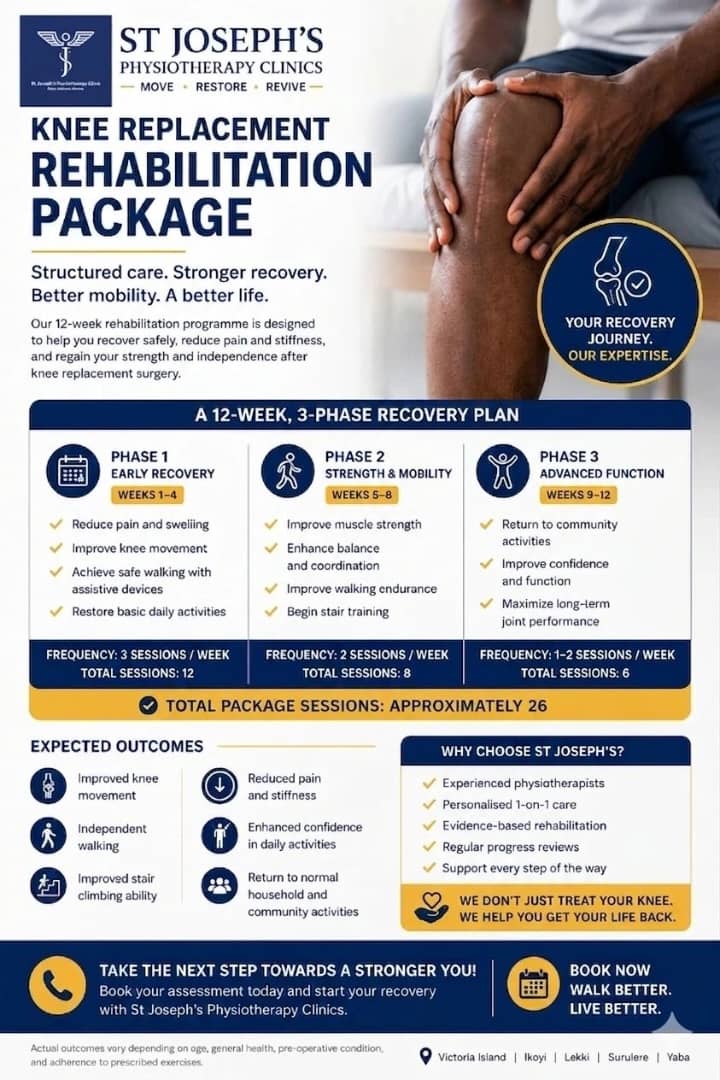
Complete Knee Replacement Rehabilitation Package in Lagos
Knee replacement surgery is a major step toward pain relief and improved mo…

NAMDA threatens strike over unpaid medical lecturers’ allowances
The Nigerian Association of Medical and Dental Academics (NAMDA) has warned…

Resident Doctors Signal End to Strike Threat After High-Level Talks with Gbajabiamila
The threat of a nationwide indefinite strike by the Nigerian Association of…