Non-medical prescribers are saving the NHS in England an estimated annual £777m, which could be increased further by at least £270m a year if more GP practices were to employ them, according to a new report.
Commissioned by NHS Health Education North West, the report investigated the economic benefits of non-medical prescribers (NMPs) in both primary and secondary care
The report – by data analysis firm i5 Health – noted that, despite “considerable evidence” that already exists showing non-medical prescribing is safe and advantageous to patients, the “adoption of NMP within the NHS is still at a relatively slow pace”.
It looked at money saved as a result of reduced GP appointments, hospital attendances, admissions and other patient contacts. National estimates were based on an annual clinicians’ audit in the North West of England.
The audit found almost 1,500 nurse prescribers in that region prevented around 20,000 further contacts in just one month.
This was equivalent to a £2.53m saving, with the majority of this coming from reduced admissions and follow up hospital appointments, as a result of nurse prescribers in secondary care, community settings and GP practices.
The report – called Non-Medical Prescribing (NMP): An Economic Evaluation – also looked at the potential impact on secondary care from having NMPs in primary care, in relation to 16 long term conditions.
It found accident and emergency and non-elective hospital admissions, and 30 day re-admissions were significantly reduced for patients registered with a GP practice with at least one NMP compared to practices with no NMPs.
“It has long been advocated that the non-medical prescribing model in England enhances patient experience [but] the discipline has not been widely adopted”
The study investigated potential benefits for a quarter of GP practices in England that do not have NMPs and are considered to be “most challenged” – those with the highest levels of attendances and admissions from long term conditions.
If these practices were to introduce at least one NMP, it was estimated resulting secondary care savings could be more than £270m every year.
 “The introduction of just one NMP practitioner into the primary care setting can have effects well beyond the saving of doctors’ time,” said the report. “Those effects reach across the long term condition spectrum and right into the secondary care sector.”
 Meanwhile, introducing NMPs into settings such as care homes, out of hours practices and palliative care, could result in annual savings for a clinical commissioning group of up to £1m.
“[This analysis] underlines the importance of commissioners in particular introducing, as a matter of course, the consideration of the NMP initiative into their planning and decision making processes. In many parts of the country…. it is [currently] given relatively little consideration,” said the report.
“It has long been advocated that the non-medical prescribing model in England enhances patient experience without endangering patients, improves overall performance and brings about significant economies. However, the discipline has not been widely adopted in either the primary or secondary care environments,” it added.
“This report seeks to demonstrate that not only the data can be collated, connected and analysed but that the results of such exercises can provide strong support for the wider adoption of NMP,” it concluded.
ABUJA: Training Schedule for Basic Life Support BLS, Pediatric Advanced Life Support (PALS), Advanced Cardiovascular Life Support ACLS, First Aid, CPR, AED
PORTHARCOURT: Training Schedule for Basic Life Support BLS, Pediatric Advanced Life Support (PALS), Advanced Cardiovascular Life Support ACLS, First Aid, CPR, AED
LAGOS: Training Schedule for Basic Life Support BLS, Pediatric Advanced Life Support (PALS), Advanced Cardiovascular Life Support ACLS, First Aid, CPR, AED
STOP paying for airtime and electricity, Let your phone pay its bills with ScreenT
You may also like
Comrade Lemii Christian Emerges Chairman of NANNM Rivers State Branch in Historic Victory
PORT HARCOURT, NIGERIA Following the long awaited National Association of N…

FG Supports Robotic Surgery Expansion to Reduce Medical Tourism
Nigeria is taking another step toward strengthening specialised healthcare …
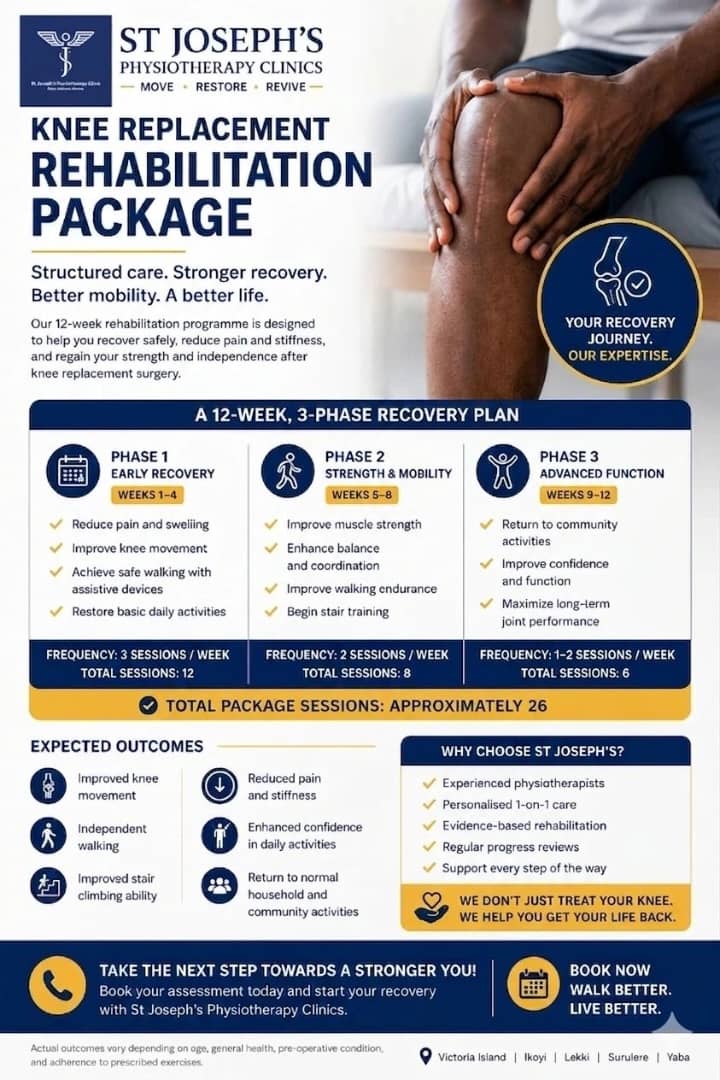
Complete Knee Replacement Rehabilitation Package in Lagos
Knee replacement surgery is a major step toward pain relief and improved mo…

NAMDA threatens strike over unpaid medical lecturers’ allowances
The Nigerian Association of Medical and Dental Academics (NAMDA) has warned…

Resident Doctors Signal End to Strike Threat After High-Level Talks with Gbajabiamila
The threat of a nationwide indefinite strike by the Nigerian Association of…