What makes someone better at switching between different tasks? Looking for the mechanisms behind cognitive flexibility, researchers at the University of Pennsylvania and Germany’s Central Institute of Mental Health in Mannheim and Charité University Medicine Berlin have used brain scans to shed new light on this question.
By studying networks of activity in the brain’s frontal cortex, a region associated with control over thoughts and actions, the researchers have shown that the degree to which these networks reconfigure themselves while switching from task to task predicts people’s cognitive flexibility.
Experiment participants who performed best while alternating between a memory test and a control test showed the most rearrangement of connections within their frontal cortices as well as the most new connections with other are as of their brains.
A more fundamental understanding of how the brain manages multitasking could lead to better interventions for medical conditions associated with reduced executive function, such as autism, schizophrenia or dementia.
Danielle Bassett, the Skirkanich Assistant Professor of Innovation in Penn’s School of Engineering and Applied Science, is senior author on the study. Manheim’s Urs Braun and Axel Schäfer were the lead authors. The research also featured work from Andreas Meyer-Lindenberg and Heike Tost of Mannheim, Henrik Walter of Charité, and others.
It was published in the Proceedings of the National Academy of Sciences.
Rather than looking at the role a single region in the brain plays, Bassett and colleagues study the interconnections between the regions as indicated by synchronized activity. Using fMRI, they can measure which parts of the brain are “talking” to one another as study participants perform various tasks. Mapping the way this activity network reconfigures itself provides a more holistic view of how the brain operates.
.jpg)
“We try to understand how dynamic flexibility of brain networks can predict cognitive flexibility, or the ability to switch from task to task,” Bassett said. “Rather than being driven by the activity of single brain areas, we believe executive function is a network-level process.”
A previous study that Bassett led showed that people who could more quickly “disconnect” their frontal cortices did better on a task that involved pressing keys that corresponded to color-coded notes on a screen. The high level decision-making associated with the frontal cortex’s cognitive control wasn’t as critical to playing the short sequences of notes, so those who still engaged this part of the brain were essentially overthinking a simple problem.
In the new experiment, lead by Andreas Meyer-Lindenberg of Mannheim, 344 participants alternated between a working memory task designed to engage the frontal cortex and a control task. The easy task involved pressing the corresponding button as a sequence of numbers appeared on a screen one by one. The hard task also involved a sequence of numbers on a screen, but participants had to press the button that corresponded to the number that appeared two places back in the series each time they saw a new one.
Source: sciencedaily.com
The Punch
ABUJA: Training Schedule for Basic Life Support BLS, Pediatric Advanced Life Support (PALS), Advanced Cardiovascular Life Support ACLS, First Aid, CPR, AED
PORTHARCOURT: Training Schedule for Basic Life Support BLS, Pediatric Advanced Life Support (PALS), Advanced Cardiovascular Life Support ACLS, First Aid, CPR, AED
LAGOS: Training Schedule for Basic Life Support BLS, Pediatric Advanced Life Support (PALS), Advanced Cardiovascular Life Support ACLS, First Aid, CPR, AED
STOP paying for airtime and electricity, Let your phone pay its bills with ScreenT
You may also like

Comrade Lemii Christian Emerges Chairman of NANNM Rivers State Branch in Historic Victory
PORT HARCOURT, NIGERIA Following the long awaited National Association of N…

FG Supports Robotic Surgery Expansion to Reduce Medical Tourism
Nigeria is taking another step toward strengthening specialised healthcare …
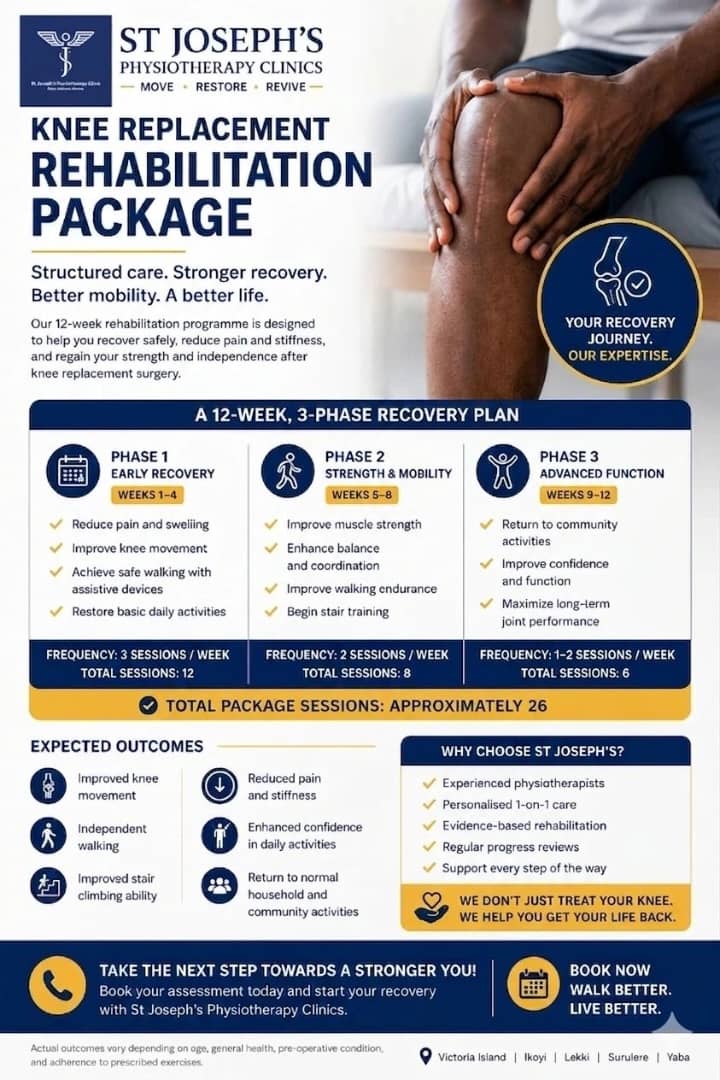
Complete Knee Replacement Rehabilitation Package in Lagos
Knee replacement surgery is a major step toward pain relief and improved mo…

NAMDA threatens strike over unpaid medical lecturers’ allowances
The Nigerian Association of Medical and Dental Academics (NAMDA) has warned…

Resident Doctors Signal End to Strike Threat After High-Level Talks with Gbajabiamila
The threat of a nationwide indefinite strike by the Nigerian Association of…