The health authorities could do more to curtail HIV infections
Nigeria joined the rest of the world last December to commemorate the World Aids Day. The year’s event, cheerily themed “Getting to Zero: Ending HIV/AIDS by 2030” by the World Health Organisation (WHO) projected zero HIV infections and AIDS-related deaths within the next 15 years. All factors considered, we believe that it is an attainable goal considering that in the last 15 years some 7.8 million lives were saved globally from HIV-related deaths.
In a report tagged “Global Health Sector Response to HIV 2000-2015”, WHO observed that “the rapid scale-up of access to Antiretroviral Therapy (ART), one of the greatest public health achievements in recent times, has made treatment available to more than 16 million people living with HIV across the globe.” Dr. Matshidiso Moeti, WHO regional director for Africa, also said that in the last 15 years, new HIV infections had been reduced by 41 per cent on the continent. But she noted too that in sub-Saharan Africa some 26 million are still living with the infection.
 Africa’s most populous country demonstrates this ambivalence. For sure, Nigeria has made significant gains in the battle against the menace. It reportedly achieved a 35 per cent reduction in new infections between 2005 and 2013, a no mean feat. But there are still dreary statistics.
 According to reports, approximately 210,000 people died from AIDS-related illnesses in Nigeria in 2013 and that accounts for 14 per cent of the world total. The number of Nigerians still living with HIV/AIDS is also high. According to the figures thrown around during the World Aids Day, of the 34 million people living with HIV and AIDS in the world, 3.5 million are Nigerians. Thus Nigeria with about 2.4 per cent of the world population accounts for more than 10 per cent of the world’s AIDS burden. Some 800,000 others are reportedly being treated with antiretroviral drugs.
The prevalence rate of Nigerians between the age bracket of 15 and 49 with HIV infections is 3.1 per cent, making the country the second only to South Africa on the continent. As rightly observed by the Health Minister, Dr. Osagie Ehanire, the HIV/AIDS epidemic is still a serious public health issue with an enormous negative impact on the health of Nigerians and the economy. Yet, one of the key issues fingered by health authorities for the present scary state of affairs is inadequate funding, but there are other challenges. For instance, less than 50 per cent of people needing anti-retroviral treatment have access while barely half the numbers of people living with HIV know their status.
Indeed, the worry is that in Nigeria the situation seems to be getting worse by the day while critical agencies of government continue to understate the national prevalence rate of the dreaded disease as well as the total number of people living with HIV and AIDS in Nigeria. There is therefore need for government, at all levels, to show renewed commitment to fighting the scourge.
The health authorities must scale up their enlightenment campaigns, particularly in the rural areas, on the many risk behaviours that could lead to infections, including unprotected sex, said to account for about 80 per cent of new infections in the country. Nigeria has what it takes to stop new transmissions and improve the lives of those living with the virus.
Source: This Day News
ABUJA: Training Schedule for Basic Life Support BLS, Pediatric Advanced Life Support (PALS), Advanced Cardiovascular Life Support ACLS, First Aid, CPR, AED
PORTHARCOURT: Training Schedule for Basic Life Support BLS, Pediatric Advanced Life Support (PALS), Advanced Cardiovascular Life Support ACLS, First Aid, CPR, AED
LAGOS: Training Schedule for Basic Life Support BLS, Pediatric Advanced Life Support (PALS), Advanced Cardiovascular Life Support ACLS, First Aid, CPR, AED
STOP paying for airtime and electricity, Let your phone pay its bills with ScreenT
You may also like
Comrade Lemii Christian Emerges Chairman of NANNM Rivers State Branch in Historic Victory
PORT HARCOURT, NIGERIA Following the long awaited National Association of N…

FG Supports Robotic Surgery Expansion to Reduce Medical Tourism
Nigeria is taking another step toward strengthening specialised healthcare …
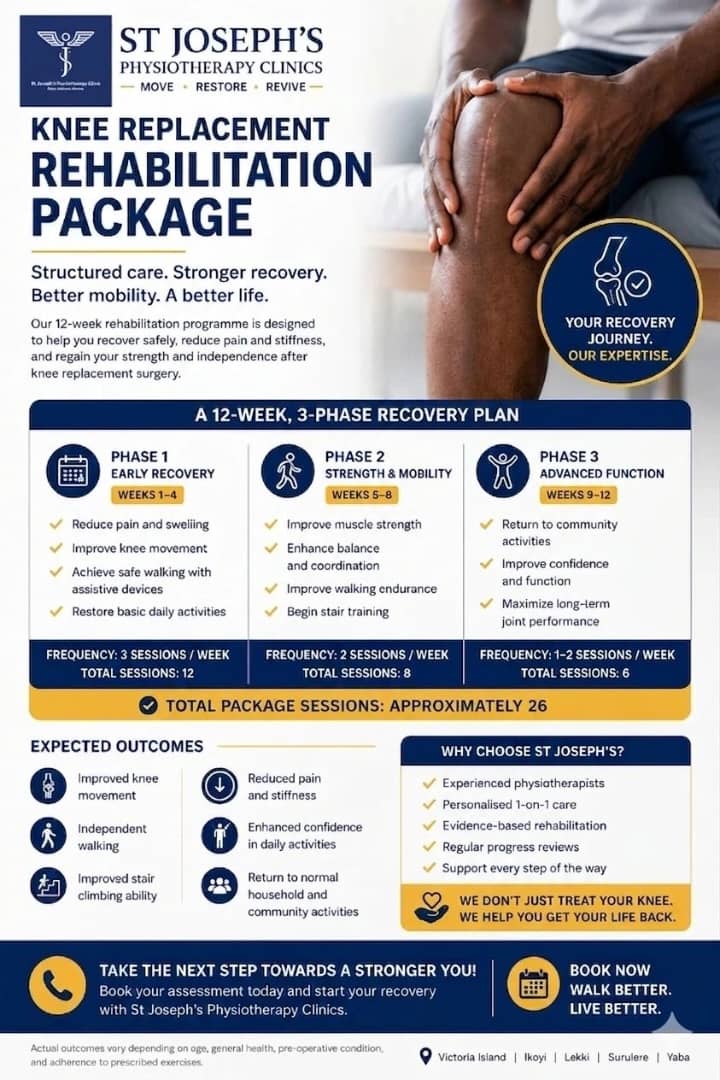
Complete Knee Replacement Rehabilitation Package in Lagos
Knee replacement surgery is a major step toward pain relief and improved mo…

NAMDA threatens strike over unpaid medical lecturers’ allowances
The Nigerian Association of Medical and Dental Academics (NAMDA) has warned…

Resident Doctors Signal End to Strike Threat After High-Level Talks with Gbajabiamila
The threat of a nationwide indefinite strike by the Nigerian Association of…