Onyinye Praise Iromba, woke up from sleep in the night to ease herself in September last year only to find out that she couldn’t move her body. She forced herself up, but fell on the ground. She managed to pick up her phone and called her pastor and his wife, who rushed down to her house.
But she couldn’t even move to the door to open it for them. And only managed to give them key through the window as she stays alone. She was rushed to the hospital, and told her blood pressure was very high, and then referred to the University Teaching Hospital, Gwagwalada where she waited for about seven hours before they attended to her.
Iromba who holds a BSc in banking and finance and a Master Degree from University of Nigeria, Nsukka was diagnosed with Stroke and spent over a month in the hospital before she was discharged.
The thirty year old lady said she was surprised, at the stroke diagnosis because she was well and even went to work on that day only to go to bed and become unable to move.
Iromba‘s problems increased when she returned to work after sometime only to be told to resign by the owner of the private firm, where she has been working for two years.
She said it really affected her because she needed money for treatment and care and has no supporter as she was the bread winner of her family before she fell ill.
.jpg) Today she is better and can walk, even drive but wherever she goes for employment, they always tell her to go and recover first before she comes for employment.
Today she is better and can walk, even drive but wherever she goes for employment, they always tell her to go and recover first before she comes for employment. She is computer literate and seriously needs a job to able to be meet up with her needs and that of her family, and calls on well meaning Nigerians for help.
Ikechukwu Obiorah a father, slumped while taking his bath in May last year and was rushed to Garki General Hospital. He was on admission for six months, four of which he spent in a comma and breathed only with the aid of a ventilator, and life support machine.
According to his wife, he was operated upon twice on the head and lost his memory. He lost kidney function and was on dialysis for some time. She said the doctors told her his stroke was at a level that only very few people survived.
Today Mr Obiorah can walk, drive not too far from the house, and gradually recovering his memory loss through the assistance of his loving wife.
Her daily routine now is always monitoring his blood pressure, sugar level, taking him for regular checkups, talking to him and helping him to recover his memory and do exercise among others.
She added that her husband is often described as the man who died thrice because of the extent f his ailment. He appeared dead to anyone that saw him except for the machine reading near him to show he was alive, she said.
She said one major thing a stroke patient need is love and care, and while it is not easy to care for them, family, friends and others must ensure they do so. According to her, Stroke is not like malaria or other diseases from which you could say the person has recovered, the person needs continuous care.
She advised Nigerians to always check their blood pressure and their health regularly so that any changes will be detected on time
While the family basks in the joy of his miraculous recovery, they still owe Garki Hospital over four million naira in hospital bills. Mrs Obiorah calls on Nigerians to help her offset the bill as it is giving her sleepless nights, adding that she only earns little income as a civil servant, and is the only one catering for the family now.
Stroke ambassador team leader for Stoke Action Nigeria, a nongovernmental organization, Mrs Florence Mbonu, said Iromba is mentally fit to work and be reintegrated into the society
Mbonu who is a carer for stroke survivors and also lost her husband to the disease called on Nigerians to embrace people suffering from stroke and not look down on them.
The Rtd. Public Health Director and advocate of stroke survivors and improved stroke management, condemned the attitude of the public towards stroke survivors and advised people to report cases of stroke immediately, because with stroke time loss is brain loss.
She enjoined the government to work with Stroke Action Nigeria, Nigeria Stroke Reference group and other related organizations, and partners in improving stroke services and management in hospitals to reduce stroke incidents and impact in the society.
October 29th is the World Stroke Day and this year’s theme is “I am woman stroke affects me” it is estimated that stroke affects more women than men in recent reports. This year highlights the impact of stroke on women.
According to Dr. Biodun Ogungbo, a brain and spine surgeon and a director of Stroke Action, Nigeria, a nongovernmental organisation a stroke is a “brain attack” and can happen to anyone at any time. It occurs when blood flow to an area of brain is cut off. When this happens, brain cells are deprived of oxygen and begin to die. When brain cells die during a stroke, abilities controlled by that area of the brain such as memory and muscle power are lost.
“It is a leading cause of long-term disability and death. Each year, more than 160, 000 Nigerians die from stroke though we do not know the actual number. This is more than Malaria and HIV combined anyway. However, stroke is not truly recognized as a killer and given the due dishonourable credit it deserves. Many of the deaths and disability is often ascribed to Malaria and witch craft,” he said.
The medical expert said for survivors and their families, the long-term costs, both financial and in terms of quality of life, are often overwhelming. Over two-thirds of survivors must live with chronic conditions, such as paralysis and reduced physical activity, speech problems, and the ability to understand speech. These conditions can impact an individual’s ability to return to work, return to school, and become a functioning member of society once again.
Common stroke symptoms include: sudden weakness of the face, arm, or leg; sudden confusion; trouble speaking or understanding speech; sudden trouble walking or seeing; loss of balance; and sudden, severe headache. The ability to recognize these symptoms and seek medical assistance immediately is critical to surviving a stroke and minimizing long-term disability.
He said stroke affects people of all ages, but several underlying factors that put individuals at higher risk include high blood pressure, diabetes, high cholesterol levels, obesity, tobacco use and physical inactivity. Understanding the risks involved with certain lifestyle choices and making healthier choices can often help reduce a person’s risk of stroke.
On reducing the incidence of the disease, he said we must carry the advocacy as regards the risk factors of stroke to the grassroots, doctors and nurses must treat high blood pressure effectively, and the victim must be rushed to a hospital immediately for investigation and treatment. He also called for the establishment of stroke centres.
He also advised that the government through the federal ministry of health must find ways to effectively support stroke survivors and their families through the advancement of new treatments. By raising awareness, we can minimize the rates of disability and mortality resulting from stroke
By: Ojoma Akor
Daily Trust News
ABUJA: Training Schedule for Basic Life Support BLS, Pediatric Advanced Life Support (PALS), Advanced Cardiovascular Life Support ACLS, First Aid, CPR, AED
PORTHARCOURT: Training Schedule for Basic Life Support BLS, Pediatric Advanced Life Support (PALS), Advanced Cardiovascular Life Support ACLS, First Aid, CPR, AED
LAGOS: Training Schedule for Basic Life Support BLS, Pediatric Advanced Life Support (PALS), Advanced Cardiovascular Life Support ACLS, First Aid, CPR, AED
STOP paying for airtime and electricity, Let your phone pay its bills with ScreenT
You may also like
Comrade Lemii Christian Emerges Chairman of NANNM Rivers State Branch in Historic Victory
PORT HARCOURT, NIGERIA Following the long awaited National Association of N…

FG Supports Robotic Surgery Expansion to Reduce Medical Tourism
Nigeria is taking another step toward strengthening specialised healthcare …
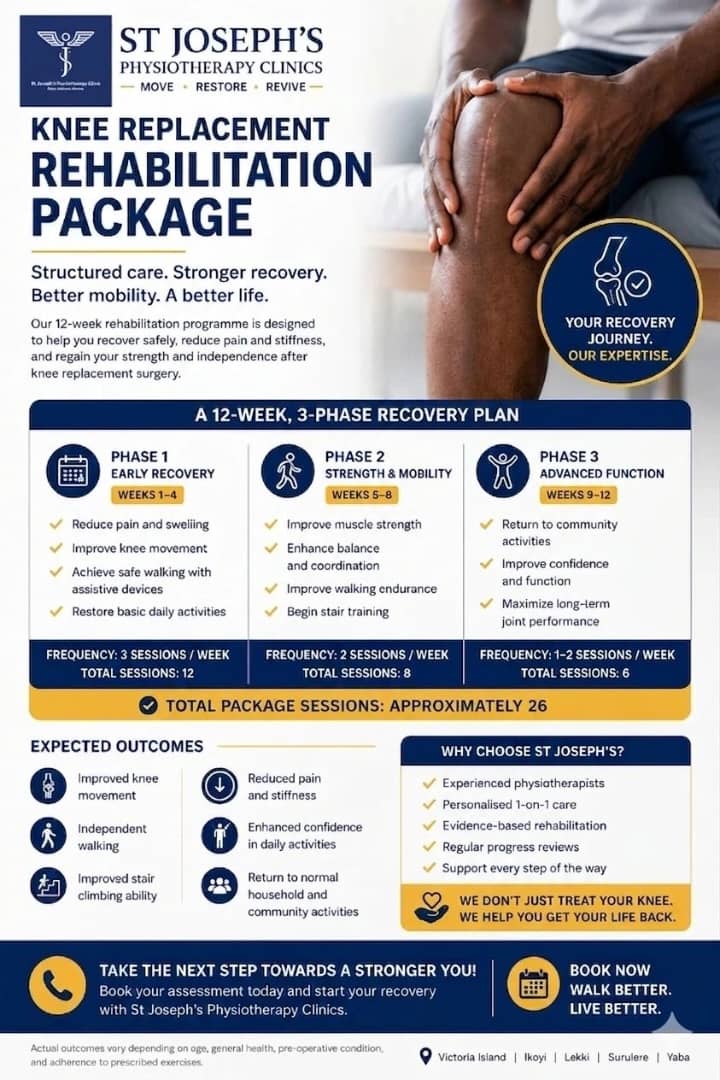
Complete Knee Replacement Rehabilitation Package in Lagos
Knee replacement surgery is a major step toward pain relief and improved mo…
NAMDA threatens strike over unpaid medical lecturers’ allowances
The Nigerian Association of Medical and Dental Academics (NAMDA) has warned…
Resident Doctors Signal End to Strike Threat After High-Level Talks with Gbajabiamila
The threat of a nationwide indefinite strike by the Nigerian Association of…