His Excellency, Mr. President has graciously assented to the National Health Bill thus it has become an Act of Parliament. The National Health Act has been long in coming and we wish to on behalf of the teaming Nigerian population thank and congratulate His Excellency, Dr. Goodluck Ebele Jonathan, the President and Commander-In Chief of the Federal Republic of Nigeria.
2. The Health Sector is one of the most important sectors which impact on ALL areas of national and personal life and economy and not an institution. It encompasses several tiers of Government including the private sector. It is one of the two most critical social sectors which form the bedrock of the transformation agenda of Mr President and a major area of impact. Following recent upheavals across the world and the impact of disease agents on human relationships, movement etc, health issues have become critical to the economy, national security and development. That is why the world is now advocating for a paradigm shift towards “Health in all Policies” in order to ensure that Health issues are at the centre of National priorities. Therefore in assenting to the NHB, the president has unleashed a most critical transformation in the health sector. We thank you sir
3. In the absence of adequate constitutional provision for health, the national health act represents the best attempt to provide legislative clarification and funding sources to support the health system through:
a. Delineation of roles and responsibilites thereby establishing an accountablitity framework. This will ensure the strengthening of health systems in order to institutionalise the responses as was recorded in the ebola virus disease outbreak and institutionalizing same.
4. The act stipulates that the federal government would contribute an amount not less than one percent from the consolidated revenue fund for the development of Primary Health Care (PHC) in the country while the state and local government will provide counterpart funds. This provision will have overarching national and multi-tier benefits to the economy and the human development indices including institutional strengthening across the entire spectrum and not to any single institution alone. It provides a requirement for counterpart funding mechanisms which is performance based and represents the best practice being implemented around the world by partners including the World Bank etc.
5. The National Health Act beyond the provision of additional funding, confers five key benefits on the Nigerian Health system:
a. Equity; the Act guarantees fairness in the allocation of resources or the treatment outcomes among different individuals or groups,
b. Efficiency; the Act will allow Nigerians to obtain the best possible value for the resources used,
c. Access; the Act allows Nigerians to have access to the health services they need by removing or reducing financial and physical barriers,
d. Quality; properly implemented, the law will improve quality of health Services in Nigeria,
e. Sustainability; there is robust provision for coordination, financing, expenditure tracking and community participation which will ensure
sustainability.
6. Social benefits: The National Health Act provides a unique opportunity for social inclusion and equity through the provision of exemption of payment for services by vulnerable groups like women and children, especially the under-5, persons with disabilities, and the elderly above 65 years. This will go a long way in ameliorating individual and family poverty levels, occasioned by exorbitant user fees paid for health service; thereby enabling them to have more disposable income to meet other social needs. It will have the greater and more long-term impact of tackling corruption and insecurity by guaranteeing social protection and inclusion.
7. Health Benefit: The Act provides for a minimum package of essential health services for all citizens to guarantee a more productive life. In addition, improved access to health for the vulnerable groups will impact positively on infant, child and maternal mortality rates (69 and 660 respectively) which currently are unacceptably high, and at variance with MDG targets. The provision of compulsory social health insurance for pregnant women and under-5s will increase the proportion of women who use ante-natal facilities with a skilled health care worker in attendance, when pregnant. Current figures are very low, ranging from 49% and 41% in the North East and North West respectively, compared to 91% and 90% in the South East and South-South respectively, highlighting marked in-country variations. State specific figures also show wide variations even within the same geo-political zone.
These would be addressed by the health Act when operational through the mandatory social health insurance scheme. Cumulatively, the current National Health Act, if effectively implemented, is capable of saving 3,131,510 lives of mothers, newborns and Under-5s by 2022.

8. Economic Benefits: Individuals and families will have more disposable income through reduction in catastrophic health expenditure occasioned by very high out of pocket expenditure when the mandatory social health insurance scheme that will be supported by the Act, especially for the vulnerable groups, is implemented. Presently, it is estimated that out-of-pocket expenses (OPE) is about N19,025 per capita without Health Insurance, and could rise to N46, 192 in 2025 if the status quo remains. Conversely, with Health Insurance, OPE will decline from an estimated N16, 746 in 2014 to N6, 318 in 2025. At the National level, the Government of Nigeria’s savings in healthcare delivery will rise from N17b in 2015 to over N211b in 2025 if the health Act is fully implemented. This economic benefit is in addition to having a healthier and happier and more productive population.
9. Holistic National Benefits: All over the world, the primary wealth of any Nation is the health of her citizens. Furthermore, empirical evidence indicate that the health of a Nation significantly enhances its economic development, and vice versa. Developed and developing countries constantly seek ways and means of improving and re-inventing their health systems to ensure that the greater number of their citizens have access to affordable health. This is the reason behind the global movement for Universal Health Coverage (UHC) which our President is at the forefront. An important national benefit of the implementation of the National health Act when passed into law is the acceleration of Nigeria’s quest towards UHC, which is about people having access to the healthcare services they need without suffering financial hardship in paying for them. (World Bank 2013).
10.Development Benefits: The multiplier effects of this will holistically manifest in increased life expectancy of Nigerians, as well as increased productivity, n addition to the direct health benefits of reduced maternal, infant and child mortality, which themselves are veritable measures of the socio-economic well- being of any Nation.
In Nigeria, it could be argued, and rightly so, that the cumulative effect of increased direct and indirect investments in health over the past 5 years through the MDGDRG Savings, and more recently the SURE-P programme have played a significant role in expanding the scope of the Mid-Wifery Service Scheme, thereby ensuring that more pregnant women have access to skilled attendants during ANC visits. As a result, the reduction in maternal mortality rates across the geo-political zones may
in part be attributed to this increased resource allocation to MNCH. Based on the foregoing, we must align with the new paradigm which holds that significantly increased investments in health must not wait till the economy develops, but rather such upswing in health investments are veritable triggers of economic development.
Finally, the massive investments in health and social protection to produce a healthy citizenry that will drive economic growth in all its ramifications will begin through the signing of the 2014 NHB, and corresponding full implementation of the law.
11. Finally, His Excellency, Mr President who has promised the world at various fora that the National Health Bill will be signed once passed by the National Assembly in order to correct the chaotic situation that can sometimes exist because of the vacuum has now matched his words with action and we most sincerely thank him. This Act went through a very consultative process and revision and has taken into consideration the economic realities of our time that is why the recommendation in the Act was reduced from 2% to 1%. We are at the verge of history. It is the one singular instrument required to unlock economy in order to unleash its goodness on Nigerians. Assenting to this Act at this time is the greatest transformation for the Health Sector and its attendant benefits will be the biggest democratic dividend and unprecedented political masterstroke as it will mobilise the World to rally around Mr. President.
Dr. Khaliru Alhassan,
Hon. Minister of State and Supervising Minister of Health
ABUJA: Training Schedule for Basic Life Support BLS, Pediatric Advanced Life Support (PALS), Advanced Cardiovascular Life Support ACLS, First Aid, CPR, AED
PORTHARCOURT: Training Schedule for Basic Life Support BLS, Pediatric Advanced Life Support (PALS), Advanced Cardiovascular Life Support ACLS, First Aid, CPR, AED
LAGOS: Training Schedule for Basic Life Support BLS, Pediatric Advanced Life Support (PALS), Advanced Cardiovascular Life Support ACLS, First Aid, CPR, AED
STOP paying for airtime and electricity, Let your phone pay its bills with ScreenT
You may also like
Comrade Lemii Christian Emerges Chairman of NANNM Rivers State Branch in Historic Victory
PORT HARCOURT, NIGERIA Following the long awaited National Association of N…

FG Supports Robotic Surgery Expansion to Reduce Medical Tourism
Nigeria is taking another step toward strengthening specialised healthcare …
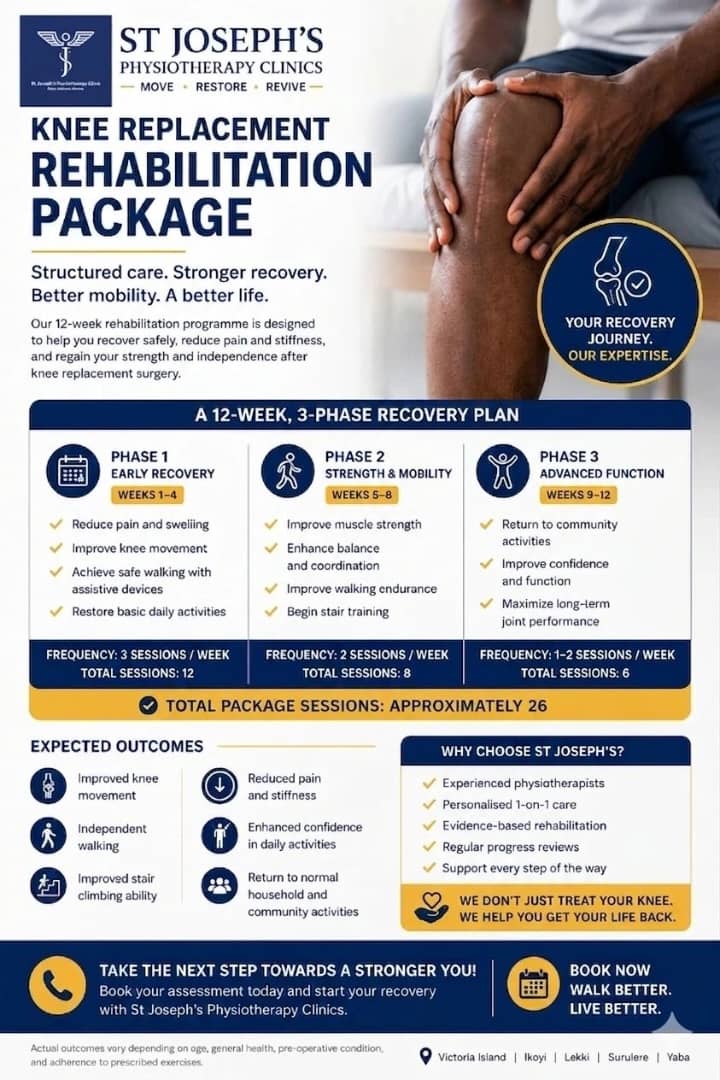
Complete Knee Replacement Rehabilitation Package in Lagos
Knee replacement surgery is a major step toward pain relief and improved mo…

NAMDA threatens strike over unpaid medical lecturers’ allowances
The Nigerian Association of Medical and Dental Academics (NAMDA) has warned…

Resident Doctors Signal End to Strike Threat After High-Level Talks with Gbajabiamila
The threat of a nationwide indefinite strike by the Nigerian Association of…
