The transcatheter technique has been used to close holes in the heart of some 300 patients with Ventricular Septal Defect (VSD) in the last five years, doctors at Apollo Children’s Hospital in India have said.
Medical advances are helping surgeons treat holes in the heart without surgery and resultant scarring through a technique called transcatheter.
The transcatheter technique has been used to close holes in the heart of some 300 patients with Ventricular Septal Defect (VSD) in the last five years, doctors at Apollo Children’s Hospital in India have said.
Ventricular septal defect occurs when a hole stays open between the lower pumping chambers of the heart, and is traditionally closed by open-heart surgery, which involves cracking the chest open, placing a patient on a bypass machine while the hole is surgically closed.
 But a transcatheter technique uses special dye to locate the hole through a pin-hole and closes it.
 At least half of all small to moderate sized VSD can be closed this way, Apollo hospital said, depending on the experience of the surgeon, the right patient and proper planning.
But any holes below the main valves of the heart still require closing by surgery only.
“In the last 10 years, there has been a tremendous development in the treatment of this condition where we have started closing the hole by pin-hole technique [angiogram] without any scar in the chest,” a hospital statement said.
The latest patient to undergo the treatment to close a hole in her heart was a 14-yar-old girl with congenital heart problem and a mildly damaged valve.
“The procedure which took us half an hour was done under local anaesthesia. The hole was successfully closed by VSD Device by transcatheter technique and she was discharged from the hospital on the very next day,” said the hospital.
In one year of follow up, there has been no record of residual leak or valve problem.
“This single day procedure helped her to avoid a cardio-pulmonary bypass surgery, lifelong scar on the chest and 5-6-day hospital stay following surgery,” the statement concluded.
By: Victoria Onehi
Daily Trust News
ABUJA: Training Schedule for Basic Life Support BLS, Pediatric Advanced Life Support (PALS), Advanced Cardiovascular Life Support ACLS, First Aid, CPR, AED
PORTHARCOURT: Training Schedule for Basic Life Support BLS, Pediatric Advanced Life Support (PALS), Advanced Cardiovascular Life Support ACLS, First Aid, CPR, AED
LAGOS: Training Schedule for Basic Life Support BLS, Pediatric Advanced Life Support (PALS), Advanced Cardiovascular Life Support ACLS, First Aid, CPR, AED
STOP paying for airtime and electricity, Let your phone pay its bills with ScreenT
You may also like
Comrade Lemii Christian Emerges Chairman of NANNM Rivers State Branch in Historic Victory
PORT HARCOURT, NIGERIA Following the long awaited National Association of N…

FG Supports Robotic Surgery Expansion to Reduce Medical Tourism
Nigeria is taking another step toward strengthening specialised healthcare …
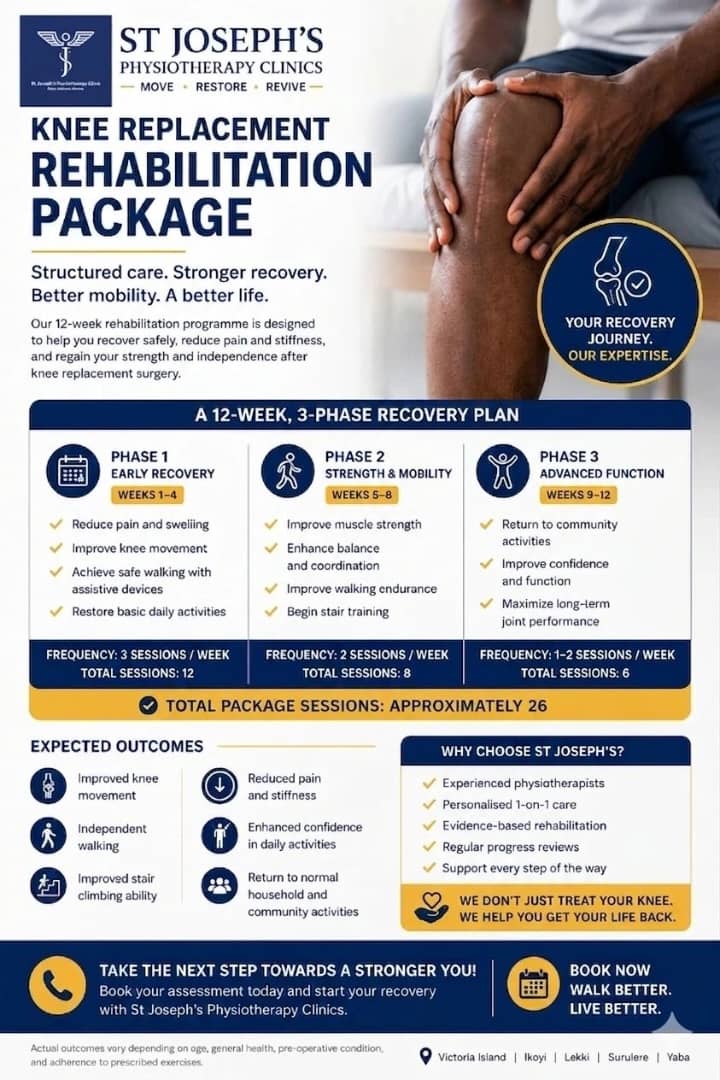
Complete Knee Replacement Rehabilitation Package in Lagos
Knee replacement surgery is a major step toward pain relief and improved mo…

NAMDA threatens strike over unpaid medical lecturers’ allowances
The Nigerian Association of Medical and Dental Academics (NAMDA) has warned…

Resident Doctors Signal End to Strike Threat After High-Level Talks with Gbajabiamila
The threat of a nationwide indefinite strike by the Nigerian Association of…