Despite cervical cancer being a preventable disease, it still remains the second highest cancer scourge among Nigerian women. Rebecca Ejiforma writes on the role of Optimal Cancer Care Foundation, in addressing this.
With available information suggesting that cervical cancer is the second largest killer-cancer of women in low and middle income countries, including Nigeria, it is no doubt a medical emergency that must be tackled head on.
According to Cervical Cancer Global Crisis Card published by Cancer-free Coalition, the mortality rate of cervical cancer in Nigeria is 22.9 per cent.
Of the 14,550 cases of cervical cancer diagnosed in Nigeria, about 9,659 of them die, meaning around 64 out of every 100 Nigerian female diagnosed of cervical cancer die.
Today, however, research has shown that Human Papilloma Virus (HPV) is a major risk factor for cervical cancer. It is a sexually transmitted virus passed on to women through sex. And over five to 10 years after having that sex, it can turn to cervical cancer.
Although Epidemiologists say they do not know the cause of all cancers but cervical cancer. According to the Medical Director of OCCF, Dr. Olufemi Olaleye, "Every man has the virus in his penis and usually on the skin. So, once a woman has sex, she contacts the virus from the man whether you wear condom or not, he notes.
While addressing participants, mostly female and police officers, during one of the five sessions on cervical cancer, the expert explained that sex is in and out. “The condom only covers the male private part, but part of the body is touching you. Eventually, it will find its way into your cervix. It will change the cervix overtime."
Olaleye continued, "We cannot legislate against sex because it is ordained. But when an infected man have sex with a woman, it increase her risk of cervical cancer."
The Medical Director and philanthropist disclosed that globally, cervical cancer was the number three cancer killing women in the world. “In Asia, it is number four. This is because they send letters of reminder to their women to go for their screening every three years. And they vaccinate their girls from age 10 to 16 for free."
Therefore, with estimates that 47.72 million Nigerian female aged 15 and above are at risk of the cancer, Olaleye assured: "We are, also, determined to make that service available to our women in Nigeria. Because the Government cannot do it alone."
He, however, emphasised that normally, all cells in the body obey the characteristics known as MR. NIGER D (Movement, Respiration, Nutrient, Irritability, Growth, Excretion, Reproduction and Death)" But some cells forget to die. Those cells that forget to die are the cancers,” he said.
How to reduce risk
"Do your screening and get vaccinated," the Medial Director urged. He, further, stressed that women should not smoke. "If a woman smokes, it increases her risk of cervical cancer even more. That's why you shouldn't smoke. Both primary and secondary smokers are both at risk of this. Hence, avoid smoking in public places.
Hence, Olaleye decried that cervical cancer stays in a woman for so long unlike breast cancer that can be treated once detected early. "Before it comes out for her to seek help, it is already too late," Olaleye said.
He said: "There are some you can do something about. The ones you can't do anything about are: environment, genetics (if you have a family member that has breast cancer - mother, sister or aunt), there is a 50 per cent chance that you as a girl or woman will have breast cancer."
.jpg) Accordingly, participants were made to understand that breast, cervical and prostate cancers are the three cancers that screening tests can be done on. Adding, he said, "But thankfully, other cancers are not as common - they are rare, compared to those three mentioned."
Accordingly, participants were made to understand that breast, cervical and prostate cancers are the three cancers that screening tests can be done on. Adding, he said, "But thankfully, other cancers are not as common - they are rare, compared to those three mentioned." "Statistics have shown that we, in developing countries, carry the largest burden of this disease for three reasons: we don't invest in healthcare enough, we don't raise awareness in many places that we need to reach, and the cost of healthcare is very high in our country," he decried.
Explaining further, he noted that a lot of people - even if they have the disease - cannot access care. Adding, “a couple came here today all the way from Badagry because they were thinking they could get the treatment today. Care is not available to our people,” he said.
With reports that one in three Nigerians die of cancer, the Gynaecologist said, "There shouldn't have been the position of death. It should have been one in three will have cancer. If you can prevent a disease, then many years down the line you will spend less on curing."
Sadly, he affirmed that the diagnosis of cancer is a death sentence in Nigeria. It is only a matter of time. Whereas in other countries when they have a cancer diagnosis, they have a good opportunity to live many years after cancer diagnosis, and if possible, recover from it.
Fate of women who grew up without the vaccines around them
We have a study that has shown that women who are still sexually active who did the screening test and the result was negative, can be given the vaccines. It is called PATRICHAD study (Papilloma Trial in Children and Adults).
“A lot of people have been saying it is not effective and not useful for women who are already sexually active. Women who are sexually active now have the opportunity to have this vaccine here in this foundation. And a large number of women who have taken it have not complained of any side effect,” he noted.
Cost of Vaccine
According to him, “the cost benefit is what I will stress. Take three doses for N30, 000 (thirty thousand naira). Each dose costs 10, 000 naira and it's something majority of women here can afford.
He said from age 10, the children should be taken to where they can access the vaccine. “It gives immunity for life for young girls. But adults have to screen first then take the vaccine if negative. If you have screened with me, I always advise my women to go for screening every 10 years. It takes 10 years for the previous virus in your body to surface. If after 10 years it doesn't show, then you can stop screening,” he explained.
He said every children’s day, his organisation give 50 per cent discount to patient's children. “We have been doing this for three years now. Let people come with their children for vaccination. "Prevention is better than cure,” he said.
Experts predict the future
Olaleye disclosed that it was on record that in the next 25 years, statistical relevance study shows that two tons of cancer deaths should be coming from less developed countries like Nigeria. "That's a lot. We should be contributing more to this planet not deaths.
"Every local government has a medical officer of health and has a health centre. They just need to incorporate it into their health system. It doesn't have to cost a lot of money. Our people deserve more than what we are currently giving them. The government can't keep hiding under 'It costs a lot of money," he said.
How to do self-breast examination
With the four finger of the right hand across on the left breast, OOCF nurse displayed clockwise self-examination: 12, 3, 6 and 9 O'clock. Then they went anticlockwise and were told to carry on weekly. "If you touch any lump there, do not panic."
Therefore, with the objective to improve knowledge, raise awareness, change health and lifestyle habit, and greatly reduce the rate of deaths from cervical cancer among Nigerians, OCCF gave all participants free prostate, breast and cervical cancer screening and urged Nigerians to join in the fight against this disease by sponsoring their daughters and other females.
Source: This Day Live News
ABUJA: Training Schedule for Basic Life Support BLS, Pediatric Advanced Life Support (PALS), Advanced Cardiovascular Life Support ACLS, First Aid, CPR, AED
PORTHARCOURT: Training Schedule for Basic Life Support BLS, Pediatric Advanced Life Support (PALS), Advanced Cardiovascular Life Support ACLS, First Aid, CPR, AED
LAGOS: Training Schedule for Basic Life Support BLS, Pediatric Advanced Life Support (PALS), Advanced Cardiovascular Life Support ACLS, First Aid, CPR, AED
STOP paying for airtime and electricity, Let your phone pay its bills with ScreenT
You may also like
Comrade Lemii Christian Emerges Chairman of NANNM Rivers State Branch in Historic Victory
PORT HARCOURT, NIGERIA Following the long awaited National Association of N…

FG Supports Robotic Surgery Expansion to Reduce Medical Tourism
Nigeria is taking another step toward strengthening specialised healthcare …
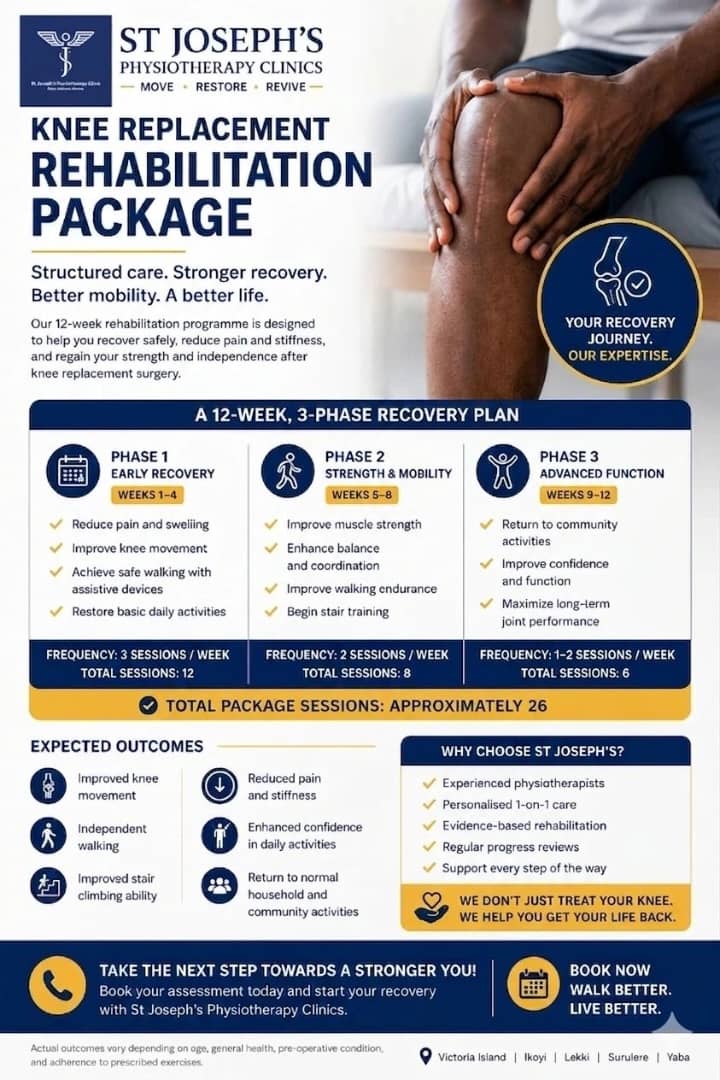
Complete Knee Replacement Rehabilitation Package in Lagos
Knee replacement surgery is a major step toward pain relief and improved mo…

NAMDA threatens strike over unpaid medical lecturers’ allowances
The Nigerian Association of Medical and Dental Academics (NAMDA) has warned…

Resident Doctors Signal End to Strike Threat After High-Level Talks with Gbajabiamila
The threat of a nationwide indefinite strike by the Nigerian Association of…