On Lassa fever? Lassa fever outbreak is a seasonal thing. It’s been on for over 40 years, the virus was discovered in 1959 in Lassa village in the present day Borno State and ever since, they had been occurrence of Lassa Fever outbreak during the dry season.
Although, many of these were never recorded until way back to 2002 when the diagnosis was made regularly and ever since, we’ve been having seasonal outbreak and it’s usually during the dry season. This one that is occurring now is another season of Lassa fever. We are aware, the Federal Ministry of Health (FMoH) is aware and we have structures in place. All the states Ministries of Health are also aware that this is the season of Lassa fever. Just like we are aware that this is the season for Meningitis and Bird flu. The reason they are occurring has to do with the fact that, for Lassa fever, we have the vectors here. We are among those countries in West Africa that harbour the vectors of multimammate rodents.
Where you don’t have the rodents, we can never have the virus except if it is imported and people can import Lassa fever to other countries just like Ebola was imported to our country. For Meningitis, this is the dry season where you have the dust. The agent is in the dust been blown from the north down to us here and then, the flu are in the white birds that flew to the dry area. They are from the Europe where they are in their winter season. The birds cannot withstand winter, so they have to come to a dry place. They share the virus where they migrate to. Even though, it kills them too. It’s not unexpected.
 We are not surprised that we are having them. As an expert, you are aware and the Ministries of Health are not surprised but with the number of casualty recorded so far, it seems the country is pretty much taken unawares? We need to step up our level of awareness and it’s not a one time exercise. It has to be continuous because we know that Lassa fever, Meningitis and Bird flu happen during the dry season and we know the factors that drive them. The vectors for Lassa fever, the rodents are in the bush and during the dry season, the bush will be burnt, they get dry, exposing the hide-outs of the rodents so they will now move into the households to hide. As they hide, 26 Daily Times Nigeria Thursday, January 28, 2016 Researchers have said that drinking coffee, tea or chocolate does not appear to cause heart palpitations, heart fluttering and other out-of-sync heartbeat patterns.
 The study published on NBC News. com report challenges a widely held belief that caffeinated drinks cause irregular heart rhythms that can lead to heart failure or dangerous heart rhythm disorders and is another vindication for coffee as a safe drink. It might be time for doctors to lighten up on coffee, says Dr. Gregory Marcus, a cardiologist at the University of California San Francisco, who led the study. “Clinical recommendations advising against the regular consumption of caffeinated products to prevent disturbances of the heart’s cardiac rhythm should be reconsidered, as we may unnecessarily be discouraging consumption of items like chocolate, coffee and tea that might actually have cardiovascular benefits,” Marcus said in a statement. “Given our recent work demonstrating that extra heartbeats can be dangerous, this finding is especially relevant.”
It used to be believed that premature cardiac contractions, which usually cause no symptoms or mild symptoms such as heart palpitations, ‘skipped’ beats or fluttering, were harmless. But studies now show they’re associated with heart failure, atrial fibrillation and other dangerous conditions. Continued on page 27 Health Æ s This is the season of Lassa fever, Bird flu, Meningitis—Prof. Omilabu Caffeine Doesn’t Give You Heart Palpitations, Study Finds Omilabu Caffeine Professor Sunday Aremu Omilabu, a virologist at the Lagos University Teaching Hospital (LUTH), Idi-Araba, and a professor at the College of Medicine, University of Lagos (UNILAG) was appointed Chairman of the Taskforce on the control of viral hemorrhagic fevers during the Ebola outbreak period he is now, a member of the newly constituted Lassa fever Control Committee. In this interview with LARA ADEJORO, he tells all there is to know on Lassa fever, Meningitis and Bird flu. they look for food remnants, they look for where we keep our foodstuff especially garri and the leftovers of cooked rice, bread and yam.
They share these foods and contaminate them, that’s why we keep hearing of Lassa fever during the dry season. Not that we don’t have the virus in vectors in the rainy season but because of the rain, the rodents are pushed to the bush and it’s the same thing for Meningitis. It’s the wind that blows the dust from the north down to us. The dust reaching those bacteria agents that are associated with Meningitis and the bird harbouring the influenza virus migrate from the winter area to the dry and warm areas. As long as we are in the dry season, we will have Lassa fever, Meningitis and Bird flu.
The period for Lassa fever is from October to March. By the time we get to March ending, it subsides. By the time we seem to have one or two rainfall, the rodents will go back, so the cases of Lassa fever will go down. These diseases are zoonotics, so transmission from these animals to human will decrease but all the humans that carry the virus now will start transmitting to each other, we now have human-to-human transmission. How can we get it right? We need to start hightening the level of awareness and sensitisation. People need to be educated and informed. We should not go to rest. We’re still going to have the fever again during another dry season but we need to prepare ahead of time. By 2012, when the awareness was very high, we recorded close to 1800 cases of Lassa fever from over 20 states. So also was it in 2013 and 2014.
In 2015 that we had lots of rainfalls, so the report was very low. We had 300 cases reported with 7 deaths and with heavy rainfall, the rodents were restricted to the bush. In this season, since we entered into the dry season, no rain and once they come to the house, they’ll eat all the exposed foods. That’s why we need health education on how to keep our food, environment and how to live hygienic lifestyles just like we did during Ebola. People have already dropped the idea of handwashing or going with hand-sanitizers. Those are the magics that worked for curtailing Ebola. The same thing also holds for Lassa fever. Once we do these, we’ll see that we won’t have more of Lassa fever. Some have stipulated that we shouldn’t drink garri. What’s your take on it? I will not say people should not drink garri as long as they are sure that their garri is protected away from rodent infestation. They have to put their garri in rodent protected containers. Once they are sure that the garri is good especially those that are well prepared.
The irony of it is that, people tend to drink garri more during the dry season. Rodents eat any exposed garri and contaminate it. One problem with rodents is that, as they eat, they urinate and defecate. But with Eba, there is still danger in it because you will use your hand to fetch the garri from the container, the hand you use will still carry virus, the one you put inside hot water will damage the virus but you won’t pour hot water on your hand. For the garri, you have to be very cautious because it’s one of the commonest sources of getting Lassa virus. If you must drink garri at all, you must be sure of the garri you’re drinking.
What are the similarities and differences in Lassa fever, Meningitis and Bird flu? Lassa fever is carried by rodents. For the ones that are problematic in Meningitis, they are bacteria caused. Though we have viral Meningitis which are different from the bacteria epidemics and many of those viruses are enterovirus, i.e the viruses we mix with in the environment. Bird flu is caused by a virus which is airborne unlike Lassa fever that is transmitted through eating; though it can now be aerosolized, then it becomes particles which we can inhale but they are not as easily aerosolizable as flu virus and when they come in contact with the respiratory tissue, they first of all grow. Lassa fever will get into the blood which will carry it over into other organs unlike the influenza virus that the air blows through the nostrils and once it gets there, it starts growing and the two are very deadly. If care is not taken, they end up killing the victim.
However, Ribavirin takes care of Lassa fever if diagnosed on time. We have Tamiflu for Bird flu and we have vaccines for Meningitis. You are a member of the newly constituted Lassa fever control committee, what is your advise to Nigerians? The committee is charged with activities of stemming Lassa fever outbreak and to put structures in place to mitigate future outbreaks. For Bird flu, we need to advise people to stay clear of any farm where it is reported because we don’t want the virus to jump from the bird into human being. We need health education because we know it’s the bird that’s harbouring the virus.
During the Ebola season, the Federal Government approved N1.9billion for Ebola intervention. Don’t you think if money is released now, it will help in the fight against these deadly diseases? Money is one of the things that will make it easier to control these diseases. The Minister of Health while inaugurating the committe at the Council of Health meeting, the Minister of Health, Prof. Isaac Adewole promised that he will try to look for money to assist the committee carry out their assignment.
Money is very key. We need to carry out diagnosis, surveillance and we need money for people to move around. We have a state where they thought it was a spiritual attack. Most of the cases reported late and there was nothing the drug could do. It’s when you report early that Ribavirin can do wonders. What lessons can we learn from the defeat of Ebola in the fight against these diseases? One of the lessons is that we can have any of those deadly viral agents anytime because we are not in the belt of Ebola, yet it was brought into our country; that tells us that we can have any of the emerging or reemerging agents in our environment, we have to b ever ready, we have to improve on our surveillance system. On the part of the populace, we have to be conscious of our environment.
We have to cultivate the habit of living in a clean environment and cultivate hygienic practise of hand-washing and washing of our fruits. Then if you notice any unusual fever, don’t stay at home, don’t say it’s a spiritual attack, go to a healthcare centre and let them rule out all they know. And if you kill any rat, we should be careful, it shouldn’t be disposed with our bare hands but rather, our hands must be wrapped, then dig the ground deep down before it’s buried.
By: SBM Foluke
Daily Times News
ABUJA: Training Schedule for Basic Life Support BLS, Pediatric Advanced Life Support (PALS), Advanced Cardiovascular Life Support ACLS, First Aid, CPR, AED
PORTHARCOURT: Training Schedule for Basic Life Support BLS, Pediatric Advanced Life Support (PALS), Advanced Cardiovascular Life Support ACLS, First Aid, CPR, AED
LAGOS: Training Schedule for Basic Life Support BLS, Pediatric Advanced Life Support (PALS), Advanced Cardiovascular Life Support ACLS, First Aid, CPR, AED
STOP paying for airtime and electricity, Let your phone pay its bills with ScreenT
You may also like

Comrade Lemii Christian Emerges Chairman of NANNM Rivers State Branch in Historic Victory
PORT HARCOURT, NIGERIA Following the long awaited National Association of N…

FG Supports Robotic Surgery Expansion to Reduce Medical Tourism
Nigeria is taking another step toward strengthening specialised healthcare …
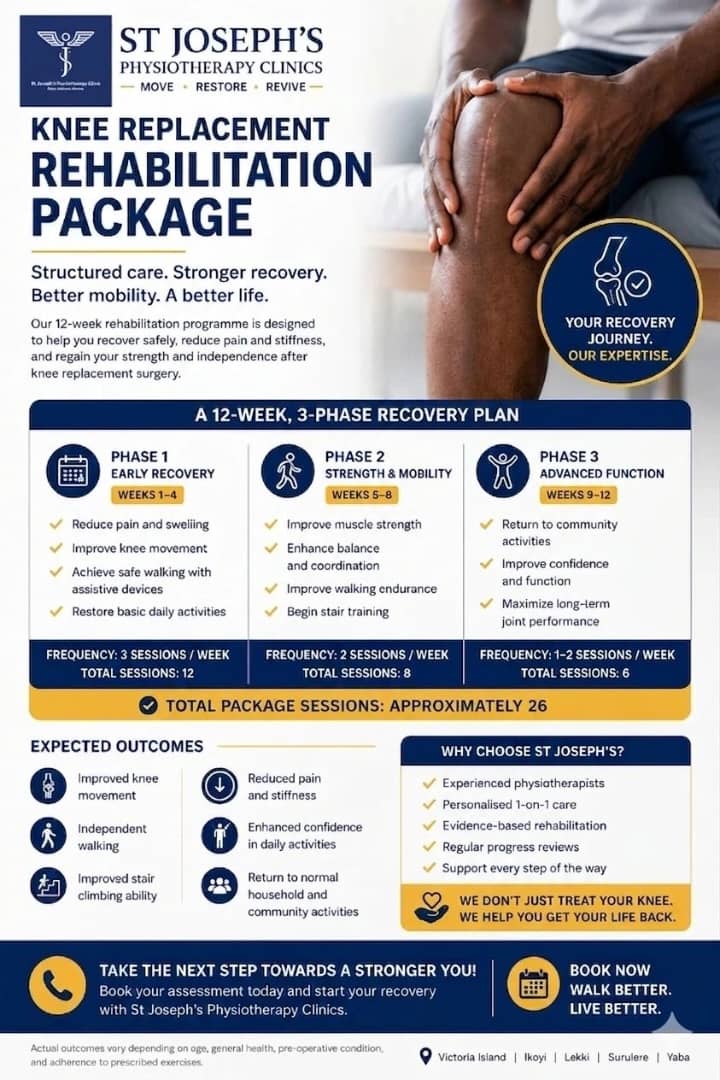
Complete Knee Replacement Rehabilitation Package in Lagos
Knee replacement surgery is a major step toward pain relief and improved mo…

NAMDA threatens strike over unpaid medical lecturers’ allowances
The Nigerian Association of Medical and Dental Academics (NAMDA) has warned…

Resident Doctors Signal End to Strike Threat After High-Level Talks with Gbajabiamila
The threat of a nationwide indefinite strike by the Nigerian Association of…