In this final part of our series on shortage of medical personnel within the Nigerian health sector, seasoned medical doctors examine the problem while proferring feasible solutions that could be applicable short-term and long-term. Starting off Chairman of the Lagos State branch of the National Association of Resident Doctors, NARD, Dr. Tope Ojo. Excerpts:
Looking at the issue of shortage of health workers I would like to put it in political perspective. There are two reasons I always advance in respect to this – inability to be fulfilled individually and professionally.
doctorsWe are in a country where a health worker cannot boast of a living wage. You cannot boast of very good condition of service and this is not alien to Nigeria.
Shortly after independence in the 1970’s people were enjoying a robust package which were not only applicable to doctors. These included a car loan, house loan among others. But this is not applicable again, we now experience a state of dead infrastructure.
We have not been able to get continuous power supply over the years. The roads are bad and access to health facilities even as a health provider, is restricted. These are requirements that there are guarantees at all for.
Second, our people are unable to practise their profession to the fullest. There are a lot of things in terms of revolution that have occurred in medicine, and this is not available in our country. For instance when you are looking at surgical specialities, it has gone beyond opening people up a times, there are now facilities that can conduct the proper examination without tiring people.
Many years back Lagos State can boast of 20 Magnetic Resonance Imaging, MRI machines, but now in the whole of Lagos I don’t think we can boast of five. And when you are comparing this number with the population of Lagos State we all know what it means. Even practising the profession you cannot help your patient maximally.
So how do will now juxtapose this with what I call a political decadence? It is the failure of leadership that is responsible for all of this, and the only people to be held responsible are our political leaders that have deceived Nigerians over the years.
When you look at it government still spend a lot of money to train our graduate but at the end you don’t have them staying back and this can be attributed to poor governance over the years.
This is a very serious problem and until we start to see it from political perspective, and be a vanguard of change and join the train of people that will say enough is enough, regardless of your political party, the situation will continue to get worse.
In the past three years in Lagos State, the government has refused to recruit resident doctors because of their rancour with doctors employed in the State and their Association.
.jpg)
The implication of this is very glaring. Accreditation will be withdrawn, the medical school will collapsed, this simply means that the institution is going to collapse because the patient here in Lagos State University Teaching Hospital has been subjected to long waiting time.
Also there are cases of people who waiting for surgery for between18 months and even up to two years.
Reasons for health worker shortage in health facilities in Nigeria are legion, in the view of the Vice President, WAR, Commonwealth Medical Association, Dr. Osahon Enabulele.
They include poor health human resource development plans; inadequate training infrastructure and health facilities to support the production of health human resource; migration of health workers (particularly medical/dental practitioners) due to insecurity and poor job satisfaction, particularly as a result of uninspiring workplace conditions, poor health infrastructure and equipment, inadequate remuneration and welfare conditions.
Enabulele who is the erstwhile President of the Nigeria Medical Association, NMA, argues that the attractive remuneration, better security guarantee, better incentive packages, conditions of service and workplace conditions in developed countries, such as United States of America, United Kingdom, Germany, Australia, etc., greatly encourages migration of health workers from developing countries, particularly countries in Africa, Nigeria inclusive.
“In terms of the appropriate numbers recommended by the World Health Organisation, a country is expected to have a minimum number of the various categories of health workers to cater for the population of the country. For instance, the recommended ideal doctor : patient ratio is 1:600, even though for developing countries the minimum is usually taken as 1:1000 (doctor-patient ratio).
In Nigeria, an average of 2, 500 medical doctors are produced annually. However, this is grossly inadequate considering the average doctor- patient ratio of 1:6300 in Nigeria.
Training infrastructure
“To address health worker shortage, there is need to address the identified factors responsible for Health worker shortage in health facilities in Nigeria, particularly by increasing the number of training infrastructure without compromising quality and standard; instituting a more efficient and effective health human resource development plan and Personnel Management System; improving the morale and job satisfaction of health workers by constantly improving their incentive package, remuneration and welfare conditions to be in tune with their professional calling, job roles and economic realities; effective resolution of conflict areas, particularly with regard to role conflict through proper designation of job roles; improved security of health workers; and institution of a transparent performance reward system,” he asserted.
By Sola Ogundipe, Chioma Obinna & Gabriel Olawale
ABUJA: Training Schedule for Basic Life Support BLS, Pediatric Advanced Life Support (PALS), Advanced Cardiovascular Life Support ACLS, First Aid, CPR, AED
PORTHARCOURT: Training Schedule for Basic Life Support BLS, Pediatric Advanced Life Support (PALS), Advanced Cardiovascular Life Support ACLS, First Aid, CPR, AED
LAGOS: Training Schedule for Basic Life Support BLS, Pediatric Advanced Life Support (PALS), Advanced Cardiovascular Life Support ACLS, First Aid, CPR, AED
STOP paying for airtime and electricity, Let your phone pay its bills with ScreenT
You may also like
Comrade Lemii Christian Emerges Chairman of NANNM Rivers State Branch in Historic Victory
PORT HARCOURT, NIGERIA Following the long awaited National Association of N…

FG Supports Robotic Surgery Expansion to Reduce Medical Tourism
Nigeria is taking another step toward strengthening specialised healthcare …
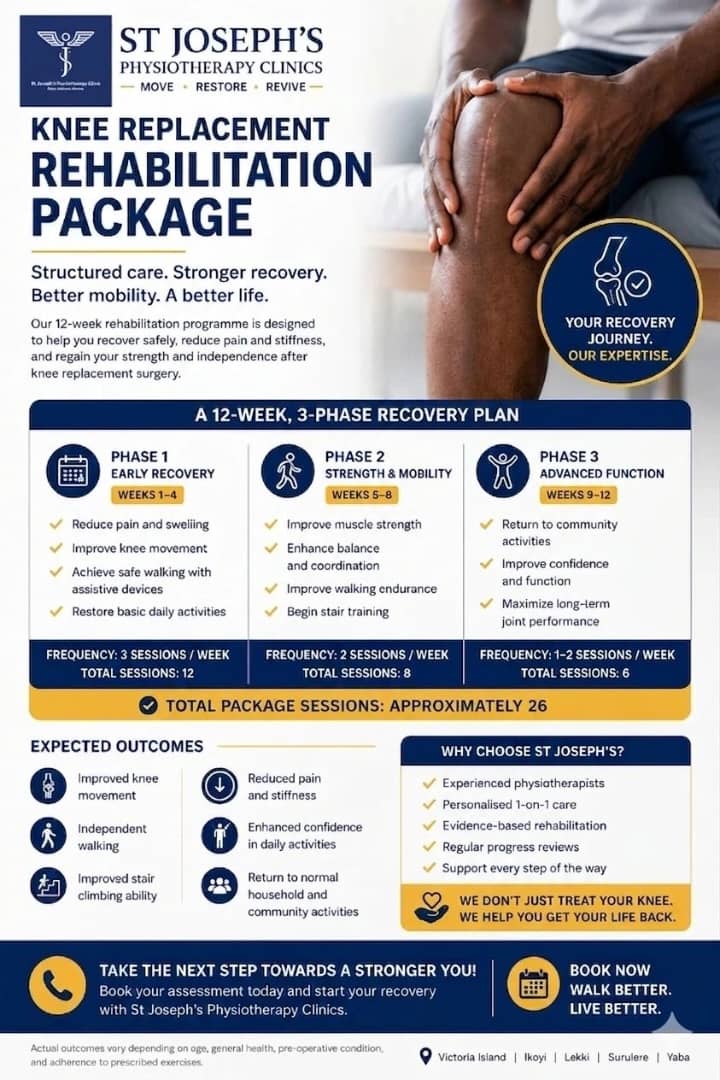
Complete Knee Replacement Rehabilitation Package in Lagos
Knee replacement surgery is a major step toward pain relief and improved mo…

NAMDA threatens strike over unpaid medical lecturers’ allowances
The Nigerian Association of Medical and Dental Academics (NAMDA) has warned…

Resident Doctors Signal End to Strike Threat After High-Level Talks with Gbajabiamila
The threat of a nationwide indefinite strike by the Nigerian Association of…
