Medical experts believe that adequate healthcare services such as diagnosis, treatment, prevention of disease, injury and other physical and mental impairments, are essential. However, they observe that the perceived somewhat negative attitudes occasioned by socio-economic conditions, may determine the quality of healthcare delivery in a society. Psychologists see an attitude as an expression of favour or disfavour towards a person, place, thing or event.
In the light of this, a negative expression towards a service or a practice can make or mar the aim of such programmes.
Stakeholders in heath sector, therefore, observe that a positive attitude of the public towards healthcare services and attitudes among health workers are fundamental to providing efficient effective medical care.
In his view, a surgeon, Prof. John Momoh, said that the challenge of healthcare delivery in Nigeria was not primarily due to lack of equipment or qualified personnel but attitude of the public to the system.
“We often think it is because we do not have the necessary equipment but over the years there has been an improvement in the availability of equipment for working and investigations.
“There should be positive attitude among health workers to recognise that we need each other’s professional input to be able to comprehensively meet the needs of the patients.
“This attitude cannot be learnt from books but only God can develop those attitudes in us and also enable us to demonstrate them for the good of our patients.
“I am also saying that if we want the improvement in our health system to pass from one generation to another and even get better, it is only within the context of positive attitude that it can be done.
“Yes, it is important that we all develop our technical abilities; it is important also that we are growing in our knowledge and understanding of diseases.
“It is important that we have up-to-date materials or equipment for investigations but it still comes down to attitude to work.
“If you have a well equipped hospital where those who are working are non-chalant about work; they see themselves as semi-gods and are only concerned about what they can gain from the system, then nothing moves forward,’’ Momoh said.
He said Nigerians should develop a right attitude to services in health institutions to revolutionise the health sector.
According to him, Nigerians ought to concentrate efforts on how to improve the health sector to prevent foreigners from establishing sub-standard health institutions in the country.
Sharing similar sentiments, Dr Samson Olori, a surgeon with the University of Abuja Teaching Hospital, Gwagwalada, said that putting up positive attitude by health givers before the patients would facilitate faster recovery.
 “There are people who do not come to hospital due to the attitude of some health workers and there are those who do not come because of ignorance.
 “But the number of those who do not come due to ignorance outweigh the number of those who do not come because of health workers attitude,’’ he said.
Olori, nonetheless, encouraged health workers to always respond in a respectful way to patients when they visited clinics.
The surgeon observed that embracing the best practices in the health sector would raise the standard of healthcare delivery in the country.
Also, Dr Wapada Balamimui, Director Family Health Federal Ministry of Health said: “Our health seeking behaviour is one of the fundamental challenges in the healthcare service’’.
He advised the public to always present the sick early at the hospital for early diagnosis and effective treatment.
“Parents who have challenges which require prompt medical attention should go to the hospital first.
“We will not mind if you get your pastor or imam to pray for you there; the best approach should be reporting to the medical doctor early enough,’’ he warned.
Beside this, former Gov. Peter Odili of Rivers, urged physicians to maintain maximum discipline in healthcare delivery services.
At an annual general meeting of the Society of Family Physicians of Nigeria recently in Abuja, he explained that discipline was key to prompt and efficient healthcare services.
“Any delay in rendering appropriate service could cause lots of damage in patient’s system, the passion that made one to choose such discipline should be reflected when dealing with patients and relatives.
“Discipline is the key, you must be there when you are supposed to be there; be it clinic, office, emergency room or at the home of your patient if the circumstances permit.
“As a team leader, once you are disciplined in the application of your knowledge, your subordinates have no choice than to take a cue in their attitudes to work and relationships with patients and relatives of the patients.
“It is also important that you, as a physician, should be a good person; if you are not a good man or woman, you cannot be a good physician.
“It is the goodness in you that first of all motivated you to choose this very difficult profession, difficult to enter, pass out and difficult to practice,’’ he said.
Odili further enjoined the medical professionals, especially those in private practice, against disregarding the health needs of the poor due to lack of funds.
He urged them to go the extra mile to ensure that they preserved and saved the lives of the poor and needy in the society.
“Always remember there is a reward for goodness and kindness, so do not be deterred, especially those in private practice.
“For every patient you let go without collecting money, God has a way of multiplying the benefit that will come to you in compensation and sacrifice you made,’’ he noted
By: Jacinta Nwachukwu
Newswatch Times News
ABUJA: Training Schedule for Basic Life Support BLS, Pediatric Advanced Life Support (PALS), Advanced Cardiovascular Life Support ACLS, First Aid, CPR, AED
PORTHARCOURT: Training Schedule for Basic Life Support BLS, Pediatric Advanced Life Support (PALS), Advanced Cardiovascular Life Support ACLS, First Aid, CPR, AED
LAGOS: Training Schedule for Basic Life Support BLS, Pediatric Advanced Life Support (PALS), Advanced Cardiovascular Life Support ACLS, First Aid, CPR, AED
STOP paying for airtime and electricity, Let your phone pay its bills with ScreenT
You may also like
Comrade Lemii Christian Emerges Chairman of NANNM Rivers State Branch in Historic Victory
PORT HARCOURT, NIGERIA Following the long awaited National Association of N…

FG Supports Robotic Surgery Expansion to Reduce Medical Tourism
Nigeria is taking another step toward strengthening specialised healthcare …
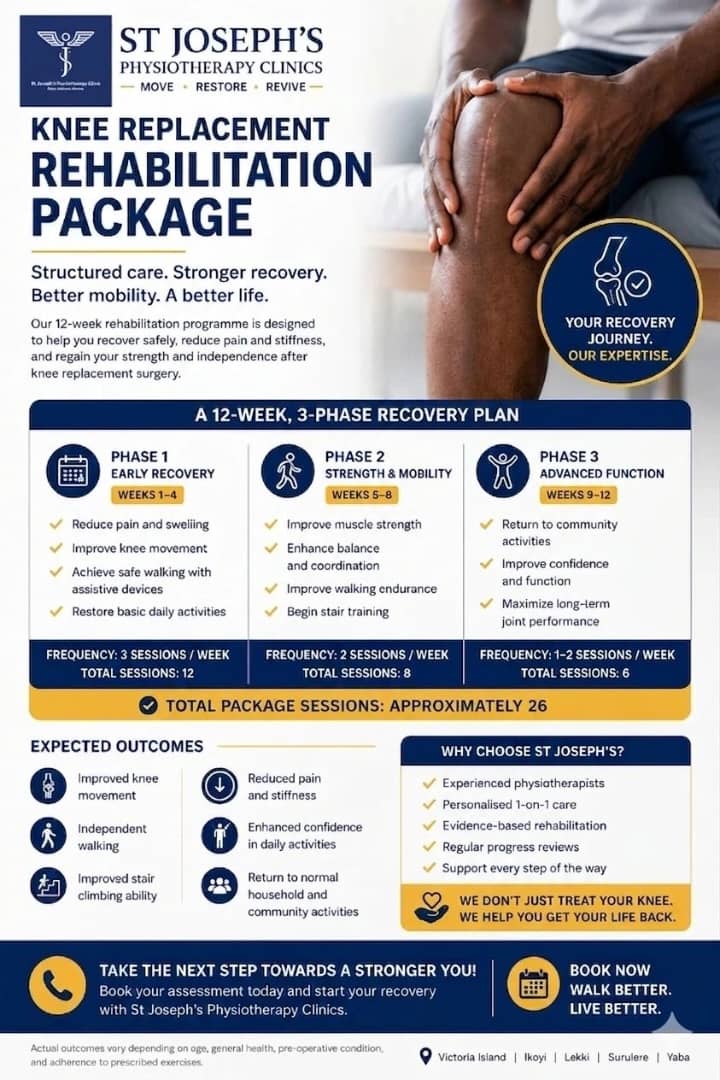
Complete Knee Replacement Rehabilitation Package in Lagos
Knee replacement surgery is a major step toward pain relief and improved mo…

NAMDA threatens strike over unpaid medical lecturers’ allowances
The Nigerian Association of Medical and Dental Academics (NAMDA) has warned…

Resident Doctors Signal End to Strike Threat After High-Level Talks with Gbajabiamila
The threat of a nationwide indefinite strike by the Nigerian Association of…