Vegetable oil is any oil that has been extracted from plant seeds like cotton seed, sesame, rapeseed, soybean and popular to us palm oil. They are used in cooking, baking, as a base for flavoured content, to improve food texture and as a supplement. Many people perceive vegetable oil as healthy, because there is the word, vegetable' in it. 'Vegetables' are healthy to the body, right? So why wouldn't vegetable oil be healthy?
In reality, 85% of what is labeled vegetable oil is actually pure soybean oil the remaining 15% is usually a combination of soy and other seed oil. In Nigeria, refined palm oil are popularly used as vegetable oil. While making vegetable oil, the goal is usually to create a flavourless, odourless, and colourless product as possible, although, there are those with flavour which are usually expensive as is the case of olive or peanuts, as these seeds are squeezed under heavy weights and they release their oil. Since no heat is involved the flavour, odour and colour remain.
Vegetable oils are a very new addition to our food world, and didn't exist until the early 1900s and now in this 20th century, the need for edible oil has increased as the average consumption is 70lbs a year per person, this may be as the result of the increased and aggravated campaign against saturated fat and cholesterol with respect to how it affects the heart health. However, the irony of the situation is that these vegetable oils that have now been propagated as the ideal oil void of saturated fats and lower in cholesterol are in fact heart killers.
Researchers from the University of Missouri and the University of Illinois regard vegetable oils as heart healthy. In their study, oil made from sunflower, canola, corn and soy bean should be consumed as they contain significant amount of calories, rich in linoleic acid an essential nutrient that lowered the risk of heart disease. According to the American Heart Association, vegetable oils aid in lowering the low-density lipoprotein (LDL) which is seen as bad cholesterol while elevating the high- density lipoprotein (HDL) referred to as the good cholesterol. Vegetable oils are easier to digest and help the body preserve important vitamins.
The intake of vegetable oil particularly olive oil, increases metabolism in obese people, in a study conducted by Sao Paulo University, Brazil.Olive oil contains phenolic compounds substances that have antioxidant, anti-inflammatory and anti-blood clotting properties which may increase the body's metabolic rate.
Another study conducted in Universita di Milano, Italy published in the issue of "Cancer causes and control" suggests that the regular use of olive oil and other vegetable oil may be beneficial in decreasing the risk for the development of breast cancer. According to them, people who use butter and margarine on the other hand have a higher risk of developing breast cancer than those who use vegetable oils. Aside from increasing metabolism, vegetable oil decreases the risk of developing heart diseases. A study con- ducted by the State University of New York. Buffalo, shows that the factors that are associated with the development of cardiovascular disease such as increased blood sugar, increased blood pressure and increased serum cholesterol level where normalized in participants that included vegetable oil in their regular diet.
Vegetable oils contain omega 3 and omega 6 fatty acids, these acids cannot be synthesized by the body, hence must be gotten from other source and vegetable oil especially those that are made from canola and flaxseed are ready source of obtaining these acids.
Both Omega 3 and omega 6 acids play an important role in the preservation of healthy heart and brain function. The American Heart Association even recommends the intake of omega 3 fatty acids for the prevention of cardiovascular diseases.
"Vegetable oil is usually contaminated with environmental toxins during the stage of processing. Also during this stage, most of the nutrients are already extracted though not intentionally
Now, obviously there are wonderful things about vegetable oil, from its contribution to increasing metabolism, decreasing the risk of heart disease to its omega 3 and omega 6 fatty acids content and how it contains monounsaturated fats but does it make it healthy?

Vegetable oils are highly processed, unlike butter or coconut oil, they cannot be extracted by pressing or separating naturally, and its common knowledge that processed food is any food that has been chemically modified in order to preserve the shelf life of a product through the addition of preservatives, flavouring and colouring. Omega 6 fats are easily oxidized with heat or light exposure. The imbalance in the levels of omega 6 and omega 3 acids have been linked to skin cancer and other types of cancer. Vegetable oils does not fall short of a processed food.
Robin Konie a nutritionist, summarized the process of making of canola oil in six steps; step I: find some canola seeds which actually do not exist as they are a hybrid of rapeseed, a genetically modified and heavily treated with pesticides seeds; step 2:. heat the seeds at an unnaturally high temperatures so that they oxidize and are rancid enough; step 3: process with a petroleum solvent to extract the oils; step 4: heat some oil to remove any wax solids that might have been formed during the first processing; step 5: treat the oil with more chemicals to improve the colour; step 6: de- odorize the oil to mask the smell from the chemical processing.
For any food that may have to pass through these many vigorous processing stages, can such a food be regarded as healthy? Monounsaturated fats, polyunsaturated fats and omega 3 and 6 acids are promoted as healthy, and as everything in life there has to be a balance, even nature balances itself, as a child is born somewhere, there are shouts of cry of death over another. With vegetable oil, the level of poly unsaturated fats are very high, " when we feed our body with excess fats as against the normal quantity that it needs, it tries to incorporate it into the body, poly- unsaturated fats causes inflammation and mutation in cells. According to Dr Lanre Olarenwaju,
Medical Director, Lanre Hospital, "Processed foods are high in unhealthy fats and causes an imbalance of the oil that the body needs, they usually contain cheap fats that are usually hydrogenated which turn them to trans fats, they contain excess amount of Omega-6 fatty acids which can cause inflammation in the body, anything that has been processed automatically has lost its value and possibly nutrients."
Omega 6 fats are easily oxidized with heat or light exposure. The imbalance in the levelof omega 6 and omega 3 acids have been linked to skin cancer and other types of cancers. Studies have also shown that people who eat much, oil are at a risk of developing heart disease; if these fats are hydro- genated they make them even worse,
"Vegetable oil is usually contaminated with environmental toxins during the stage of processing. Also during this stage, most of the nutrients are already extracted though not intentionally, but since we are talking about processed oil here, do the nutrients have any choice here? And when the extraction is all done it leaves us with plain oil, which explains the need for most oils now to come fortified unlike our traditional oils like butter and coco-nut oil."
Since vegetable oils are chemically produced, it is safe to assume that there are definitely additives that are used to preserve the shell life. Butylated Hydroxyanisole and butylated hydroxytoluene are the most used in processing vegetable oil. Studies have shown that these chemicals have been proven to produce potential cancer causing compounds in the body and have been linked to liver damage, kidney damage, immune and fertility problems.
These days it is evidently hard to avoid vegetable oil, the way they are being advertised and packaged get one confused aside from that virtually everything these days are processed containing these oils from our chips to crackers. I would very much like to say 'don't buy them' but then who am I kidding, the right thing to do is to be cautious of how weingest these oils. Anyway for a bet- ter option to cooking, baking, improving food texture or as a base for flavor, I advise you stick to traditional oils like butter or coconut oil.
Like my friend would say, "if you don't have a nutritionist to tell you what to eat, then pray to your ancestors to guide you."
By Ogechukwu Agwu
Daily Trust
ABUJA: Training Schedule for Basic Life Support BLS, Pediatric Advanced Life Support (PALS), Advanced Cardiovascular Life Support ACLS, First Aid, CPR, AED
PORTHARCOURT: Training Schedule for Basic Life Support BLS, Pediatric Advanced Life Support (PALS), Advanced Cardiovascular Life Support ACLS, First Aid, CPR, AED
LAGOS: Training Schedule for Basic Life Support BLS, Pediatric Advanced Life Support (PALS), Advanced Cardiovascular Life Support ACLS, First Aid, CPR, AED
STOP paying for airtime and electricity, Let your phone pay its bills with ScreenT
You may also like

Comrade Lemii Christian Emerges Chairman of NANNM Rivers State Branch in Historic Victory
PORT HARCOURT, NIGERIA Following the long awaited National Association of N…

FG Supports Robotic Surgery Expansion to Reduce Medical Tourism
Nigeria is taking another step toward strengthening specialised healthcare …
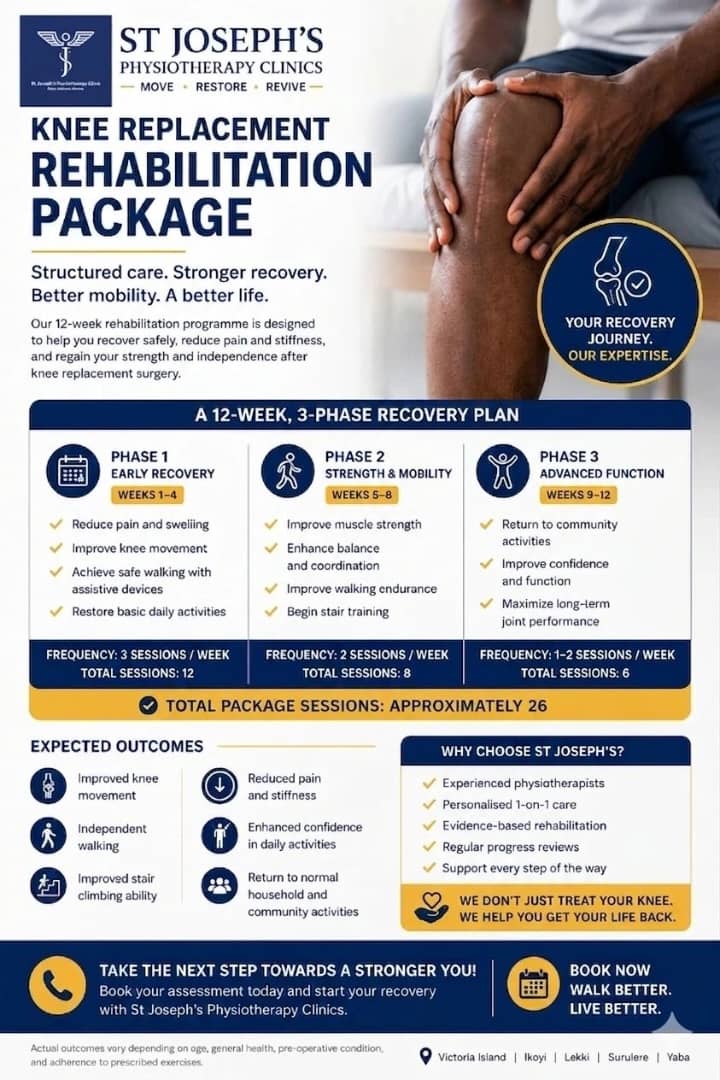
Complete Knee Replacement Rehabilitation Package in Lagos
Knee replacement surgery is a major step toward pain relief and improved mo…

NAMDA threatens strike over unpaid medical lecturers’ allowances
The Nigerian Association of Medical and Dental Academics (NAMDA) has warned…

Resident Doctors Signal End to Strike Threat After High-Level Talks with Gbajabiamila
The threat of a nationwide indefinite strike by the Nigerian Association of…
