Understanding the symptoms of hyperactive/impulsive type ADHD can be difficult, even more so in adults than children. It is tempting for us as nurses to armchair-diagnose the disorder in our coworkers, our neighbors, celebrities, even in our patients. However, ADHD symptoms aren’t widely understood and the condition is often stigmatized. This article is the second in a series that I hope will shatter some misconceptions and bring the facts of ADHD out into the open.
What does hyperactive ADHD look like?
FACTS:
Hyperactive/impulsive behaviors
Unable To Be Completely Still
Children often fiddle with pencils/crayons in class, fidget, tap their fingers or their toes, take overshirts or jackets off and put them back on, toy with their clothing or with fasteners, click pens, etc.
Teens and adults tend to bounce their knees, doodle, take excessive notes, pass notes in class, flip through textbooks, read and reread agendas or other meeting documents, flip through reports, twirl pens, tap pens, change positions frequently, and so forth.
Have A Hard Time Remaining Seated
Children will get up frequently in class, ask to use the bathroom frequently, find excuses to get up and look out the windows, get up while eating, get on the floor while supposed to be sitting, and get up for frequent snacks and bathroom breaks while doing homework.
Teens and adults will offer to do tasks that require standing or walking, claim that sitting hurts their back and stand against the wall, shift position frequently, leave to get beverages or snacks. They may also take frequent bathroom breaks, get up and down for extras during dinner, clean or do several other tasks while watching television, and stand or walk around while talking on the telephone.
Tend To Run Around Or Climb Inappropriately
Children will often display these behaviors while participating in sports or other structured activities; to the child with ADHD, the world is often a fascinating obstacle course.
Teens and adults have usually learned to stop doing this, but are often restless. This behavior can be exaggerated in situations where it is appropriate, such as while participating in sports or outdoor activities. Patients will often search out opportunities to be physically active, like participating in martial arts, taking self-defense classes, running obstacle courses and marathons, or sports.
Tend To Get Loud While Participating In Quiet Activities
Children can be loud, argumentative, and confrontational during structured quiet time.
Teens and adults often show this while watching sports or television by talking to or yelling at the screen, as well as by becoming overly competitive and loud while playing board or card games.
Seem Unable To Stop And Rest
Children may be unable to stop themselves from an enjoyable activity, or may complete one activity and dive straight into the next; this is characterized as acting as though they are “driven by a motor.”
Teens and adults may display “driven” behaviors towards school, work, or leisure activities. This can be mistaken for commitment, but is similar to short-term obsession. The teen and adult with ADHD are frequently enthusiastic to the extreme about a new project, video game, garage band, concept for entrepreneurship, and so on. Teens may stay up all night playing music or games even though they have class the next day. Adults may be unable to stop work in the middle of a task and continue on to finish it even though it takes hours and affects sleep patterns. Artists and craftspeople may work without sleeping until exhausted or until a project is complete. In teens and adults, this symptom can be mistaken for mania. Another term for this symptom is hyperfocus.
Talk When It Is Inappropriate
Children may talk excessively in class or during activities, tell stories constantly, socialize during class time, and may be characterized as a “motormouth.”
Teens and adults may dominate conversations, especially when excited, or talk over others.
Tend To Blurt
Children do not wait to be called on and shout out answers in class or at home even before the question is finished, say whatever they are thinking without thought to the consequences, and change subjects in the middle of sentences.
Teens and adults answer questions before they are finished, make uncensored comments, say hurtful things without meaning to, and have trouble staying on topic.
Doesn’t Want To Take Turns
Children have a hard time waiting for their turn, preferring for it to be their turn all the time. They may become frustrated and tearful when it is another child’s turn.
Teens and adults may lose interest in long games and look for a more exciting activity, break in line, or get frustrated while waiting in line and leave.
Butts In
ADHDers often miss social cues that indicate an intrusion is not welcome and will do things such as interrupt speakers, interject during movies, walk through a photo op, barge into rooms, and break into other’s conversations. These patients may be labeled as a “busy-body.”
Impulsive
For ADHD children, action is often synonymous with thought; an affected child will chase after something it sees that it wants, change direction mid-stride, break into running, slide to a stop, grab for things without being careful, snatch toys, hit other children, scream suddenly, or throw things when frustrated.
Teens and adults often make poorly thought out decisions, such as choosing a college because their friend got in, taking the first job offered, spontaneous road trips, sudden turns while driving, making expensive purchases on a whim. These patients may be described as “flighty.”

FICTION:
“Only boys are hyperactive.” Females are diagnosed with hyperactive/impulsive type ADHD, as well as combined type. In females, the trait displays more as excessive talking and hyper-social behavior.
“There’s nothing wrong with that child except a lack of discipline.” While discipline and structure can help a child mitigate behavioral symptoms, the underlying ADHD is not cured.
“Boys will be boys!” The often out-of-control behavior that is typical of males with hyperactive/impulsive symptoms is not a normal manifestation of maleness. These children often need help to learn how to regulate their behavior.
“There’s nothing wrong with that girl except too much pent-up energy.” While getting enough exercise is an important element in treating ADHD, it is only part of a complete treatment plan.
“That’s just a bad kid.” Children with ADHD are not inherently bad. With proper treatment, they can be very successful.
First article in the series: Stupid, lazy, or ADHD?
References:
American Psychiatric Association (APA), “What is ADHD?”
National Institute of Mental Health (NIMH), “Attention Deficit Hyperactivity Disorder”
The Centers for Disease Control and Prevention (CDC), “Symptoms and Diagnosis”
Children and Adults with Attention Deficit/Hyperactivity Disorder (CHADD) The National Resource on ADHD, “About ADHD"
Source: Allnurses
ABUJA: Training Schedule for Basic Life Support BLS, Pediatric Advanced Life Support (PALS), Advanced Cardiovascular Life Support ACLS, First Aid, CPR, AED
PORTHARCOURT: Training Schedule for Basic Life Support BLS, Pediatric Advanced Life Support (PALS), Advanced Cardiovascular Life Support ACLS, First Aid, CPR, AED
LAGOS: Training Schedule for Basic Life Support BLS, Pediatric Advanced Life Support (PALS), Advanced Cardiovascular Life Support ACLS, First Aid, CPR, AED
STOP paying for airtime and electricity, Let your phone pay its bills with ScreenT
You may also like

Comrade Lemii Christian Emerges Chairman of NANNM Rivers State Branch in Historic Victory
PORT HARCOURT, NIGERIA Following the long awaited National Association of N…

FG Supports Robotic Surgery Expansion to Reduce Medical Tourism
Nigeria is taking another step toward strengthening specialised healthcare …
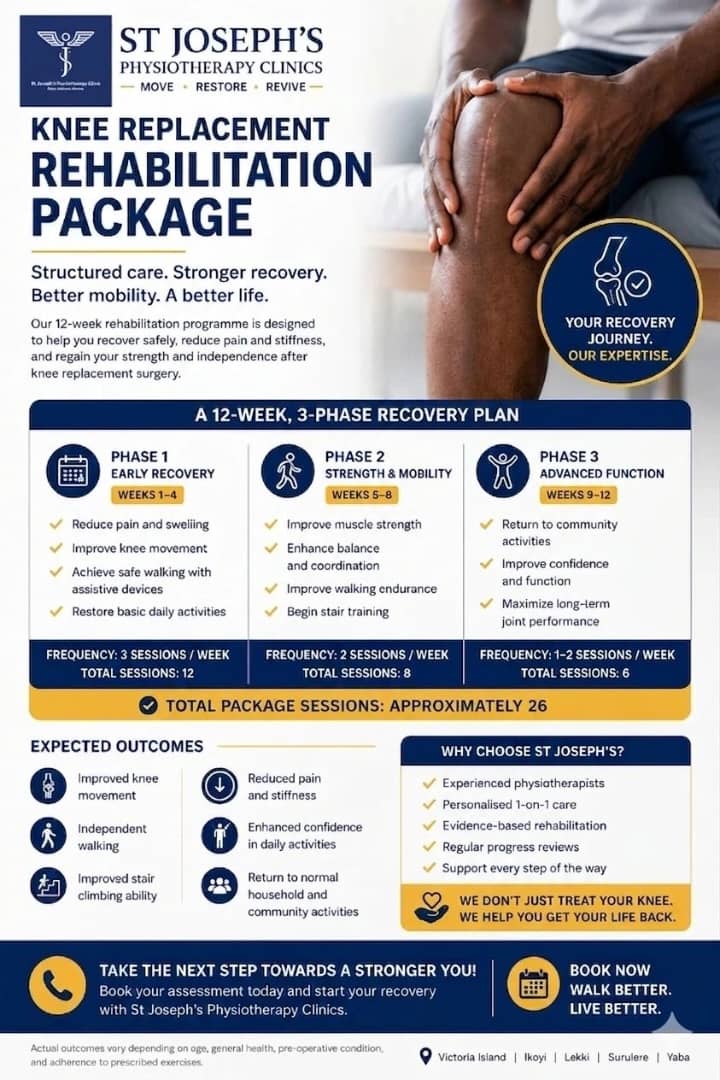
Complete Knee Replacement Rehabilitation Package in Lagos
Knee replacement surgery is a major step toward pain relief and improved mo…

NAMDA threatens strike over unpaid medical lecturers’ allowances
The Nigerian Association of Medical and Dental Academics (NAMDA) has warned…

Resident Doctors Signal End to Strike Threat After High-Level Talks with Gbajabiamila
The threat of a nationwide indefinite strike by the Nigerian Association of…