Emergency control centres are helping to co-ordinate response to the disease
Lassa fever has threatened Nigeria for 47 years, killing many. Yet it continues to march on. So far, seven people have died—two in Kano, three in Taraba, and two fresh deaths lately in Rivers State.
Dr Abdulsalami Nasidi, Director of the Nigeria Centre for Disease Control, told BBC Hausa service yesterday that 150 people were now affected. “The disease has now spread to seven states of Kano, Bauchi, Oyo, Niger, Rivers, Taraba and Nasarawa. We are trying our best to stop it,” he said.
In 2013, three deaths—among them a health worker—struck Benue, prompting despatch of monitoring teams. Ondo was next to be covered by teams investigating reported outbreaks.
Exactly three years on now monitoring teams have been on the ground, identifying cases, tracing contacts of those suspected to be infected or dead from the virus, and placing contacts under quarantine.
After nearly half a decade since Lassa fever was first identified in Nigeria, it continues to strike concern in the nation.
.jpg) Back then, Dr Oyewale Tomori, a professor of virology at Redeemer’s University and chairman of the country’s expert review committee on poliomyelitis, said Lassa fever had remained “an annual recurrent budget of death for the poor people of Nigeria.”
Back then, Dr Oyewale Tomori, a professor of virology at Redeemer’s University and chairman of the country’s expert review committee on poliomyelitis, said Lassa fever had remained “an annual recurrent budget of death for the poor people of Nigeria.” His reason: “Because we have lived in a state of denial of the disease and handled it characteristic laxity, laissez-faire, negligence, sloppiness, slackness, disregard, triviality and freewheeling abandon.”
Lassa lacks the zeal and trepidation that Ebola fever outbreak inspired and Nigeria still wakes up every year an outbreak is reported, “running like a decapitated chicken in any which direction, and forgetting about the disease till another year another outbreak.”
Lassa fever is an old epidemic. A new study last August in the journal Cell by a team that included Christian Happi of Irrua Specialist Hospital—where experts confirm strains of Lassa fever in samples—traced “ancient roots” of Lassa nearly 1,000 years to a region that is now present-day Nigeria.
“But there is not enough awareness of the endemicity of this disease in Nigeria,” said Prof Dennis Agbonlahor, among researchers who first described the fever in Nigeria.
“There is a large reservoir of the Lassa virus in rodents, and experts believe getting rid of rodents that carry the virus would “solve a large chunk of the problem,” he explained.
The link between man and animal
The culprit Lassa virus is zoonotic—that is, it can infect both human and animals. And the African soft-furred rat, with a hairless tail, is the link to humans.
The animal frequently gets onto leftover food or food left to dry in the sun and open air. While eating, rodents may also urinate and defecate—and pass the virus onto humans who eat the contaminated food.
Doctors and nurses in contact with patients are usually among the first people to become infected and die. Knowledge about the disease is growing but since the first outbreak in 1969, says Agbonlahor, “government has not been able to support a complete surveillance to know the distribution of the Lassa rat—where and how much of it in different parts of the country is still unknown.”
Up till 2008, specimens were flown abroad for confirmation. Since 2008, two centres have stepped in to fill the gap in laboratory diagnosis and research into the fever—Lassa Fever Research and Control Centre at Irrua Specialist Hospital, Edo, and Lahor Research.
Samples from the latest outbreaks have undergone confirmation at Irrua, which also provided confirmation for cases from 2012 onwards.
But other laboratories set up failed on account of “lack of genuine government commitment, mismanagement and mis-application of funds by research staff in collaborative collusion with Ministry staff,” said one expert who spoke with Daily Trust.
Arsenal against Lassa fever
Nigeria’s move to deal with the disease has focused on treatment with Ribavirin, an antiviral drug considered effective if a case is diagnosed early and effectively.
In 2012, half a million vials of the drug came six weeks after the first case of Lassa was reported in Ebonyi. By then, one doctor and up to four nurses had died, some others were hospitalised at Federal Teaching Hospital, Abakiliki, Tomori said.
In an emailed response to Daily Trust a year later, Tomori said, “Mark my word, we will not get any change and improvement in the way we operate our disease surveillance until one of these diseases stretches its tentacles to hold by the jugular and squeezes life out of the big people of our society - the rich, the high and the mighty.
“During the Lafia Lassa fever epidemic, I was asked a question. What do you think can happen in Nigeria to make the country take Lassa fever seriously? Without batting an eyelid, I said 'Not until a big man - a Director General in the ministry, an original minister or a minister of state, an honourable member of one of parliament, a prominent oba/eze/emir, a governor, or perhaps the Vice President or even the President - dies of Lassa fever, before we will take the issue seriously.
I have not seen anything yet, to make me change that answer.”
Alongside treatment, research considering candidate vaccines against Lassa virus are ongoing but are still inconclusive.
“But when the disease is yours, should you wait for donor agencies to financially intervene? Why must they wait all the time for external bodies to come and assist them? You start intervening to the extent you can within your limited resources and then cry out for assistance.”
Said Tomori: “We need a MAJOR attitudinal mutation. Before we can eradicate or control any disease – natural or manmade- we must first eradicate or control our “attitude”. We must realize that excellence has only one global definition.
It is neither country nor culture specific. We must approach whatever or whichever national issue, with the objective of excellence in our performance and output.”
Lassa fever has the greatest impact among haemorrhagic fevers—rivalled only by dengue. Up to 300,000 are infected annually in West Africa alone, and an estimated 5,000 of them die.
Most start getting symptoms between one and three weeks after contact with the virus. Fever is typical, as is pain behind the chest wall, sore throat, back pain, cough, abdominal pain, vomiting, diarrhoea. The face may swell, and protein may be passed out in urine.
The symptoms vary and make diagnosis difficult but there may also be bleeding in the mucosa—a lining that covers most internal organs—hence the term haemorrhagic fever.
Dealing with the rodents falls then to individual hygiene. “Rodent control is good but preventing them from coming to your home is better,” according to Agbonlahor.
The same advice has come from public health experts for 47 years: stop rats from entering your home; avoid drying food on roadside close to bushes from which rodents can emerge to feed, urinate or defecate on foods; ensure leftover foods in the home are properly covered.
Simple enough, but deviating from hygiene, prevention, treatment describes what Tomori calls his famous 19 words to describe the country’s response to Lassa fever: “We have never been serious, nor are ever going to be serious about important developmental issues, including our health”.
By: Judd-Leonard Okafor & Victoria Onehi
Daily Trust News
ABUJA: Training Schedule for Basic Life Support BLS, Pediatric Advanced Life Support (PALS), Advanced Cardiovascular Life Support ACLS, First Aid, CPR, AED
PORTHARCOURT: Training Schedule for Basic Life Support BLS, Pediatric Advanced Life Support (PALS), Advanced Cardiovascular Life Support ACLS, First Aid, CPR, AED
LAGOS: Training Schedule for Basic Life Support BLS, Pediatric Advanced Life Support (PALS), Advanced Cardiovascular Life Support ACLS, First Aid, CPR, AED
STOP paying for airtime and electricity, Let your phone pay its bills with ScreenT
You may also like
Comrade Lemii Christian Emerges Chairman of NANNM Rivers State Branch in Historic Victory
PORT HARCOURT, NIGERIA Following the long awaited National Association of N…

FG Supports Robotic Surgery Expansion to Reduce Medical Tourism
Nigeria is taking another step toward strengthening specialised healthcare …
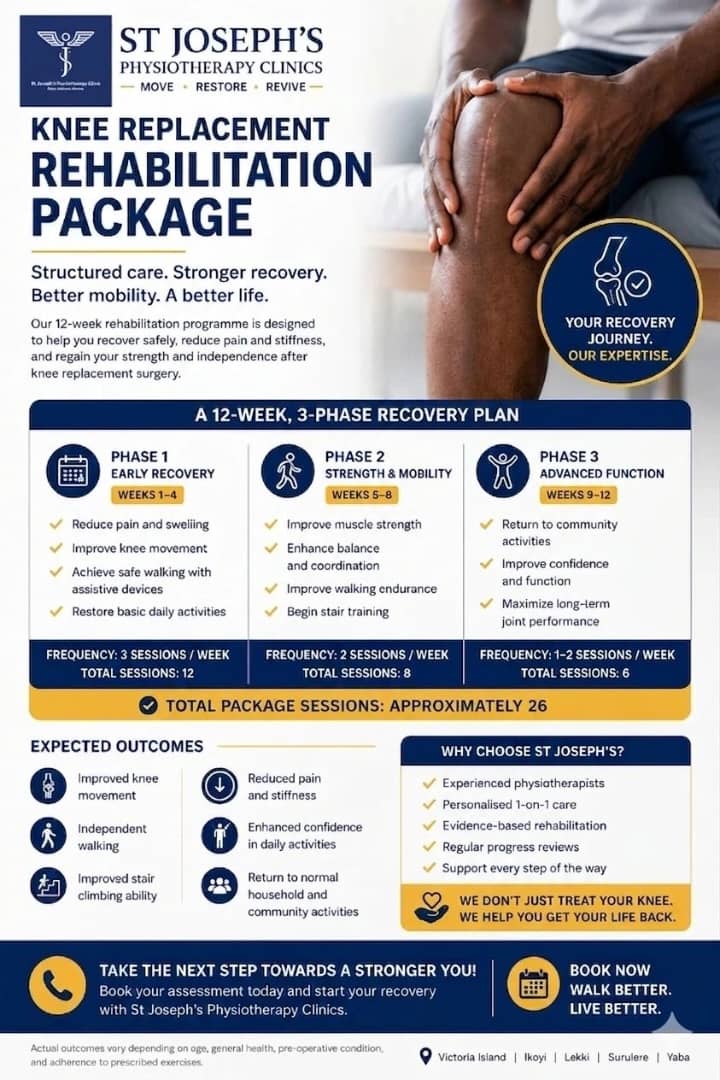
Complete Knee Replacement Rehabilitation Package in Lagos
Knee replacement surgery is a major step toward pain relief and improved mo…

NAMDA threatens strike over unpaid medical lecturers’ allowances
The Nigerian Association of Medical and Dental Academics (NAMDA) has warned…

Resident Doctors Signal End to Strike Threat After High-Level Talks with Gbajabiamila
The threat of a nationwide indefinite strike by the Nigerian Association of…