Ovarian cancer is the third gynaecological cancer that affects women, after breast and cervical cancers.
Unlike the last two that can be detected early and prevented through breast self-examinations as well as pap smear and HPV screening, cancer of the ovaries cannot be prevented and it is very hard to detect.
About 75 to 85 per cent of women with ovarian cancer are diagnosed only at a late stage, when the cancer has spread and prognosis is poor. 51 per cent of all cases of ovarian cancer are diagnosed when they are at stage III, and a woman has a one in 70 percent risk of being diagnosed with ovarian cancer in her lifetime, according to medical experts.
Cancer of the ovary or ovarian cancer is not common, but it causes more deaths than other female reproductive cancers.
Many women have died of the disease in this country. The recent case of the young graduate, Mayowa Shukurat Ahmed, whose ordeal with the disease, appeal for assistance and subsequent death went viral on social media is a case in point.
Ovarian cancer is a type of cancer that begins in the ovaries. Women have two ovaries, one on each side of the uterus. The ovaries produce eggs (ova) as well as the hormones, estrogen and progesterone.
According to a gynaecological oncologist, Dr Kehinde Okunade, there are four stages of cancer - I to IV. Stages I and II are still early, it has not spread.
At stage III, it must have spread to the whole abdomen. And at stage IV, it would have spread to the lungs, liver, and other organs of the body.
Stage III ovarian cancer, means the cancer cells have spread to tissues outside the pelvis or to regional lymph nodes and may be found on the outside of the liver.
Diagnosis
An expert in ovarian cancer symptoms and screening at the Fred Hutchinson Cancer Research Center in Seattle, Dr Robyn Anderson, said: “It isn’t clear what can be done to improve the early detection of ovarian cancer.”
The location of the ovaries does not make it easily accessible, hence, hard to detect early.
Ovarian cancer often goes undetected until it has spread within the pelvis and abdomen.
To diagnose this cancer, doctors do one or more tests. They include a physical exam, a pelvic exam, lab tests, ultrasound, or a biopsy.
For all types of ovarian cancer taken together, about three in four women with ovarian cancer live for at least one year after diagnosis. Women diagnosed when they are younger than 65 do better than older women.
 Risk factors
 Okunade said, Ovarian cancer can affect any woman, but it has been found in girls as young as 10, 12, 14 years old, adding that it is more common among women above 60 years.
The main risk factors for ovarian cancer identified by medical experts include:
Having a family history of ovarian cancer, such as having a mother, sister or daughter who has had ovarian cancer. And whoever has two close relatives with cancer will have a higher risk.
Inheriting gene changes: A small number of women with a family history of cancer have inherited gene changes, such as the BRCA gene changes.
Ovarian cancer mostly affects postmenopausal women. However, other women are more likely to get this cancer if they:
• Never had a baby.
• Started menstrual cycles before age 12 and went through menopause after age 50.
• Unable to become pregnant.
• Used hormone therapy for menopause symptoms.
Some things that lower a woman’s risk for ovarian cancer include:
• Taking birth control pills (oral contraceptives). But this may slightly increase the risk for breast cancer and other health problems.
• Having babies and breast-feeding.
• Having both tubes tied (tubal ligation) or having a hysterectomy. But you will not be able to become pregnant after having either of these surgeries.
• A strong family history of ovarian or breast cancer.
Symptoms
Dr Okunade said any woman that has abdominal swelling, abdominal pain, feeling unusually full quickly, loading weight should get tested for ovarian cancer.
In addition, frequent bloating, trouble eating and urinary problems, such as an urgent need to urinate or urinating more often than usual, are also other symptoms of the cancer.
The cancer expert, Okunade further said, “A woman can go to any general, teaching or other hospitals to see a gynaecologist. Request for an ultrasound (pelvic) scan, so that whatever is causing the swelling will be noticed on time. And if the medical officer cannot handle it, then the case will be transferred to a gynaecologist and if it is beyond him, it will be referred to a gynaecologist oncologist, so that necessary surgery can be done.”
Prevention
“Ovarian cancer is not preventable. There is no way of preventing ovarian cancer, unless such person shows symptoms. Anytime someone presents symptoms, it means that person is in advance stage, II, III or IV,” said Okunade.
In a new study conducted by Kirsten Morvich, it was discovered that lack of exercise is associated with an increased risk of ovarian cancer and of death from the disease.
“Our findings suggest that any amount of regular, weekly recreational physical activity may reduce the risk for and improve survival from ovarian cancer, while a lack of regular exercise throughout adulthood is associated with an increased risk of developing and dying from ovarian cancer,” Moysich, a professor of oncology at Roswell Park Cancer Institute, in Buffalo, New York said in an institute news release.
Treatment
The gynaecology oncologist, Okunade said if someone presents early, at stage I, the person may not need any other treatment aside surgery. But, most people present late.
On whether the disease can be handled in Nigeria, he said surgery can be done at any tertiary institution in Nigeria. According to him, the Lagos University Teaching Hospital (LUTH), is one of the hospitals that does the surgery. He said the hospital must have a gynaecology oncologist, because they are the doctors who operate on patients with ovarian cancer and other gynaecological cancers.
The treatment for stage II and III ovarian cancer involves removal of both ovaries and fallopian tubes, debulking of as much of the tumor as possible, and sampling of lymph nodes and other tissues in the pelvis and abdomen that are suspected of harboring cancer.
Okunade said the ovaries are removed to stop the cancer from recurring.
After surgery, the patient may either receive combination chemotherapy possibly followed by additional surgery to find and remove any remaining cancer cells.
Meanwhile, new medications and treatments for ovarian cancer are constantly being developed. These must be shown to be safe and effective before doctors can prescribe them to patients.
Treatment cost
Okunade said for instance at LUTH , a public hospital, it costs N135,000 to do an ovarian cancer surgery.
“Money for admission, lab tests, medications, and others will sum up to N200,000. Chemotherapy has six courses done within three weeks interval. Each course cost N40,000. By the time the person sums it up, complete treatment will cost roughly N500,000,” he noted.
On the average, three to four persons with ovarian cancer cases are attended to by the doctors in LUTH every week.
Survival
Most women diagnosed with stage III ovarian cancer have a five-year survival rate of approximately 34 percent. Survival rates are often based on studies of large numbers of people, but they cannot predict what will happen in any particular person’s case. Other factors impact a woman’s prognosis, including her general health, the grade of the cancer, and how well the cancer responds to treatment.
By: Risikat Ramoni, Lagos
Daily Trust News
ABUJA: Training Schedule for Basic Life Support BLS, Pediatric Advanced Life Support (PALS), Advanced Cardiovascular Life Support ACLS, First Aid, CPR, AED
PORTHARCOURT: Training Schedule for Basic Life Support BLS, Pediatric Advanced Life Support (PALS), Advanced Cardiovascular Life Support ACLS, First Aid, CPR, AED
LAGOS: Training Schedule for Basic Life Support BLS, Pediatric Advanced Life Support (PALS), Advanced Cardiovascular Life Support ACLS, First Aid, CPR, AED
STOP paying for airtime and electricity, Let your phone pay its bills with ScreenT
You may also like

Comrade Lemii Christian Emerges Chairman of NANNM Rivers State Branch in Historic Victory
PORT HARCOURT, NIGERIA Following the long awaited National Association of N…

FG Supports Robotic Surgery Expansion to Reduce Medical Tourism
Nigeria is taking another step toward strengthening specialised healthcare …
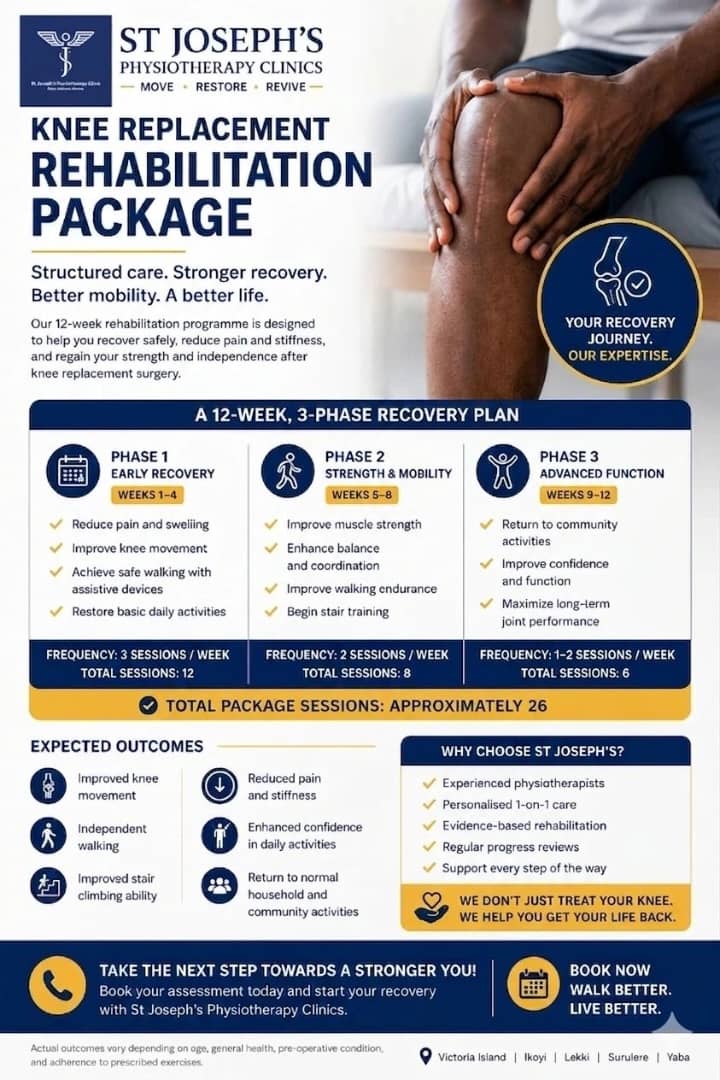
Complete Knee Replacement Rehabilitation Package in Lagos
Knee replacement surgery is a major step toward pain relief and improved mo…

NAMDA threatens strike over unpaid medical lecturers’ allowances
The Nigerian Association of Medical and Dental Academics (NAMDA) has warned…

Resident Doctors Signal End to Strike Threat After High-Level Talks with Gbajabiamila
The threat of a nationwide indefinite strike by the Nigerian Association of…