Experts stress need for this nature's wholesome gift to mankind
TO everyone, two-year-old, Omoniyi Ojo, is not just an adorable tot, but also a wizkid who has a high Intellectual Quotient (IQ). At an age when most kids
could barely piece comprehensible words together, he can comfortably communicate his needs; even his academic brilliance has left many speechless. His mother, Morenike, usually wastes no time in attributing her child's perceived uniqueness to his six-month exclusive breastfeeding.
Breast milk is nature's free, unique and precious gift to mammals to nurture their young. That is why experts advocate that breast milk is best for a baby, noting that its benefits extend well beyond basic nutrition. From the first few days after birth, a mother is always advised to suckle her child. However, the decision for any woman to breastfeed or formula feed is a personal one.
Although, medical authorities like the American Academy of Pediatrics (AAP), the American Medical Association (AMA) the World Health Organisation (WHO) and the American College of Obstetricians and Gynaecologists, believe breast milk is the best nutritional choice for infants, it may not be possible for all women. To some women, the decision to breastfeed or formula feed is bWd on comfort level, lifestyle, ana specific health conditions.
Daily Sun learnt that before now, breastfeeding was the only culturally acceptable mode. of feeding for babies in Africa. In Nigeria in particular, infants and children are breast fed within the first two years of life, except when some serious health reasons are involved. In some African societies, breastfeeding it was observed used to be a thing of pride and even held as a taboo for a mother not to breastfeed her child. In some rare cases, if an infant loses its mother at birth, it is usually breast fed by relations who re-lactate to do so, or by their grandmothers. However, this practice is gradually being eroded, as civilization has made many Nigerian women to practically discard what was culturally seen as a child's right.
According to the National Demographic Health Survey (NDHS) 2003, the rate of exclusive breastfeeding was put at 17 per cent.
Unfortunately, NDHS said the rate dropped to 13 per cent in the 2008.
This drastic fall, experts said, could be one of the many reasons for high child mortality in the country. According to the former Minister of Health Prof. Christian Onyebuchi Chukwu, the rate at which women breastfeed had decreased drastically, stressing that the trend did not augur well for the health of the average Nigerian baby.

"Breast milk contains antibodies that help a baby fight off viruses and bacteria. Babies who are breastfed exclusively for the first six months, without
any formula, have fewer ear infections, respiratory illnesses, allergies and diarrhea.
They also have fewer hospitalisations and trips to the doctor.
From antibodies which protect an infant at birth, to 4'he eXClusive nutrients in mothers' milk, breastfeeding goes a long way to prevent a number of childhood diseases."
A UNICEF Executive Director, Ann Veneman, while in Nigeria, highlighted the critical need for improvements in child health and nutrition. According to her, exclusive breastfeeding for the first six months of life can have the single largest impact on child survival of all preventive interventions.
"Under nutrition is an underlying cause in one-third of all under-five deaths. During the first six months of life, breast milk completely meets an infant's nutritional requirements. Yet only 13 per cent of children in Nigeria are exclusively breastfed from birth to six months of age," she said.
Experts recommend breastfeeding exclusively, with no formula, juice, or water for six months. Even if a mother breastfeeds less than the recommended months, it's advisable to breastfeed for a short time than no time at all. Beyond that, breastfeeding is encouraged for at least 12 months, and longer if both the mother and baby are willing. However, for mothers who are unable to breastfeed or who decide not to, infant formula is a healthy alternative. Even though formula is also said to provide babies with the nutrients children need to grow and thrive, expert contend that nothing can duplicate the properties of breast milk, no matter how many vitamins, minerals and other supplements that are added to what is basically a chemical foanulation.
Experts equally maintain that the first few days after birth, a woman's breasts make what is described as ideal "first milk," called colostrum. It is thick, yellowish, and scant, but well loaded to meet a baby's nutritional needs.
Colostrum also helps a newborn's digestive tract to fully develop in preparation to digest breast milk.
In addition to containing all the vitamins and nutrients needed in the first six months of life, breast milk is packed with disease- fighting substances that protect a baby from illness. The May 2010 edition of Pediatrics, an international magazine, published a study showing that babies who are breastfed are less likely to have fevers after their inununisations than babies who are formula fed.
According to Ijeoma Nwagba, a paediatrician and nutritionist with one of the country's apex hospitals, breast milk, among other things provide the ideal nutrition for infants. It has a nearly perfect mix of vitamins, protein, and fat a baby needs to grow, and they are provided in a form more easily digested than infant formula.
"Breast milk contains antibodies that help a baby fight off viruses and bacteria. Babies who are breastfed exclusively for the first six months, without any formula, have fewer ear infections, respiratory illnesses, allergies and diarrhea. They also have fewer hospitalisations and trips to the doctor.
From antibcdies which protect an infant at birth, to the exclusive nutrients in mothers' milk, breastfeeding goes a long way to prevent a number of childhood diseases."
Our correspondent learnt that the controversy associating breastfeeding with intelligence might not be farther from the truth, as various researches appear to have found a connection between it and cognitive development. For instance, researchers at Baby Centre, an online parenting portal, found out that more than 17,000 infants aged 0 - 6 112 years, had higher IQ scores. They also found out that other intelligence' tests showed that prolonged and exclusive breastfeeding significantly improves cognitive development. '
Another study carried out researcher and published on the same portal indicated that almost 4,000 children showed that babies who were breastfed had significantly higher scores on a vocabutary test at five years of age than children who were not breastfed.
And the scores were higher the longer they were nursed.
BY Tessy Igomu
Daily Sun
ABUJA: Training Schedule for Basic Life Support BLS, Pediatric Advanced Life Support (PALS), Advanced Cardiovascular Life Support ACLS, First Aid, CPR, AED
PORTHARCOURT: Training Schedule for Basic Life Support BLS, Pediatric Advanced Life Support (PALS), Advanced Cardiovascular Life Support ACLS, First Aid, CPR, AED
LAGOS: Training Schedule for Basic Life Support BLS, Pediatric Advanced Life Support (PALS), Advanced Cardiovascular Life Support ACLS, First Aid, CPR, AED
STOP paying for airtime and electricity, Let your phone pay its bills with ScreenT
You may also like
Comrade Lemii Christian Emerges Chairman of NANNM Rivers State Branch in Historic Victory
PORT HARCOURT, NIGERIA Following the long awaited National Association of N…

FG Supports Robotic Surgery Expansion to Reduce Medical Tourism
Nigeria is taking another step toward strengthening specialised healthcare …
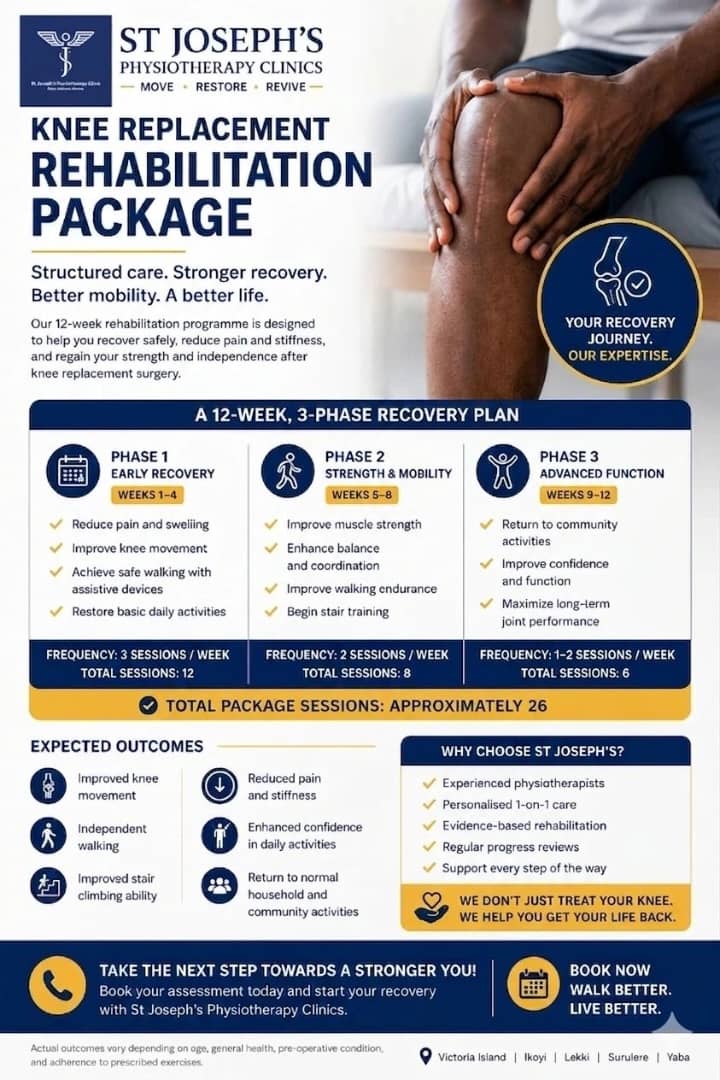
Complete Knee Replacement Rehabilitation Package in Lagos
Knee replacement surgery is a major step toward pain relief and improved mo…

NAMDA threatens strike over unpaid medical lecturers’ allowances
The Nigerian Association of Medical and Dental Academics (NAMDA) has warned…

Resident Doctors Signal End to Strike Threat After High-Level Talks with Gbajabiamila
The threat of a nationwide indefinite strike by the Nigerian Association of…
