Working long hours and regularly engaging in heavy lifting may impact women’s ability to get pregnant, according to a new study published in the journal Occupational & Environmental Medicine.
 Researchers say those who worked more than 40 hours weekly took around 20% longer to get pregnant than those who worked 21-40 hours weekly.
 Lead study author Dr. Audrey J. Gaskins, of the Harvard T.H Chan School of Public Health in Boston, MA, and colleagues reached their findings by analyzing the data of 1,739 women of an average age of 33 who were part of the 2010-2014 Nurses’ Health Study.
All women included in the analysis were attempting to get pregnant. At study baseline, participants completed a questionnaire that detailed their work schedules and physical labor.
Most of the women worked days or nights only, while 16% worked rotating shifts. More than 30% of women reported working for more than 8 hours daily, while 40% said they lifted heavy loads up to five times each day. After 12 months, 16% of study participants had not become pregnant, while 5% had not conceived after 2 years.
Source: Leadership News
ABUJA: Training Schedule for Basic Life Support BLS, Pediatric Advanced Life Support (PALS), Advanced Cardiovascular Life Support ACLS, First Aid, CPR, AED
PORTHARCOURT: Training Schedule for Basic Life Support BLS, Pediatric Advanced Life Support (PALS), Advanced Cardiovascular Life Support ACLS, First Aid, CPR, AED
LAGOS: Training Schedule for Basic Life Support BLS, Pediatric Advanced Life Support (PALS), Advanced Cardiovascular Life Support ACLS, First Aid, CPR, AED
STOP paying for airtime and electricity, Let your phone pay its bills with ScreenT
You may also like
Comrade Lemii Christian Emerges Chairman of NANNM Rivers State Branch in Historic Victory
PORT HARCOURT, NIGERIA Following the long awaited National Association of N…

FG Supports Robotic Surgery Expansion to Reduce Medical Tourism
Nigeria is taking another step toward strengthening specialised healthcare …
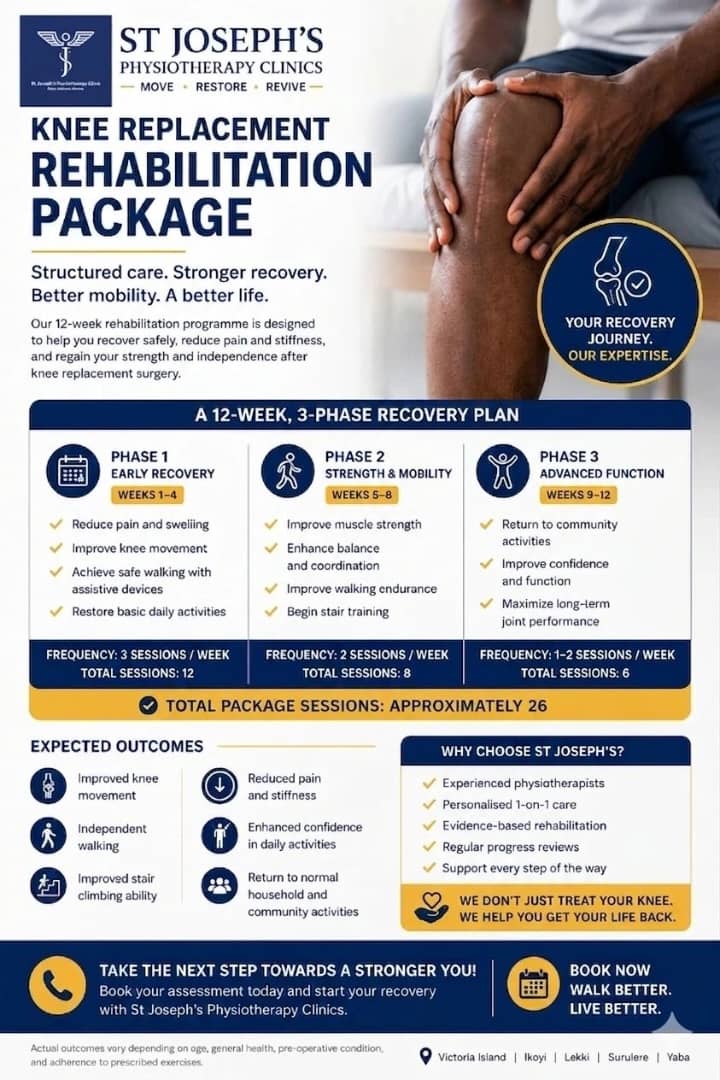
Complete Knee Replacement Rehabilitation Package in Lagos
Knee replacement surgery is a major step toward pain relief and improved mo…

NAMDA threatens strike over unpaid medical lecturers’ allowances
The Nigerian Association of Medical and Dental Academics (NAMDA) has warned…

Resident Doctors Signal End to Strike Threat After High-Level Talks with Gbajabiamila
The threat of a nationwide indefinite strike by the Nigerian Association of…