As a worldwide affair that takes place annually on February 4, World Cancer Day unites the world’s population in the fight against cancer. Its aim is to stop millions of needless deaths annually by increasing consciousness and education about the disease, as well as pressing governments and individuals across the world to take action. As we mark this year’s event, it is instructive to pay close attention to the following words of Heather Bryant, VP, Cancer Control, Canadian Partnership Against Cancer: “On World Cancer Day, we have an opportunity to collectively examine cancer control strategies to identify winning formulas that will accelerate progress. The goal for all of us is to ensure fewer people develop cancer, more people are successfully treated and that there is a better quality of life for people during treatment and beyond.”
Hence, aside the usual ritual of speech-making that normally characterizes0 the occasion, this year’s event offers yet another huge opportunity for the world to come up with a winning strategy against the deadly disease. Just as cancer affects everyone in different ways, all people have the power to take various actions to lessen its impact on individuals, families and communities. The main thrust of this year’s World Cancer Day should, therefore, centre on joint action against a common adversary.
Undoubtedly, today’s world is bedeviled with numerous challenges. Global terrorism has heightened the fear of insecurity across the globe. Globally, poverty has become a serious threat as we now have to deal with a poverty line as low as $1.25 per day. It is even more shocking that 1/7th of the world’s population lives below this line. Climate change has equally continued to be a major threat to an increasingly endangered world. To compound the problem, turbulent wars occasioned by political differences have continued to displace millions of people across the world. As if this is not enough, many nations currently grapple with severe economic strain that seems to have defied all scientific solutions. The world, no doubt, is in a troubled phase.
.jpg) Aside the numerous socio-political and economic woes being faced by various nations across the world, the world is equally contending with increasing menace of several life threatening diseases. HIV/AIDS, Ebola, Lassa fever, Bird Flu, Tuberculosis, among others are some of the diseases that have continued to defy logical explanations world-wide. However, of all globally acknowledged menacing diseases, cancer remains, perhaps, the most dreadful. Though, the threat of cancer has been on across the ages, it is, however, only in the second half of the 20th century that the numbers of cancer cases have tremendously increased.
Aside the numerous socio-political and economic woes being faced by various nations across the world, the world is equally contending with increasing menace of several life threatening diseases. HIV/AIDS, Ebola, Lassa fever, Bird Flu, Tuberculosis, among others are some of the diseases that have continued to defy logical explanations world-wide. However, of all globally acknowledged menacing diseases, cancer remains, perhaps, the most dreadful. Though, the threat of cancer has been on across the ages, it is, however, only in the second half of the 20th century that the numbers of cancer cases have tremendously increased. Today, the global cancer scourge is enormous and there is little hope of the situation getting better. At present, an estimated 8.2 million people die from cancer world-wide annually. Out of this number, four million people die precipitately at relatively young age of 30 and 45. Recent statistics revealed that in 2001 alone, cancer was responsible for about 13% of all human deaths globally (7.9million). Statistics from Cancer Research UK similarly revealed that 14.1 million adults worldwide were diagnosed with cancer in 2012 while 8.2 million people died from it in the same year (4.7 million males and 3.5 million females).
Nigeria is not in any way immune from the disease as it records about 100,000 new cases of cancer annually. Currently, according to experts, the country contends with about two million recorded cases of cancer. Breast and cervical cancer are the commonest forms of cancer in Nigeria and they occur in women. According to the Committee Encouraging Corporate Philanthropy (CECP- Nigeria), 30 Nigerian women die every day of breast cancer while one Nigerian woman dies every hour of cervical cancer. Also, CECP-Nigeria has revealed that 14 Nigerian men die daily of prostate cancer while one Nigerian dies every hour of liver cancer and one other dies every two hours of colon cancer.
Basically, cancers occur as a result of excessive amount of toxin and pollutants people are exposed to, obesity, tobacco use, lack of physical activity, high stress lifestyles that zap the immune system, poor quality junk food that are full of pesticides, irradiated and genetically modified food. Other causes include electro-magnetic lights and everything we were not exposed to 200 years ago. Findings have shown that tobacco use is the most important risk factor for cancer, causing about 70% of global lung cancer deaths and 20% of global cancer deaths. All the afore-mentioned weaken the immune system and change the body’s internal environment to one that promotes cancer growth .While cancer can affect people of all ages, and a few types of cancer are more common in children, the risk of developing cancer generally increases with age.
Cancer is no respecter of age or social status as men and women of all classes have fallen victim of this terrible plague. In Nigeria, experience has shown that, often times, cancer patients have been treated for other diseases for a long time leading to the metastases of the disease and the eventual death of the patient. The late legal luminary and social crusader, Chief Gani Fawehinmi falls into this category as he was once diagnosed with pneumonia but eventually died of lung cancer. Some symptoms of cancer include fatigue, weight loss, unexplained anemia and inexplicable fever.
Experts have, however, disclosed that a major key to fighting cancer is early detection. It is, therefore, advised that we regularly conduct medical check-ups to discover the disease when it could be easily and quickly tackled with little complications. According to the World Health Organisation (WHO), 30% of cancer deaths can be avoided by keeping away from or adjusting key threat factors such as being obese, harmful diet with low fruit and vegetable intake, lack of physical activity, alcohol use, sexually transmitted HPV-infections, infection by HBV (Hepatitis virus), ionizing and non-ionizing radiation, urban air pollution and indoor smoke from household use of solid fuels.
By: Tayo Ogunbiyi
Sun News
ABUJA: Training Schedule for Basic Life Support BLS, Pediatric Advanced Life Support (PALS), Advanced Cardiovascular Life Support ACLS, First Aid, CPR, AED
PORTHARCOURT: Training Schedule for Basic Life Support BLS, Pediatric Advanced Life Support (PALS), Advanced Cardiovascular Life Support ACLS, First Aid, CPR, AED
LAGOS: Training Schedule for Basic Life Support BLS, Pediatric Advanced Life Support (PALS), Advanced Cardiovascular Life Support ACLS, First Aid, CPR, AED
STOP paying for airtime and electricity, Let your phone pay its bills with ScreenT
You may also like
Comrade Lemii Christian Emerges Chairman of NANNM Rivers State Branch in Historic Victory
PORT HARCOURT, NIGERIA Following the long awaited National Association of N…

FG Supports Robotic Surgery Expansion to Reduce Medical Tourism
Nigeria is taking another step toward strengthening specialised healthcare …
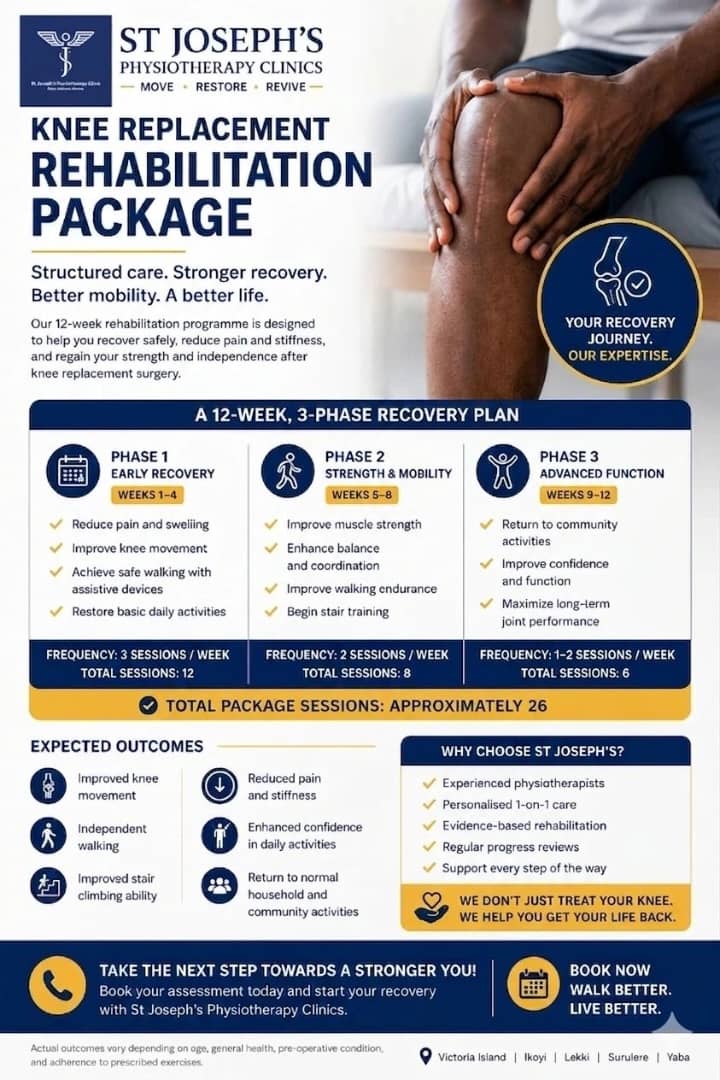
Complete Knee Replacement Rehabilitation Package in Lagos
Knee replacement surgery is a major step toward pain relief and improved mo…

NAMDA threatens strike over unpaid medical lecturers’ allowances
The Nigerian Association of Medical and Dental Academics (NAMDA) has warned…

Resident Doctors Signal End to Strike Threat After High-Level Talks with Gbajabiamila
The threat of a nationwide indefinite strike by the Nigerian Association of…